
NTB Provincial Government Urges Parliament to Immediately Pass Indigenous Peoples Bill
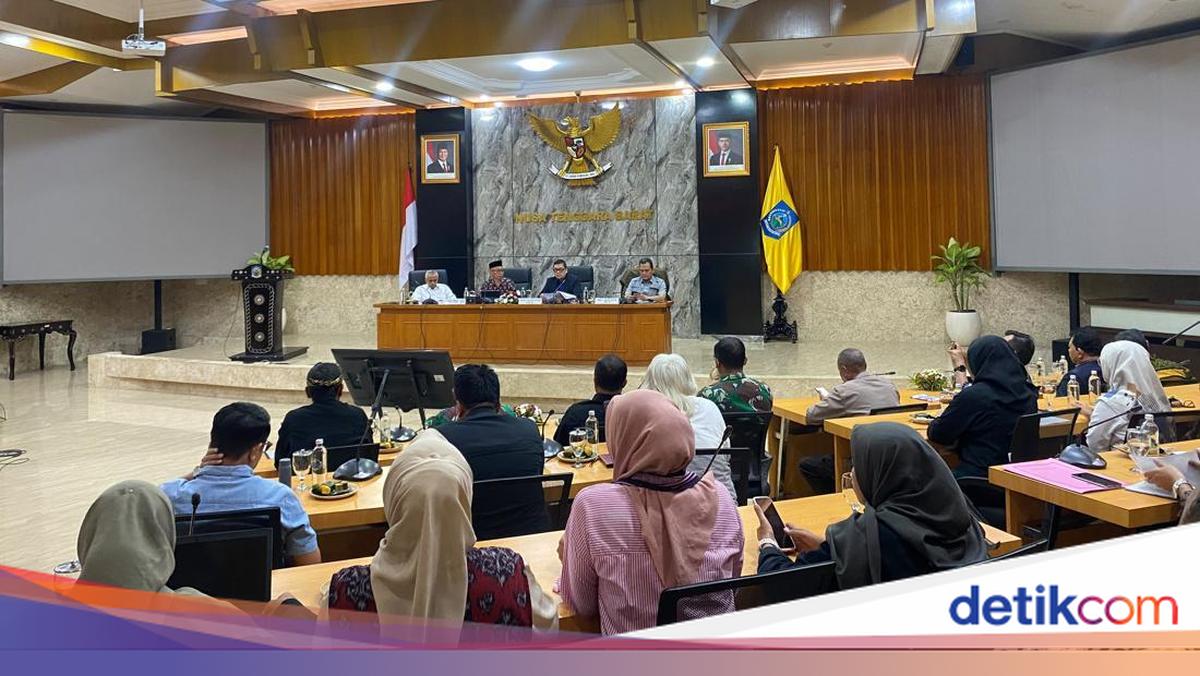
The Provincial Government of West Nusa Tenggara (NTB) is urging the Indonesian House of Representatives to immediately finalise the deliberation of the Indigenous Peoples Bill. The NTB administration stressed that indigenous peoples must not only be recognised administratively but must also receive genuine protection and welfare. This message was conveyed during an aspiration gathering forum for the drafting of the Indigenous Peoples Bill with the Working Committee of the House Legislative Body in Mataram. During the forum, the NTB administration presented various conditions of indigenous communities spread across Lombok Island and Sumbawa Island. Head of the NTB Culture Office Muhamad Ikhwan emphasised that indigenous peoples are not merely social groups. They are guardians of local knowledge as well as bastions of environmental conservation that persist to this day. “Indigenous peoples are the guardians of local knowledge and the shield of environmental sustainability,” Ikhwan stated on Thursday. On Lombok Island, the Bayan Indigenous legal community continues to uphold ancestral traditions. Meanwhile, on Sumbawa Island, several indigenous communities have strong historical ties with the Sultanates of Bima and Dompu. According to Ikhwan, the results of aspiration gathering indicate that indigenous communities still face various problems on the ground. These issues include indigenous land disputes, protection of historical sites, and the weakening of indigenous institutions in the face of modern developments. He noted that legal uncertainty has frequently left the position of indigenous peoples vulnerable, risking marginalisation due to development pressures, spatial planning changes, and conflicts over natural resource utilisation. Therefore, the Indigenous Peoples Bill is considered vital for providing legal certainty. However, Ikhwan cautioned that the regulation should not stop at mere administrative aspects. “The Indigenous Peoples Bill must be able to answer fundamental questions: how the state protects indigenous territories, maintains cultural continuity, and opens up equitable economic empowerment opportunities,” he asserted. To strengthen the substance of the regulation, NTB Province, through its Culture Office, proposed several points for inclusion in the draft Bill. “First is a concise and unbureaucratic mechanism for the recognition of indigenous peoples, followed by concrete protection of indigenous territories and cultural heritage,” Ikhwan said. Additionally, the NTB administration is pushing for the involvement of indigenous peoples in development decision-making, the strengthening of indigenous institutions, and conflict resolution through deliberation. Economic empowerment based on local potential is also among the proposed points. Ikhwan also called for an end to the paradigm that often pits indigenous peoples against development. According to him, indigenous peoples can instead become strategic partners in achieving sustainable development. “Amidst the threat of the global climate crisis, the traditional knowledge of indigenous peoples in wisely managing nature is a highly relevant solution,” he said. Before the House Legislative Body Working Committee, Ikhwan affirmed the NTB administration’s commitment to overseeing the deliberation of the regulation to ensure it delivers justice for indigenous peoples, rather than mere symbolic recognition. “Because safeguarding indigenous peoples means tending to the roots of Nusantara’s civilisation so they are not eroded by time,” he concluded.