
NTB provincial government pushes village cooperatives as poverty eradication engine
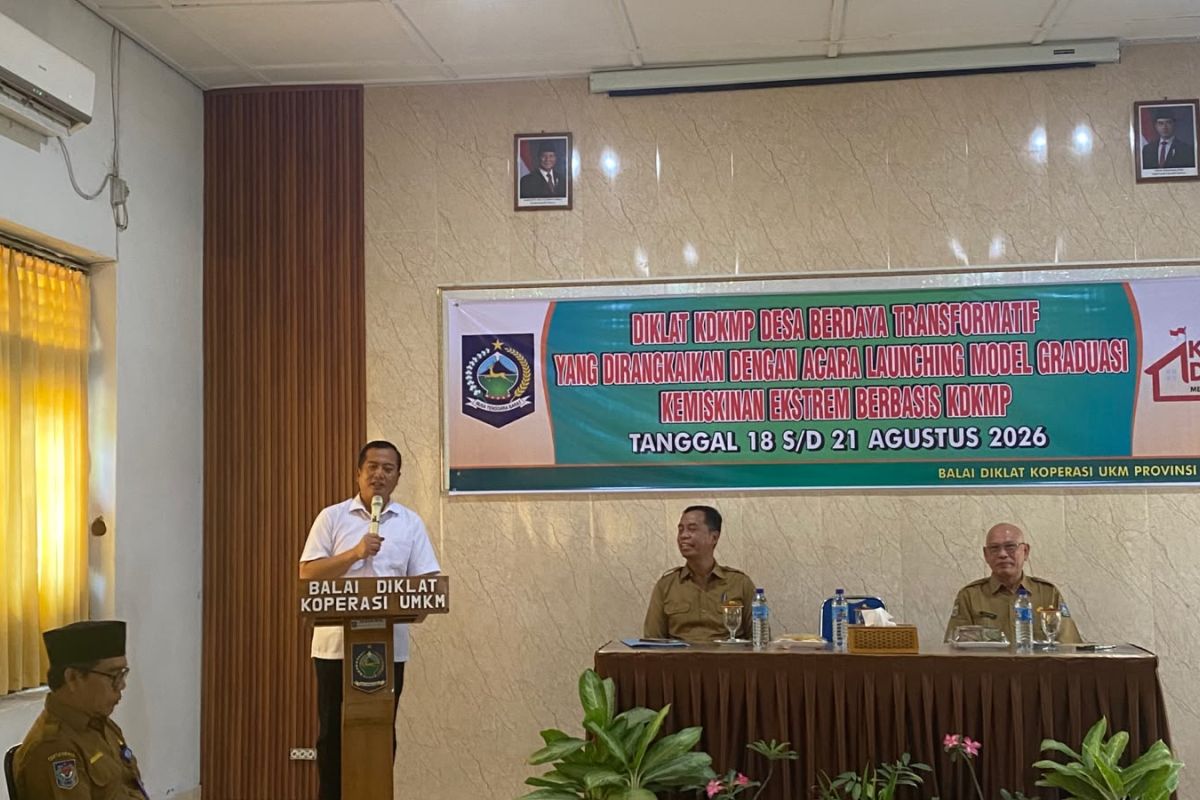
Mataram (ANTARA) - The West Nusa Tenggara (NTB) provincial government is encouraging the Koperasi Desa/Kelurahan Merah Putih (KDKMP) village cooperatives to become economic engines for eradicating poverty at village and sub-district level.
NTB Governor Lalu Muhamad Iqbal said his administration is integrating the Desa Berdaya programme with the KDKMP scheme to accelerate poverty reduction.
“What we want to do is solve the fundamental problems first, then we empower them,” he said during the KDKMP Desa Berdaya Transformatif training event in Mataram on Tuesday.
Iqbal said village cooperatives are not enough merely as institutions carrying out administrative activities, but must be able to encourage communities to produce, transact and increase income sustainably.
The NTB government does not want poverty eradication to rely solely on temporary social assistance. Providing aid without resolving fundamental problems is considered to only keep communities trapped in poverty.
Therefore, the Desa Berdaya programme is integrated with KDKMP as an approach to empowering village communities economically in West Nusa Tenggara.
“The provincial government no longer wants to be a sympathiser, no longer wants to be Robin Hood for its people, because the approach of providing social assistance alone stops there and only delays poverty,” said the former Indonesian Ambassador to Turkey.
The Desa Berdaya programme consists of thematic and transformative programmes directed to become one of the main programmes in reducing extreme poverty. Empowerment activities are carried out by optimising cooperatives, village-owned enterprises (BUMDes) and various village business entities so they can create productive economic activity.
Iqbal stressed that poverty eradication requires cross-sector collaboration involving regional agencies, village governments, non-governmental organisations, KDKMP administrators and various other parties.
The NTB provincial government is targeting the poverty rate, currently approaching 12 percent, to be reduced to below 10 percent or single digits by 2029 to 2030.
Iqbal expressed hope that the synergy between the Desa Berdaya programme and village cooperatives can enable poor communities not only to receive assistance, but to gain access to productive economic activities until they become self-reliant and escape poverty permanently.