
NTB Provincial Government Prepares Feasibility Study for Clean Energy 'Supergrid' Project
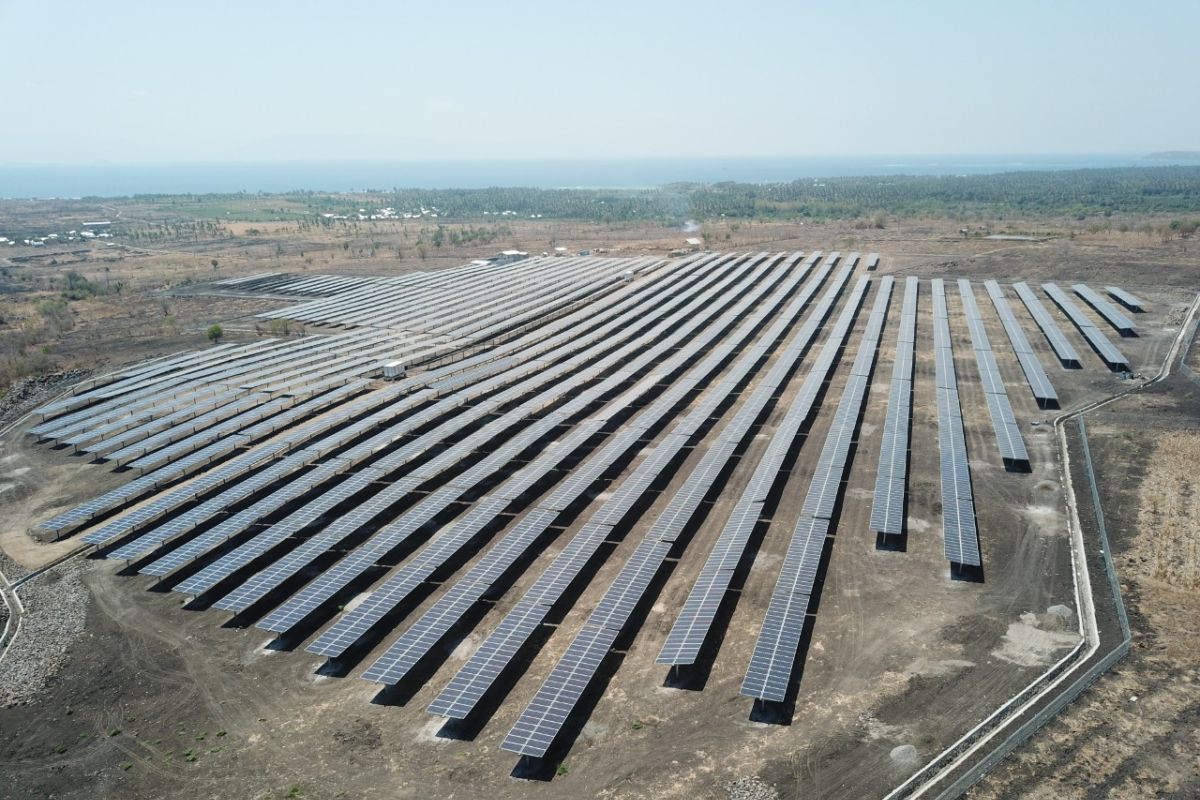
The West Nusa Tenggara (NTB) Provincial Government has stated that the renewable energy supergrid project requires a feasibility study as an initial step to realise a clean power development hub connecting the Lesser Sunda Islands. NTB Energy and Mineral Resources Agency Head Samsudin said the feasibility study is being prepared following the province’s plan to build a large-scale transmission network, which is hindered by economic viability concerns. “During a consultation with the Directorate General of Electricity at the Ministry of Energy and Mineral Resources, we learned that establishing a supergrid is not straightforward, requiring undersea transmission lines,” he said in Mataram on Sunday. Samsudin explained that constructing a large-scale transmission network requires significant infrastructure, particularly undersea power cables across the Lombok Strait connecting NTB to Bali. The central government assesses that the undersea clean energy cables will only be economically viable for construction around 2031 to 2033. “The Ministry of Energy and Mineral Resources has factored in population growth and other factors, deeming the Lombok Strait undersea cable connection feasible around 2031-2033,” Samsudin said. He stated that a feasibility study is essential to test whether the undersea interconnection can be realised sooner than the central government’s projection. The study will also meticulously assess NTB’s renewable energy potential, a key requirement for becoming a clean energy supergrid in central Indonesia. “NTB has seven renewable energy sources. The province must determine its capacity and compare it with East Nusa Tenggara (NTT), as a supergrid must identify these potentials,” Samsudin explained. NTB’s substantial clean energy potential stems from hydropower, solar, wind, ocean currents, waste, biomass, and geothermal sources. The NTB Energy and Mineral Resources Agency notes that renewable energy currently contributes 25% to the province’s power mix, significantly higher than the national average of 15.75%, which has a total installed clean energy capacity of 15,630 megawatts. Installed renewable energy capacity in NTB includes 21.6 megawatts of grid-connected solar power (PLTS), 26.8 megawatts of off-grid solar managed by mining industries, and 18.5 megawatts of micro-hydro plants (PLTMH). The NTB government is actively offering clean energy investment opportunities to foreign embassies, private sectors, and non-profit organisations to secure funding for the large-scale transmission project. “Our budgetary support is limited. The governor has sought assistance from strategic partners, including foreign embassies,” Samsudin concluded. Previous reports state that NTB’s supergrid concept was declared in the Bali-NTB-NTT cooperation forum (KRBN). The project is a strategic step towards Indonesia’s net-zero emissions target. Currently, Bali is part of Java’s large-scale transmission network, meaning its electricity will be supplied by West and East Nusa Tenggara in the future.