
NTB Provincial Government Affirms the Presence of People's Schools to Protect Children
Mataram (ANTARA) - The West Nusa Tenggara (NTB) provincial government has affirmed that the existence of People’s Schools in the region serves as a safe space for children’s educational activities.
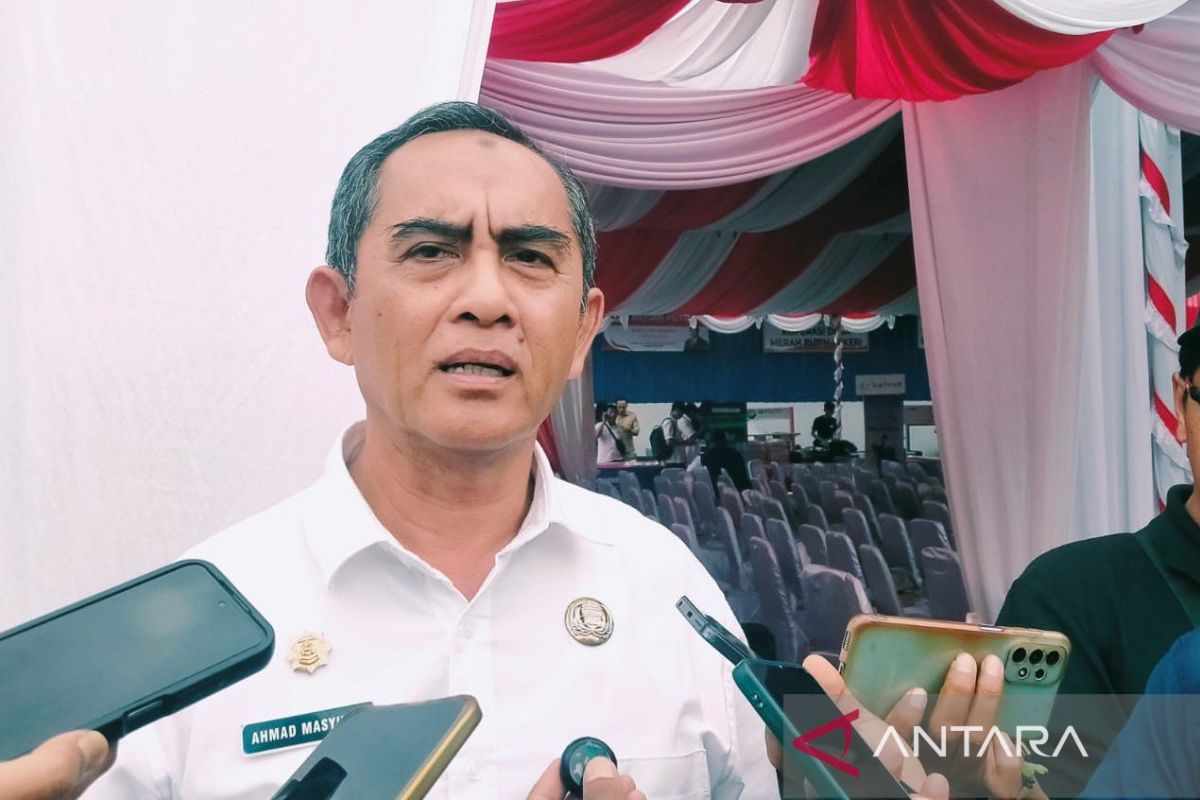
Head of the Social Services, Women’s Empowerment, and Child Protection Agency of NTB, Ahmad Masyhuri, emphasised that the presence of People’s Schools represents the state’s protection for the most vulnerable children, especially those in the lowest welfare deciles.
“Essentially, the establishment of People’s Schools is to protect our children who are at the very bottom of the welfare line. The priority is deciles 1 and 2, meaning those who are truly unable to afford it,” he stated in Mataram on Tuesday.
He explained that People’s Schools are present with a concept that not only focuses on providing educational access for poor communities but also emphasises a child-friendly learning environment.
“People’s Schools do not only accommodate children from poor families but also children with complex social backgrounds, such as victims of neglect to those traumatised by certain events,” Masyhuri said.
“Children like this are given a safe place. In People’s Schools, there are psychologists to assist, so it’s not just formal education but also mental recovery,” he clarified.
The dormitory school concept is one of the advantages offered. With this system, supervision of children is more optimal, and the potential for negative external influences can be minimised.
“People’s Schools are very safe. Because they are dormitory-based, children are protected from external influences, and supervision is also strict,” Masyhuri stated.
He also affirmed that to date, no cases of violence have been found in the People’s Schools environment in NTB. Instead, according to him, the dynamics that occur are more about the emotional closeness of families who find it difficult to part with their children.
He added that in terms of facilities, People’s Schools are designed to high standards. All student needs are covered by the state, from education costs, meals, accommodation, to technology-based learning equipment.
“The children already use computers, learn with digital media, and even the blackboards are electronic. The facilities are very good,” he said.
Currently, NTB has five pilot People’s Schools spread across primary to secondary levels, including in Gunung Sari - West Lombok, East Lombok, and Sumbawa. Meanwhile, one permanent school is being built in North Lombok Regency with an integrated concept from primary to secondary school.
In addition to physical development, the government also ensures the quality of educators. Recruitment is handled by the central government through the Ministry of Social Affairs, but still involves local personnel with competencies.
“The teachers and education staff are mostly local, including civil servants and PPPK personnel with education backgrounds. They also receive training from the centre,” he said.
To ensure the programme is on target, student selection is carried out strictly through data validation by PKH companions, village governments, to the central government. The main targets remain children from poor families and vulnerable groups.