
NTB prepares data-based fisheries management
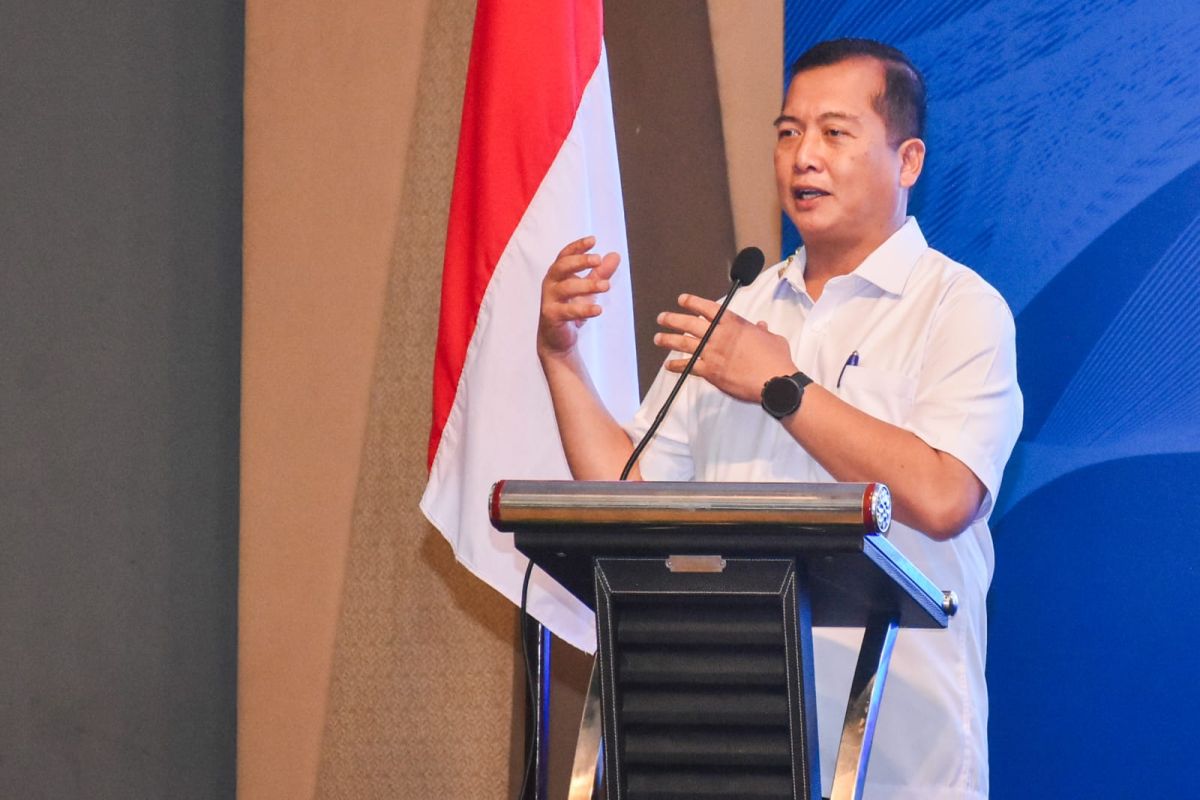
The West Nusa Tenggara (NTB) Provincial Government is preparing a transformation of fisheries industry governance through data-based policies as the foundation for sustainable marine resource management. NTB Governor Lalu Muhamad Iqbal asserted that every policy adopted must be based on accurate data and not mere assumptions in order to improve fishermen’s welfare while preserving marine resources. “We do not want to make policies based on feelings. We want to build evidence-based policies, so that every decision truly emerges from valid data and is capable of answering the community’s problems,” he said during the annual meeting of the Joint Fisheries Management Committee in Mataram on Tuesday. West Nusa Tenggara is flanked by two fisheries management areas, or WPPs, encompassing WPP 573 in the Indian Ocean and WPP 713 in the Flores Sea, giving the province significant potential in the fisheries sector. Iqbal stated that this great potential must be supported by an accurate data system so that management can proceed sustainably. According to him, data limitations remain a fundamental problem in formulating policies for the marine and fisheries sector, meaning a number of programmes have not yet fully delivered optimal impact for the community, especially fishermen. The NTB government is inviting all parties, from universities, non-governmental organisations, and research institutions to business actors, to participate in building an integrated and high-quality fisheries data system. “A collaborative mechanism capable of producing quality data is needed as the foundation for policymaking,” said Iqbal. He further conveyed that sustainable fisheries management must also be supported by a healthy business ecosystem. The entire business chain, from fishermen and the processing industry to marketing, needs to be interconnected so that economic benefits can be felt equitably. Reflecting on practices in various developed countries, Iqbal added, the fisheries sector has been positioned as part of national resilience, making the business sector worthy of government support and protection. “The success of the fisheries sector can only be achieved if the entire business chain strengthens each other and grows together,” he said. Meanwhile, Head of the NTB Marine and Fisheries Service, Muslim, said the province’s position within two national fisheries management areas is a strategic asset for developing globally competitive fisheries commodities. The NTB government is committed to resolving fishermen’s administrative issues by accelerating the issuance of E-Pas Kecil, a requirement for accessing subsidised fuel. The NTB Marine and Fisheries Service recorded that there are currently more than 60,000 fishermen, so administrative resolutions are being carried out in coordination with district and city governments so that fishermen no longer have to manage the process themselves. “The future of the fisheries sector is determined not only by the abundance of marine resources, but also by the ability to deliver precise, data-based policies supported by collaboration among all stakeholders,” Muslim concluded.