
NTB post opens three new public kitchens in isolated areas of NTT
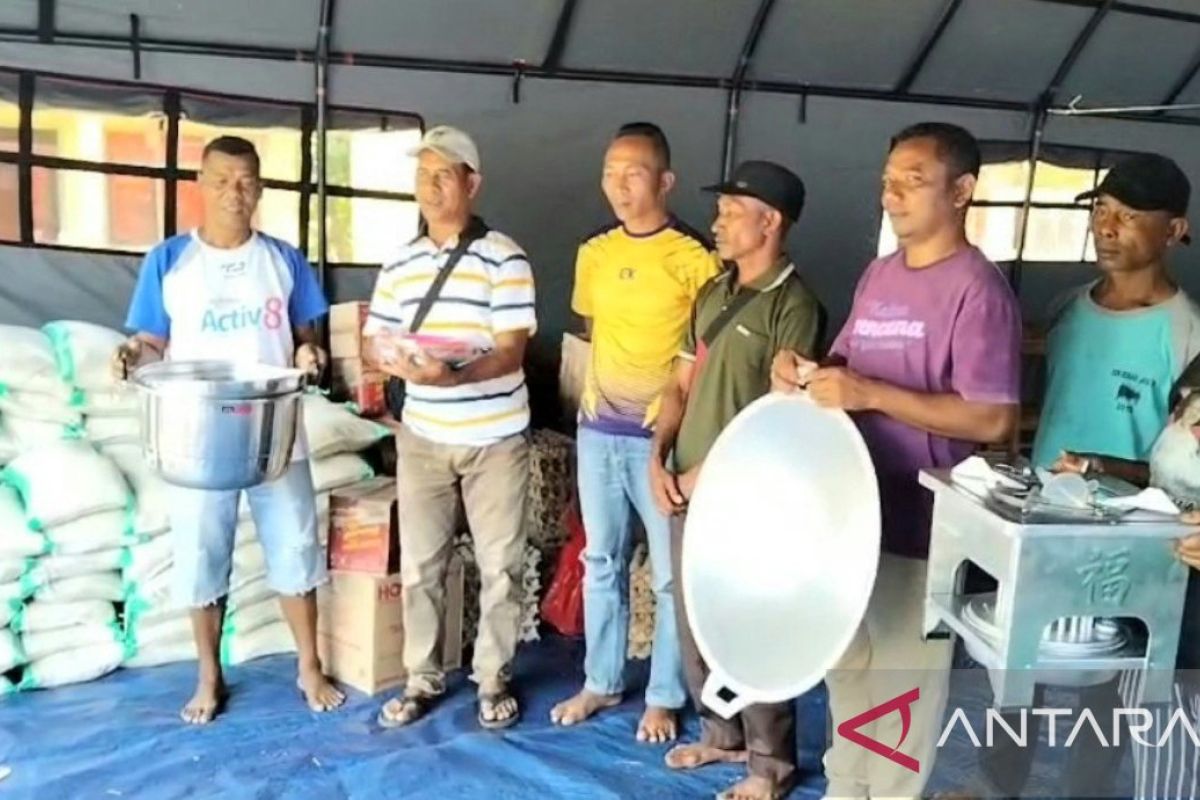
The disaster response team of the West Nusa Tenggara Provincial Government is expanding its aid coverage by opening three new public kitchens in isolated areas following the 7.7 magnitude earthquake in East Nusa Tenggara.
“Since the third day after the earthquake, the NTB team has been operating the main public kitchen in Dampek, Lamba Leda District, East Manggarai, with a production capacity of 3,000 packed meals per day,” said NTB Provincial Government representative Chandra Aprinova by telephone from Mataram on Friday.
“In addition to serving the wider affected community, the packed meal production from the NTB post is also deployed to supply the consumption needs of various humanitarian teams, medical teams, and patients at the NTB Provincial Government Field Hospital,” he said.
The Head of Destination Division at the NTB Tourism Office said that the high demand for logistics and the increasingly widespread distribution of earthquake-affected residents prompted the NTB Governor to direct the team to immediately open three new public kitchen units in three different locations.
“Each new public kitchen is targeted to produce 2,000 lunch packages and 2,000 dinner packages every day,” Chandra explained.
The operations use equipment donated by the Ministry of Social Affairs, while the supply of main logistical materials and operating personnel is brought directly from NTB.
“The team is tasked with training local residents so they are able to manage the public kitchens independently after the NTB team withdraws following the fifteenth day,” he said.
Chandra said that one of the three new public kitchen locations is stationed in a highly isolated area that had previously received no aid at all due to difficult road access for vehicles.
This expansion is expected to ensure that the basic food needs of affected communities are met down to the smallest remote areas.
“To reach the isolated points, the field team received route guidance from the local Family Hope Programme facilitator who understands the terrain,” he said.