
NTB integrates waste management with community economy
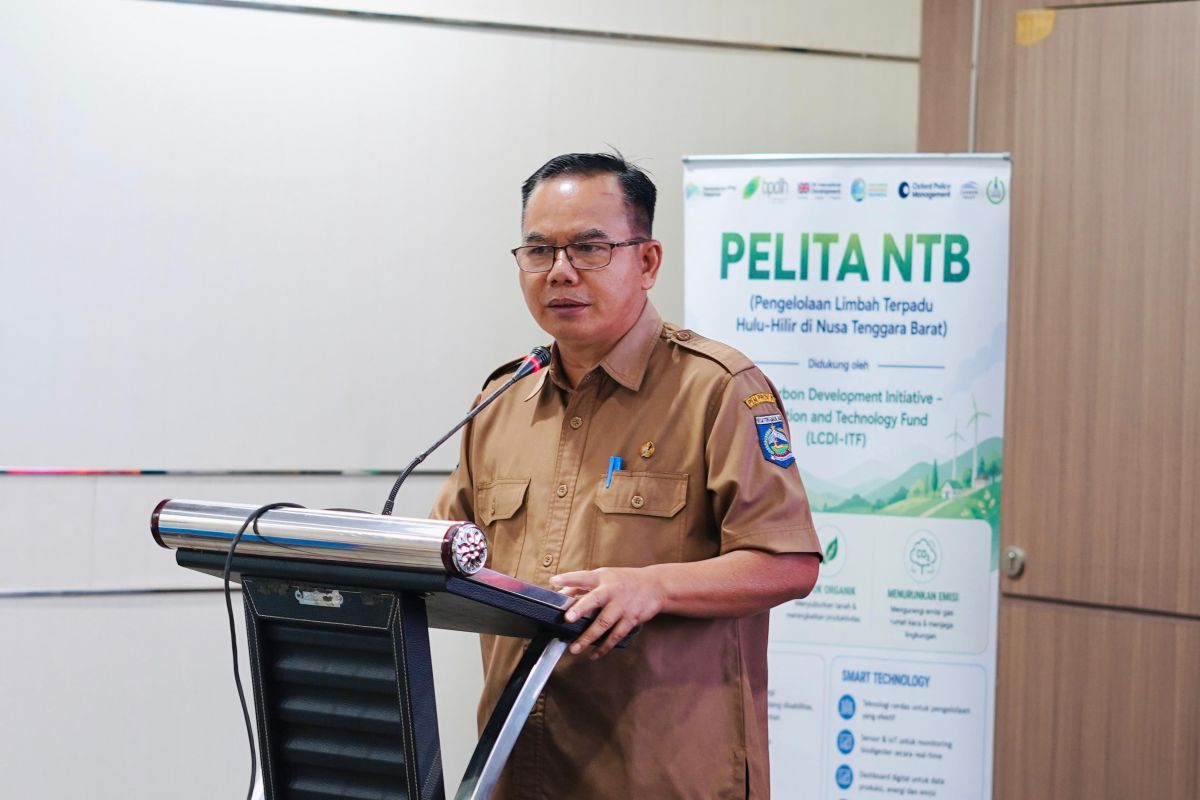
Mataram (ANTARA) - The Regional Research and Innovation Agency (BRIDA) of West Nusa Tenggara (NTB) province is integrating waste management with the strengthening of the community economy through the utilisation of organic waste to produce fertiliser and energy.
“The government, community, universities, the business world, and development partners need to work within a single ecosystem so that various ongoing initiatives do not stop partially,” said the Head of BRIDA NTB, I Gede Putu Aryadi, in Mataram on Tuesday.
Aryadi stated that waste management must be positioned as part of the solution to various development issues, including poverty alleviation, food security, and the strengthening of the tourism sector.
The utilisation of waste is also aligned with the development of the ‘Empowered Village’ (Desa Berdaya) programme, which is directed towards increasing the community’s ability to manage local potential productively.
“The waste management programme must not stop at the construction of facilities, but must ensure the existence of institutions, human resources, business models, and management mechanisms capable of maintaining programme sustainability,” Aryadi added.
BRIDA NTB views the upstream-to-downstream approach in the Integrated Waste Management project, known as PELITA, as one of the waste management models that connects environmental aspects with economic benefits for the community.
The PELITA project is part of a collaboration between Indonesia and the United Kingdom through the Low Carbon Development Indonesia–Innovation and Technology Fund (LCDI-ITF).
The project is designed to encourage the management of organic waste starting from the household and village levels to be processed into biogas fuel and organic fertiliser. The construction phase of the PELITA project is planned to run from September 2026 until approximately April 2027.
PELITA is aimed at reaching 28 Empowered Villages, including the areas of Gili Trawangan, Gili Air, and Moyo Island, involving women, youth, and persons with disabilities to ensure that green economic benefits are accessed more inclusively.
The local government hopes that cross-sector collaboration can ensure that the project does not only produce waste processing facilities but also builds a sustainable circular economy model at the community level.
The Low Carbon Development Coordinator of the National Development Planning Agency (Bappenas), Anna Amaliya, stated that climate change has become an integral part of development planning.
She emphasised that economic growth and the improvement of community welfare must go hand in hand with efforts to reduce greenhouse gas emissions.
Based on data from the NTB Environmental and Forestry Service (LHK), waste production across the West Nusa Tenggara region currently reaches approximately 2,500 tonnes per day. This condition necessitates a change in waste management patterns from merely collecting, transporting, and disposing to sorting and processing at the source.
Source: jawawa.id (https://jawawa.id/newsitem/ntb-integrates-waste-management-with-community-economy-1788246263)
Originally published by Antara (Indonesian) (https://www.antaranews.com/berita/5720157/ntb-integrasikan-pengelolaan-sampah-dengan-ekonomi-masyarakat), translated from Indonesian