
NTB Governor stresses Sade reconstruction must not sacrifice authenticity
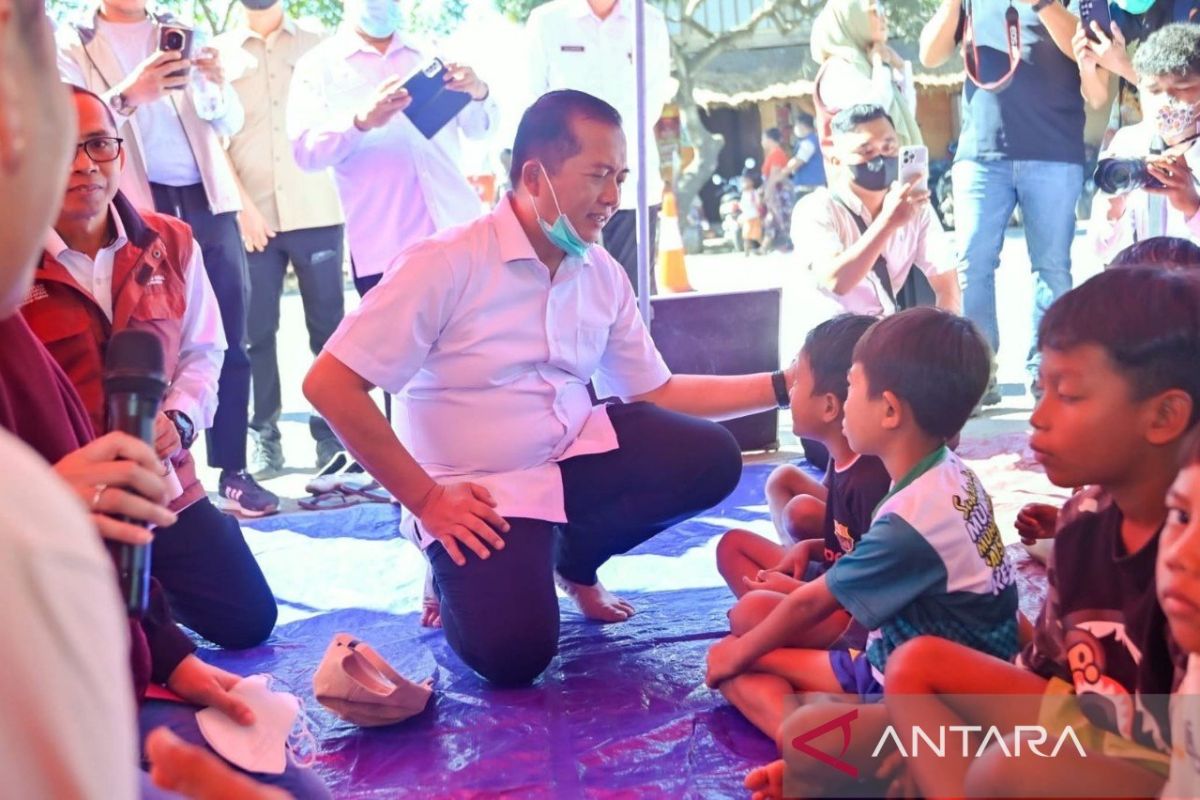
West Nusa Tenggara Governor Lalu Muhamad Iqbal has stressed that reconstruction of the Sade traditional village following a fire must not merely pursue physical development and erase its authenticity.
“The houses that burned down must indeed be rebuilt, but the history, architecture, living spaces, and cultural identity that make Sade what it is must not be lost along the way,” Iqbal said during a visit to Sade Traditional Village in Central Lombok Regency on Wednesday.
Accompanied by NTB PKK Driving Team Chairwoman Sinta Agathia and Central Lombok Regent Lalu Pathul Bahri, Iqbal inspected the affected area and held discussions with the village head, community leaders, and residents who were working together to clear the fire debris.
Iqbal said the handling of Sade must be distinguished from fire response in ordinary residential areas. Sade is not merely a collection of buildings, but a cultural site that holds history, spatial layout, traditional architecture, and the way of life of the Sasak people.
“This is not an ordinary fire. This is a fire that occurred at a historical site rich in culture. So the reconstruction is not about building habitable houses, but about rebuilding a historical site as close as possible to its original form,” he asserted.
He therefore urged the government not to rush into determining a development model or financing scheme before the reconstruction direction is agreed upon together with the indigenous community.
According to the Governor, the people of Sade must be the primary subjects in the recovery process. The government is present to assist, facilitate, and strengthen community capacity, not to take over decisions about the future of the traditional village.
“This village belongs to the community, the indigenous people who live here, so we need to invite them to talk and decide together what we should do,” Iqbal said.
During the dialogue, an initial understanding emerged that Sade’s reconstruction needs to be carried out with a community-based approach. Residents are not merely beneficiaries, but are involved from concept development through to implementation of the construction.
In principle, Sade will be restored as closely as possible to its original form and character. However, the reconstruction must also serve as a momentum to improve safety and disaster mitigation aspects without damaging the area’s identity.
“We will restore it as closely as possible to the original, but in a better version. We must think about hydrants, fire extinguishers, circulation systems and access, so that if a fire occurs, it can be handled more quickly and effectively,” he explained.
Iqbal also opened space to discuss more comprehensive area planning, including the possibility of arranging community living spaces outside the core customary area. However, all these options, he said, are not yet decisions and must first be discussed with the indigenous community.
He asked that the fire-affected area be temporarily secured as there are still materials that could potentially endanger residents and volunteers. Assistance from the public is also expected to be channelled through the command post and established mechanisms so that handling is orderly and in line with needs.
“Sade is no longer just the property of the residents who live here. Sade belongs to NTB, and is even part of Indonesia’s heritage,” he added.
He also reminded that the recovery process should not be rushed merely to pursue tourism agendas or various major events that will take place in NTB. The speed of recovery remains important, but must not sacrifice the authenticity and historical value that give Sade its special meaning.
The NTB Provincial Government, together with the Central Lombok Regency Government, the indigenous community, and various related parties, will continue to refine the reconstruction direction. Once the concept is agreed upon, the next step is to compile financing needs and open space for collaboration for various parties who wish to contribute.
“The agreement is that we determine the direction first. Do not rush to build. Once the reconstruction direction is clear and agreed upon by the community, then we will think together about where the financing will come from,” he said.