
NTB Governor: 2026 Revised Budget to Focus on Sade Reconstruction and Economic Strengthening
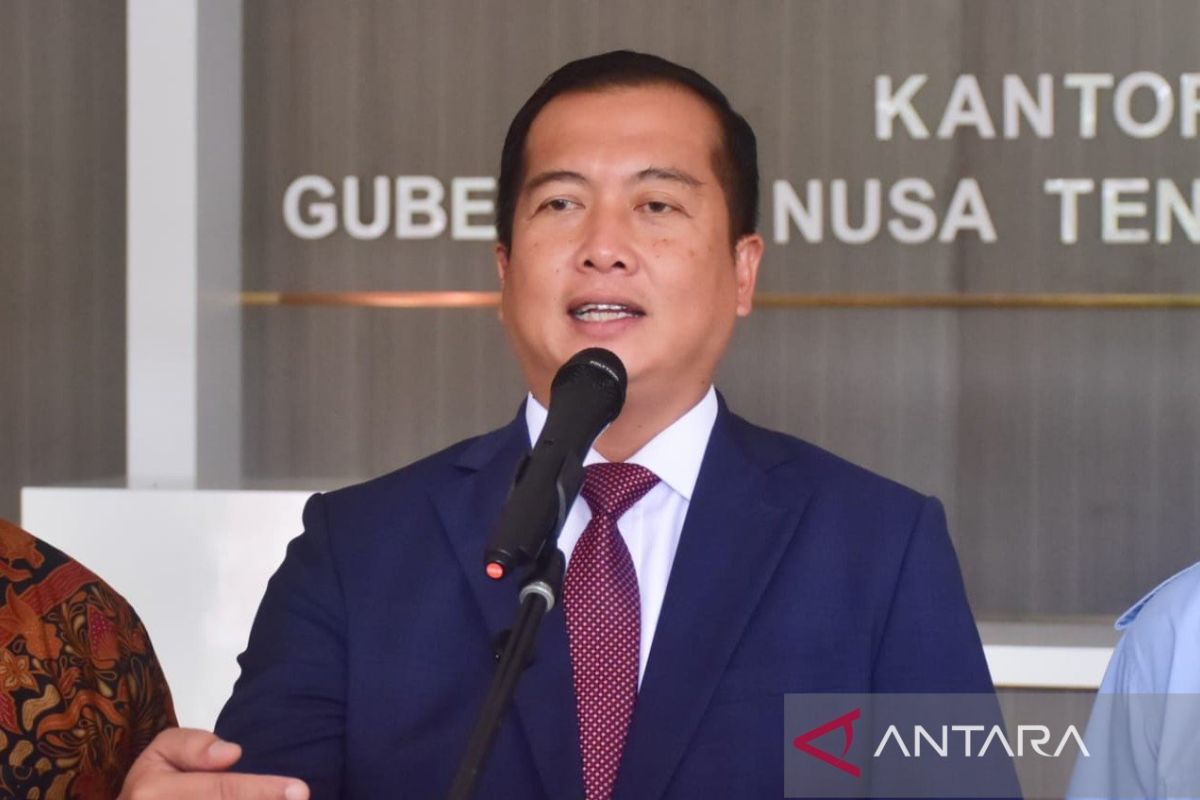
The Governor of West Nusa Tenggara (NTB), Lalu Muhamad Iqbal, has emphasised that the 2026 Revised Regional Budget (APBD-P) will focus on several strategic regional agendas, ranging from the reconstruction of the Sade Traditional Village to economic strengthening.
During a plenary session of the NTB Regional House of Representatives (DPRD) regarding the 2026 KUA-PPAS (General Budget Policy and Regional Financial Priorities), Iqbal stated that the 2026 revisions were drafted considering changes in the 2026 Regional Government Work Plan (RKPD) and ongoing regional dynamics.
According to the Governor, one of the major dynamics attracting government attention is the earthquake disaster that recently struck East Nusa Tenggara (NTT). As a province geographically closest to NTT, NTB has moved swiftly to provide aid and support to affected communities as a gesture of solidarity.
In addition to the earthquake in NTT, NTB is currently addressing the aftermath of a fire in the Sade Tourism Village, Central Lombok. The Provincial Government, alongside the Central Lombok Regency Government and the local community, is preparing three main steps for the rehabilitation and reconstruction of Sade.
First, the government will provide replacement housing for affected residents. The administration will utilise 40 houses previously built by the Ministry of Tourism and Culture that are currently unoccupied. Furthermore, the government is preparing an additional 35 houses funded through non-binding sources outside of the regional budget.
Second, a permanent art museum will be constructed in the Sade area. This museum will document the history of Sade, covering its condition before and during the fire, through to the post-fire phase. It will also display remaining historical artefacts and feature performance spaces for traditional arts such as Gamelan and Peresean. The museum is targeted for completion before October to ensure tourism activities can resume.
Third, a comprehensive reconstruction of the Sade area will be undertaken. The Governor noted that reconstruction must not be rushed, as Sade is not merely a settlement but a site of significant historical and cultural value. The government is collaborating with various parties, including the Indonesian Institute of Architects, Unram, and ITB, to turn the project into a laboratory for traditional building reconstruction.
Iqbal emphasised that the reconstruction must maintain the original form and character of the village while improving safety aspects, such as drainage systems, sprinklers, sanitation, and structural security. He also assured that the process would involve the local community, with the government providing facilitation and ensuring that all recovery aid is managed transparently and accountably.
Furthermore, Iqbal touched upon NTB’s efforts to strengthen its position as a strategic player in the national agricultural sector, noting that the province has been entrusted to become a national hub for garlic seed development and supply. He stated that development in NTB is aimed not only at strengthening internal capacity but also at building networks to expand investment, economic development, and human resource quality.
Regarding the budget figures, Iqbal noted that the 2026 Revised Regional Budget includes revenue, expenditure, and regional financing. Regional revenue in the revised budget is estimated at approximately Rp5.62 trillion, an increase of about 1.08 per cent compared to the original 2026 budget. Meanwhile, regional expenditure is designed at Rp6.52 trillion, an increase of approximately 5.56 per cent from the original budget of Rp5.733 trillion.
The revised budget records a deficit of approximately Rp369 billion. This deficit will be covered through net financing from a surplus (SiLPA) of Rp431 billion, offset by a financing expenditure of Rp61 billion for maturing debt repayments.
Iqbal expressed hope that the discussions and agreement on the revised budget between the executive and legislative branches would serve as a foundation to accelerate development and improve public services.