
NTB Government Requires 41,000 New Students to Plant Chillies
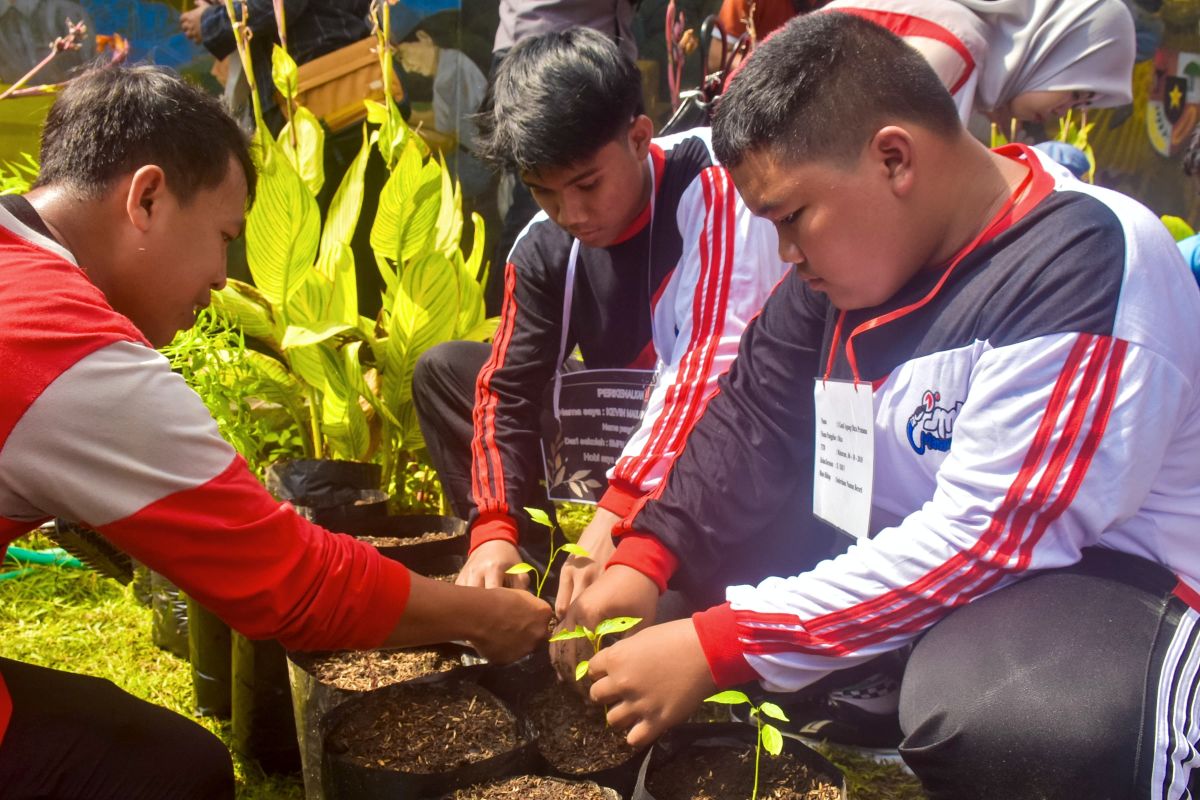
Mataram (ANTARA) - The provincial government of West Nusa Tenggara (NTB) is requiring around 41,000 new students at senior high schools (SMA), vocational schools (SMK) and special schools (SLB) to plant one chilli tree each, as part of efforts to control the pace of food inflation in the region.
“This is not merely about planting chillies. The children learn to sow seeds, care for the plants, harvest, and even market the produce,” said NTB Governor Lalu Muhamad Iqbal in Mataram on Wednesday.
Iqbal said the policy arose from the region’s experience of chilli price spikes being the main contributor to inflation, forcing the government to bring in supplies from outside the region at considerable cost.
In February 2025, the price of bird’s eye chillies in West Nusa Tenggara broke through Rp200,000 per kilogram and became a topic of national discussion.
At the time, bird’s eye chilli production had fallen by 63.64 per cent, depleting chilli stocks within just one month as a result of extreme rain influenced by the La Nina phenomenon.
In March 2026, bird’s eye chillies were again expensive, in the range of Rp150,000 per kilogram, also due to bad weather and coinciding with Ramadan. Some 1.18 tonnes of bird’s eye chillies had to be brought in from Enkerang Regency in South Sulawesi to control inflationary turbulence.
Iqbal said the 41,000 new students are projected to be able to produce reserves of more than 20 tonnes of chillies if all the plants grow and are harvested.
He hopes the chilli harvest produced by the new students can become an instrument for controlling regional inflation whilst also strengthening family-based food resilience.
The chilli planting programme carried out by school students is designed as a learning medium that integrates character education, environmental awareness and entrepreneurship.
The movement is one model of synergy between the education and agriculture sectors in supporting regional inflation control through the active participation of students from an early age.
“They learn responsibility, care for the environment, and at the same time build life skills that will be useful for their future,” said Iqbal.