
NTB Government Explores Cooperation with Morocco from Tourism to Energy
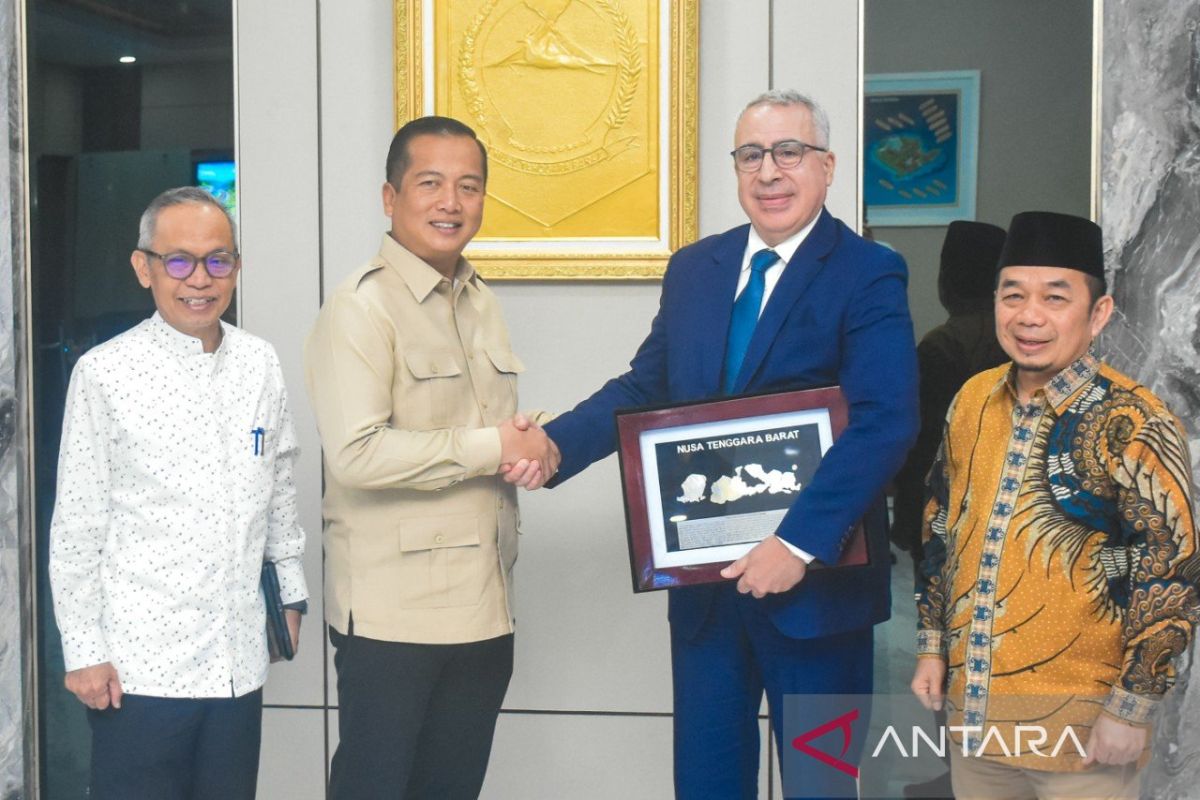
The Provincial Government of West Nusa Tenggara (NTB) is exploring strategic cooperation opportunities across various sectors, from trade and tourism to natural resource development, human resource enhancement, and energy, with Morocco. Governor of NTB Lalu Muhamad Iqbal, after receiving Moroccan Ambassador to Indonesia Redouane Houssaini at his office in Mataram on Friday, stressed that international cooperation must deliver tangible benefits to the community through increased investment, job creation, industrial downstreaming, and strengthening regional economic competitiveness. The meeting was also attended by Member of Commission II of the House of Representatives Jazuli Juwaini and NTB Regional Secretary Abul Chair.
In a presentation themed ‘An Archipelago with Unlimited Potential’, Iqbal introduced NTB as a region with substantial and diverse investment prospects. The province has a population of approximately 5.81 million, predominantly of productive age, supported by stable economic growth and a strategic geographical position as a gateway to eastern Indonesia. In the tourism sector, he offered a concept of quality tourism, focusing on developing high-quality, sustainable, and globally competitive destinations. NTB currently boasts 265 tourist destinations, 375 tourist villages, and continuously developing supporting infrastructure. ‘The trend in tourist visits is also showing an increase, in line with efforts to expand international flight connectivity and develop investment in hospitality, tourism areas, and tourism transportation,’ he stated.
The agricultural sector remains one of NTB’s main strengths, contributing the largest share to the Gross Regional Domestic Product. Various leading commodities such as rice, maize, shallots, chillies, coffee, cocoa, coconut, vanilla, and tobacco present promising investment opportunities. The NTB provincial government is currently running a programme to plant one million coconut trees and one million coffee trees as part of a sustainable agricultural development strategy integrated with the agricultural product processing industry. In the livestock sector, NTB is one of the national centres for beef cattle production. The government is opening investment opportunities in breeding development, modern abattoirs, meat processing industries, dairy products, and a strategic beef cattle farming project in Labangka, Sumbawa Regency.
The marine and fisheries sector also holds significant potential. Fishery production reaching approximately 1.25 million tonnes in 2025 serves as crucial capital for developing the fishery product processing industry, constructing cold chain facilities, and downstreaming various leading export commodities such as tuna, vannamei shrimp, lobster, seaweed, and salt. In the energy sector, Iqbal affirmed that NTB possesses vast new and renewable energy potential, particularly solar, wind, water, biomass, and geothermal energy. ‘This potential is strengthened by the existence of at least 15 large dams that can be developed as sites for floating solar power plants or hybrid power generation systems,’ Iqbal explained. Furthermore, strategic mineral resources such as copper, gold, silver, manganese, iron sand, and lead offer significant opportunities for developing green energy-based downstream industries.
As part of its investment promotion, the NTB provincial government also offered a number of investment-ready projects, including the Kerakas Beach Five-Star Hotel in North Lombok, the Gili Gede Luxury Resort & Five-Star Hotel, the Mautika Mandalika Hotel, and the Kuta Heights Hotel in the Mandalika area. ‘All these projects have a combined investment value of approximately Rp1.61 trillion and have been prepared with infrastructure support, licensing ease, and promising market prospects,’ Iqbal stated. He expressed hope that through this forum, relations with the Kingdom of Morocco would develop not only in trade and investment but also encompass strengthened cooperation in education, technology development, renewable energy, modern agriculture, and human resource quality improvement.