
NTB Draft Regulation Allows Education Donations to Fund Non-Civil Servant Teacher Salaries
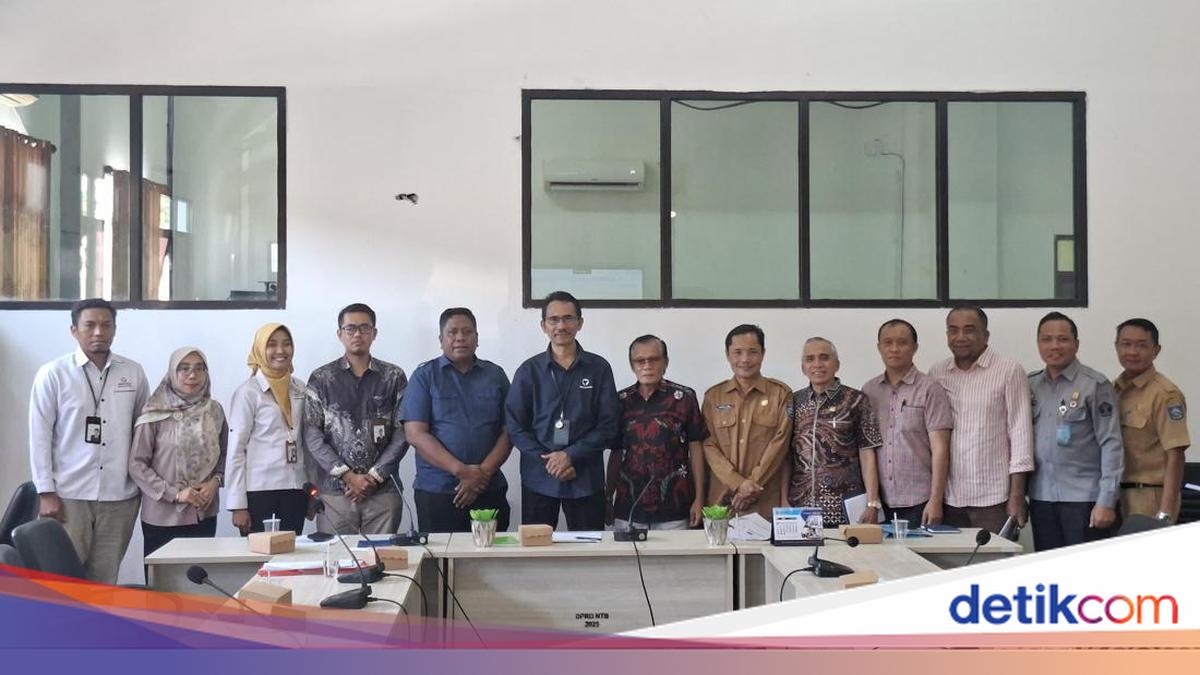
The Regional House of Representatives (DPRD) of West Nusa Tenggara (NTB) is continuing deliberations on a Draft Regional Regulation (Raperda) on Education Donations. The regulation, being drafted by the Regional Regulation Formation Body (Bapemperda) together with Commission V of the NTB DPRD, has sparked heated discussion regarding the clear boundary between voluntary donations and illegal levy practices in schools disguised as donations.
A member of Commission V of the NTB DPRD from the Golkar faction, Didi Sumardi, explained that one crucial point raised in the deliberation of the Education Donations Raperda is that the funds could be used to finance incentives or salaries for non-civil servant (ASN) teachers, including honorary and part-time teachers.
He stated that the use of donation funds for such purposes is in principle permissible, provided the funds serve the goal of improving education quality and the best interests of students.
“The main point is that these funds are directed towards improving the quality of education and, above all, towards the interests of the children. If there is a clear correlation with that, I believe (donation funds) may be used,” Didi said after a Public Hearing (RDP) at the NTB DPRD office on Monday (13/7/2026).
Although permitted, Didi stressed that schools must fulfil a strict requirement, namely the transparent application of transparency principles.
According to him, the school’s actual conditions and budgetary needs must be openly disclosed by the school and its committee to parents and guardians, and then formally set out in the School Budget Work Plan (RKAS).
The Chair of Bapemperda of the NTB DPRD, Ali Usman Ahim, emphasised that the regulation is designed to govern the mechanism for third parties wishing to donate to schools, while preventing illegal levies imposed by school administrators on students and parents.
“There are improvements to several norms in this Raperda. Technical matters concerning donations at private schools or pesantren emerged in the discussion and will be discussed further in Commission V as the leading sector of this Raperda,” he added.
Special Notes from the Ombudsman
The Ombudsman of the Republic of Indonesia for West Nusa Tenggara Province has issued special notes regarding the planned formation of the education donations Raperda in NTB.
The Head of the NTB Ombudsman, Dwi Sudarsono, asserted that the Education Donations Raperda must eliminate fundraising practices in NTB schools that are often carried out under the guise of donations.
Therefore, Dwi said, such practices must be regulated in the Raperda being drafted by the Regional Regulation Formation Body (Bapemperda) of the NTB DPRD together with Commission V of the NTB DPRD.
“We want the fundraising procedure to be strengthened. We hope this Raperda will regulate it so that donations are made in accordance with the school’s actual needs,” Dwi said while attending the RDP.
According to him, over the past year, the dominant cases in schools have been donation collections with the character of levies. This occurs because many schools do not yet have specific guidelines or proper fundraising procedures.
Dwi emphasised that, based on financial sources outside the regional budget (APBD) and BOS funds, there are three categories with clearly different meanings: donations, assistance, and levies.
“So far, we seem to have focused only on money, which has led to resistance from parents. Through this Raperda, we want to clarify the mechanisms and procedures so that levy motives do not ride on donations. Levies and donations are clearly different,” Dwi asserted while providing input to the NTB DPRD.
He outlined the fundamental difference between tuition fees or levies, whose amounts are clearly determined, whose payment schedules are set, and which are mandatory and binding.
Donations, on the other hand, which need to be regulated in the new Raperda, have no fixed amount, are voluntary, are not obligatory, involve no coercion, and target all groups regardless of social status.
Dwi explained that this Raperda will broaden the definition of donations themselves. Schools are expected not only to look to the pockets of students’ parents, but also to expand their networks to the business community, organisations, and other stakeholders.
“So the essence of donations is that we do not focus only on funds, but also on the provision of goods and services. That is what we want to enrich — not just money,” he said.
He gave an example: a parent who owns a shop selling building materials could donate construction materials for the construction of a school building.
“Or, for instance, if a parent has skills as a builder, that is possible. I donate my labour, my skills, my services to participate in building school infrastructure without money. That is possible,” Dwi asserted.
Therefore, Dwi hopes that the donation collection mechanism discussed in this Education Donations Raperda must be transparent. Indeed, schools must prepare a School Revenue and Expenditure Budget Plan (RAPBS) and then elaborate it into a school committee proposal.
“From there, it will be clear how much funding is not covered by BOS funds or the APBD, and that shortfall is what may be raised through donations,” he asserted.
The Ombudsman has frequently found cases of students’ rights being violated due to financial administrative matters disguised as school donations. Dwi wants this Raperda to strictly prohibit schools from intimidating or discriminating against students whose families do not donate.
“There must be no more stories of students not receiving their report cards, being barred from exams, or having their diplomas withheld simply because they have not paid donations or even tuition fees. Such things must not happen again because they violate children’s rights,” Dwi asserted.
Responding to this input, Didi Sumardi, a member of Commission V of the NTB DPRD from the Golkar faction, considered the Ombudsman’s input highly constructive for enriching the legal substance of the Raperda being deliberated at the NTB DPRD.
According to the former Chair of the Mataram City DPRD, this Raperda was born precisely to accommodate the high aspirations of members of the public who wish to contribute legally and constitutionally to advancing the quality of education in NTB.
“The substance of this Raperda is to provide a channel for the public to donate. Because these are donations, there must be no coercion, no fixed amounts, and no time limits,” Didi said.
Didi also underlined that the governance of donation funds will later be regulated very strictly and transparently, from how funds are raised, what the budget is used for, and how it is accounted for to the public.
“Everything must be clear and accountable. That is the essence of this Raperda,” he added.
Didi said that deliberation of the Raperda is currently still at the internal level of Commission V of the NTB DPRD in order to gather more aspirations from various parties.
Once the review and harmonisation process is complete, the draft regulation will proceed to the next stage of deliberation to be enacted as an official Regional Regulation.