
NTB DPRD Highlights IDR 431 Billion Budget Surplus, Governor Blames Late Central Transfers
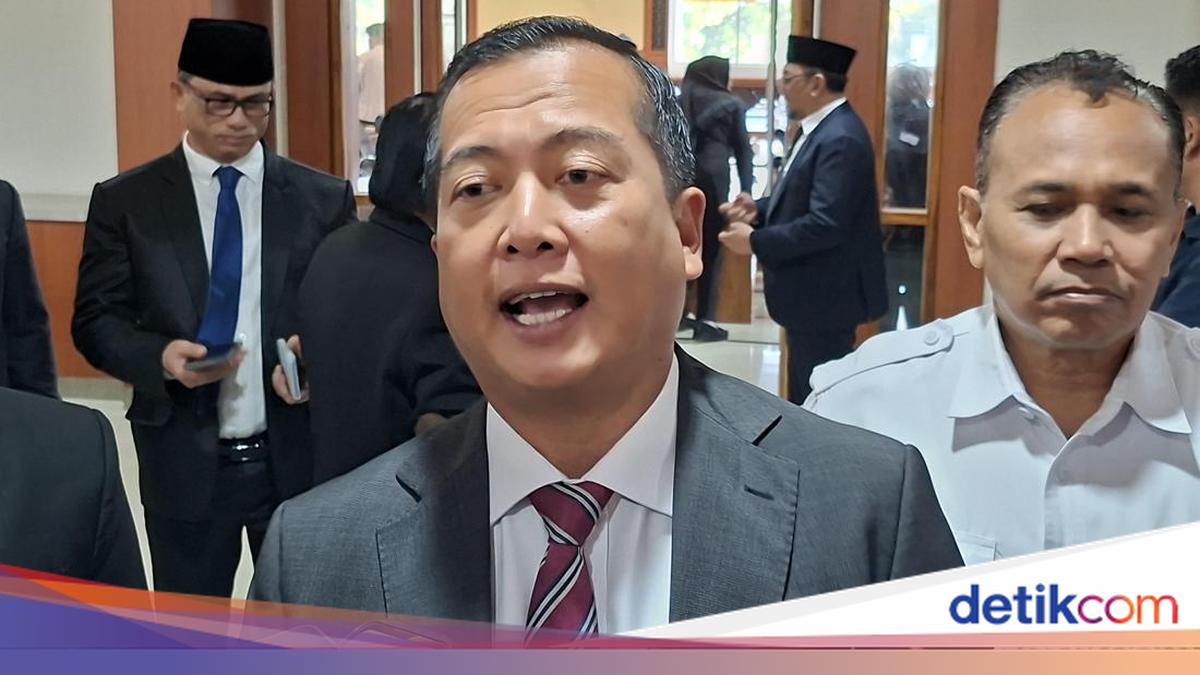
The Budget Committee (Banggar) of the West Nusa Tenggara (NTB) Regional House of Representatives (DPRD) has highlighted the high Sisa Lebih Penghitungan Anggaran (SILPA) in the 2025 NTB APBD accountability report. The SILPA value reached IDR 431 billion. Banggar DPRD NTB member Hasbullah Muis Konco stated that this value had increased sharply compared to 2024, reaching IDR 431 billion. This figure is double the 2024 SILPA, which was IDR 167.68 billion. Konco said that of the total IDR 431 billion SILPA, IDR 208 billion is tied SILPA with a designated purpose. Konco assessed that the serious concern is the untied SILPA, which reached IDR 222.10 billion. “The large amount of untied SILPA indicates that budget absorption and programme implementation are still not optimal, so the quality of planning, budgeting and execution of the APBD needs to be continuously improved so that the budget is more effective in supporting development and public services,” Konco stressed during a plenary meeting on Wednesday (22/7/2026) afternoon. The Budget Committee considers that a high budget surplus can no longer be viewed merely as a form of efficiency, but rather as an indicator of weak planning and programme implementation at the Regional Apparatus Organisation (OPD) level. Konco requested that the Governor of NTB evaluate several OPDs with low budget realisation, such as the Agriculture and Plantation Agency with 64 percent realisation, the DP3AP2KB Agency (79.19 percent), the NTB Provincial Hospital (85.14 percent), the DPMPTSP Agency (85.74 percent), and the Health Agency (87.84 percent). Konco emphasised that the NTB DPRD Budget Committee provided strategic recommendations to the Provincial Government regarding the surplus issue. The DPRD requested that the Provincial Government make the ability to control SILPA one of the Key Performance Indicators (IKU) for OPD heads. “With that, agency heads are fully responsible for the timeliness and quality of budget absorption,” Konco stressed. The Budget Committee also requested that the Provincial Government present a detailed SILPA analysis per OPD and per source of funds. The Provincial Government must clearly distinguish between SILPA resulting purely from efficiency and SILPA arising from programmes that failed to be executed. Apart from the SILPA issue, the NTB DPRD also highlighted the slow completion of follow-up actions on BPK RI findings, which have only been 24.50 percent resolved from total findings of IDR 18.14 billion. “We also request the systematic resolution of regional asset management worth IDR 14.35 trillion,” he stressed. Nevertheless, the NTB DPRD Budget Committee approved the Draft Regional Regulation on the Accountability of the 2025 Fiscal Year APBD Implementation to be enacted into a Regional Regulation. The approval was granted with the strict condition that the executive immediately follow up on all BPK recommendations. “Budget management must have a direct impact on the welfare of the people of NTB,” Konco stressed. Responding to the criticism, NTB Governor Lalu Muhamad Iqbal assessed that the high 2025 SILPA was caused by immature planning. Most of the accumulation of these funds was triggered by the dynamics of transfers from the central government that arrived at the end of the fiscal year. “It is not that the planning was immature, the planning was good, but the money came down at the very end, that’s the difficulty so we could not execute it. If we forced execution at the end of the year, it would be too risky. So for the sake of mutual security, it is better that we declare it as SILPA,” Iqbal stressed. He explained that delays in the distribution of Dana Bagi Hasil (DBH) from the Ministry of Finance, as well as several administrative requirements that were only fulfilled towards the end of the year, were the main causes of the low budget absorption. Nevertheless, Iqbal welcomed the DPRD’s input and confirmed that evaluations of OPD performance were ongoing. “Of course, that is good advice for us to correct. For OPDs with low budget absorption, improvements have been made. The head of the OPD was even replaced after being given repeated warnings. This year, we will certainly continue to evaluate,” he concluded.