
Notes on S&P Global Ratings' Latest Decision
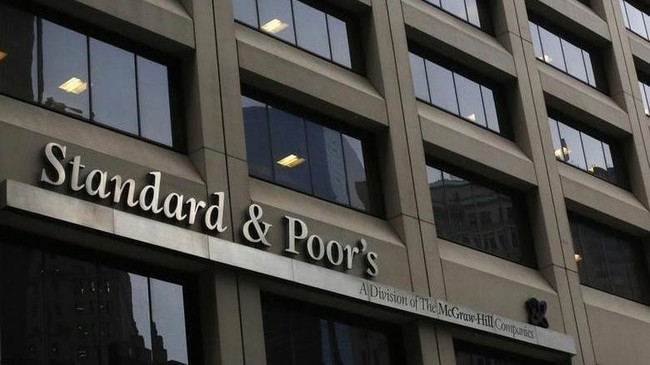
In a world still overshadowed by geopolitical uncertainty, economic slowdown, and high global funding costs, maintaining trust is often far more difficult than earning it. Therefore, S&P Global Ratings’ decision to reaffirm Indonesia’s debt rating at BBB with a stable outlook should be viewed as good news. Not because Indonesia received an upgrade, but because the international community has once again affirmed that the country’s economic foundations are considered strong and credible. For some, the term sovereign credit rating may sound technical. In reality, its meaning is quite simple. The rating is akin to a report card on a country’s financial health, used by global investors to measure risk. The higher the rating, the greater the confidence that the country can meet its financial obligations on time. This trust translates into investment, lower borrowing costs, and increased confidence for businesses to expand their economic activities. Under S&P’s system, the highest rating is AAA, followed by AA, A, and BBB, all of which are still considered investment grade. Below BBB-, ratings enter the speculative, or non-investment grade, category, which carries a higher level of risk. Indonesia’s current position is at BBB, two notches above the lowest investment-grade threshold. Meanwhile, the country’s short-term rating remains at A-2, indicating that the government’s ability to meet short-term financing obligations is still in a strong category. In other words, Indonesia has not yet moved up a class, but it has also not lost the trust built over many years. This is the essence of S&P’s decision. Amidst many countries facing fiscal pressures, surging debt, and declining economic prospects, Indonesia has managed to maintain its position as a stable nation. Such trust does not appear out of nowhere. It is built through policy consistency, fiscal discipline, macroeconomic stability, and the ability to sustain growth momentum. The S&P report reflects this. Indonesia’s economic growth prospects are still estimated to be around 5 percent in the coming years. Fiscal discipline remains a key strength, supported by a government debt ratio that is relatively low compared to many other developing countries. At the same time, various measures to strengthen state revenue governance and the natural resources sector are seen as having the potential to improve Indonesia’s fiscal and external position sustainably. For the business world, this decision carries far greater significance than simply maintaining a number. A sovereign rating is one of the primary references for global investors in making investment decisions. When a country’s risk is perceived as manageable, the cost of capital becomes more competitive, access to financing becomes more open, and long-term investment interest increases. Ultimately, these benefits are felt throughout the entire economic ecosystem, from large corporations and MSMEs to communities gaining new job opportunities. However, this affirmation should not lead to complacency. In fact, this is where the major work begins. Indonesia is still at the BBB level, while countries with higher economic competitiveness have already reached the A, AA, or even AAA groups. The journey to that level cannot be achieved in a short time. It requires consistent reform, legal certainty, a more efficient bureaucracy, and continuously increasing economic productivity. S&P itself has given a fairly clear signal regarding this direction. The opportunity for a rating upgrade will be more open if Indonesia can strengthen state revenues sustainably, maintain the fiscal deficit at an increasingly healthy level, lower financing costs, and bolster its external position through stronger foreign exchange reserves and higher value-added exports. This means that the reform agenda being pursued is not only important for economic growth but is also a prerequisite for bringing Indonesia to the next level. Therefore, this momentum must be used to accelerate economic transformation. Downstreaming must continue to generate real added value for national industry. Bureaucratic reform must provide greater certainty and ease of doing business. Natural resource governance needs to be continuously strengthened to deliver greater economic benefits for the country without reducing investment competitiveness. At the same time, the business world also has a responsibility to increase productivity, expand investment, encourage innovation, and create quality jobs. Ultimately, what is being maintained is not merely a BBB rating, but trust. Because no investment comes without trust, no growth is sustainable without credibility, and no country can move up a class if it loses the confidence of the market. Indonesia has successfully built that foundation. The next challenge is not just to maintain its position, but to transform that trust into a leap forward. With a demographic bonus, a large domestic market, abundant natural resources, and a growing entrepreneurial spirit, Indonesia has all the capital to move towards the group of countries with a higher quality economy. In the end, a rating upgrade is not the final goal. It is a consequence of consistent policy, sustainable reform, and the courage of all elements of the nation to keep moving forward.