
Notes from an Umrah Pilgrimage Amid Houthi Drone Threats
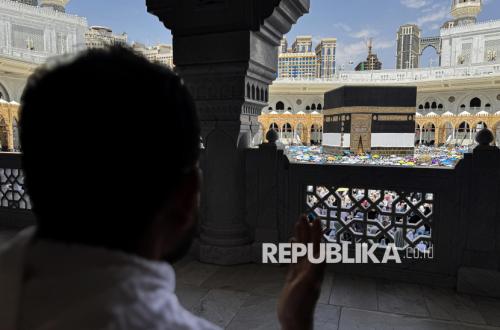
Although concerns about the war in the Middle East weigh on us, it seems we are undeterred and still want to return to Makkah and Madinah.
In the days before our departure, my phone screen was filled with reports about the Houthi militia, a longstanding enemy of the Saudi government. On 10 October 2026, two days before our scheduled flight, a Houthi attack struck King Khalid International Airport in Riyadh. Saudi civil aviation authorities reported at least 12 people killed and 309 injured. It was understandable that the question I was asked most often concerned safety and the situation in Saudi Arabia. “So, are you still going? The Houthis are really stirring things up,” a friend asked.
I read all the reports and discussed the matter with my family, before reaching a simple conclusion: the trip had not been cancelled, and we already had our flight tickets and visas. We decided to go ahead. Our intention was simply to fulfil our religious calling and pray for the kyai and the Gontor Islamic boarding school. Our group of 80, all alumni of Gontor Modern Islamic Boarding School from the class of 1996, had organised the Umrah pilgrimage together and planned to pray for the school’s continued development and success as it entered its second century.
On 12 October, I was at Soekarno-Hatta Airport. Baggage and check-in went as usual. The disruption came not from the threat of drones, but from bad weather over the Indian Ocean, along our flight route. The weather delayed our flight by an hour from its original 5.30pm departure time.
There was indeed bad weather en route, and the aircraft experienced some turbulence. But the Saudi aircraft we were travelling on continued safely.
Nine hours later, we landed in Jeddah. From there, the journey continued by bus to Madinah, taking around six hours, and everything went smoothly. During the trip, a friend in Jakarta sent me a message: “How is it there? Have lots of Houthi drones strayed into Jeddah?” I could only laugh when I read it. My reply was brief: there was no sign of war here. Everyone was going about their business as usual. The terror seemed to exist only in the news and on social media.
Makkah, Madinah and Ajyad Street
That impression lasted throughout our stay in Madinah. There were no signs of tension. Shops in the first and second rings around the Prophet’s Mosque remained open, and activity continued as usual. Bin Dawood supermarket was always busy, as were food and clothing shops, most of which employed foreign workers from countries such as Bangladesh, Pakistan and India. Construction activity in Saudi Arabia’s second-holiest city also continued as normal, in pursuit of the targets set out in the Saudi Vision 2030 programme launched by Crown Prince Mohammed bin Salman.
Worship at the Prophet’s Mosque did not appear to have diminished. At every prayer time, its courtyards were filled with worshippers from around the world. I queued to pray in the Rawdah and visit the tomb of the Prophet Muhammad. In the following days, we visited Quba Mosque and the Quran printing complex. Three days in Madinah felt all too short.
After three days, the group travelled on to Makkah. We stayed at a hotel on Ajyad Street, around a seven-minute bus ride from the terminal near the Grand Mosque. The buses run 24 hours a day, travelling along Ajyad to transport pilgrims. In principle, it is a good service.
In practice, however, it is difficult to predict when a bus will arrive. Several times, I chose to take a taxi rather than wait too long. For elderly pilgrims, every minute of waiting feels extended.
At the bus terminal near the Grand Mosque, queues of buses can sometimes grow long. More concerning is the situation for elderly pilgrims, who are vulnerable while queuing and jostling to board the buses that will take them back to their hotels.
A friend then proposed an interesting idea. “Why not build a moving walkway like the one at Jeddah Airport along the side of Ajyad Street, so pilgrims can reach the Grand Mosque more quickly?” The more I considered it, the more sensible it seemed, although it would need to be adapted to the street’s conditions and fitted with protective infrastructure. This city is capable of building a clock tower as tall as a skyscraper, so a pedestrian route alongside Ajyad’s main road is not impossible. The technical issues may be more complicated than a layperson imagines, but it is a question worth asking.
Source: jawawa.id (https://jawawa.id/newsitem/notes-from-an-umrah-pilgrimage-amid-houthi-drone-threats-1793631110)
Originally published by Republika (https://opini.republika.co.id/berita/tnvped282/catatan-ibadah-umroh-di-tengah-ancaman-drone-houthi), translated from Indonesian