
Notary Challenges PNBP Law in Constitutional Court Over Rp15 Million Fee Before Retirement
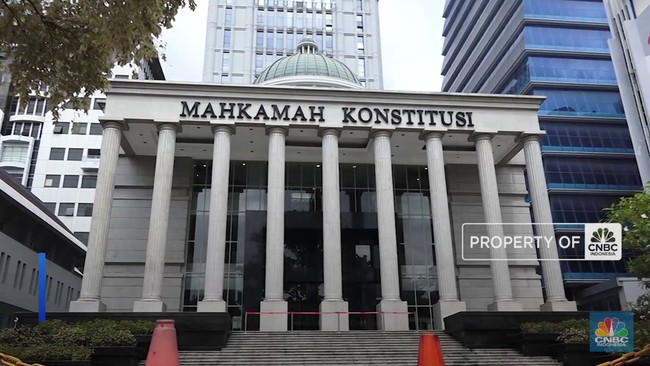
A notary named Anisitus Amanat, also known as Anisitus Amanat Gaham, has filed a petition challenging Law Number 9 of 2018 concerning Non-Tax State Revenue (UU PNBP) with the Constitutional Court (MK). In case Number 203/PUU-XXIV/2026, he lodged the petition after suffering constitutional losses due to the obligation to pay PNBP of Rp7.5 million for each extension of his notary term two years before retirement, namely from age 67 to 68 and from age 68 to 69, totalling Rp15 million. According to the petitioner, the tariff amount is not proportional to the extension period, which is only valid for one year, and results in unfair and discriminatory treatment, as stated in an MK press release. During the Preliminary Examination Hearing for Petition 203/PUU-XXIV/2026, Anisitus also argued that the norm in Article 4 paragraph (3) of Law Number 9/2018 contradicts the 1945 Constitution of the Republic of Indonesia, because compulsory levies for state purposes and matters concerning state finances must be regulated by law, not through Government Regulation (PP) or Ministerial Regulation. He therefore requested that it be declared conditionally unconstitutional insofar as the type of PNBP referred to in paragraph (2) is not interpreted as being regulated by law. Anisitus, as the petitioner, also alleged a violation of the right to fair legal certainty and equal treatment before the law as guaranteed by Article 28D paragraph (1) of the 1945 Constitution, as well as the right to be free from discriminatory treatment as stipulated in Article 28I paragraph (2) of the 1945 Constitution. He presented this argument by comparing the PNBP amount charged to notaries with PNBP tariffs for other services, such as fiduciary security registration, which he claimed is lower despite involving much larger transaction values. In his petition, the petitioner also noted that following Constitutional Court Decision Number 84/PUU-XXII/2024, a notary’s term of office can be extended annually until the age of 70. However, each extension stage is burdened with the obligation to pay PNBP. Therefore, in his petitum, the petitioner requested the Court to declare that the phrases granting authority to regulate the type and tariff of PNBP through Government Regulation and/or Ministerial Regulation in Article 4 paragraph (3) and Article 8 paragraph (3) of the PNBP Law contradict the 1945 Constitution and have no binding legal force. The petitioner also asked the Court to affirm that the type and amount of PNBP tariffs for the notary profession be regulated by law. In response to the petition, Constitutional Justice M. Guntur Hamzah advised the petitioner to be cautious, as the petitum requested a new interpretation while the article under review already states that PNBP is regulated by law. He suggested the petitioner could simply request the deletion of the phrases ‘Government Regulation and/or Ministerial Regulation’ to achieve the desired outcome. Guntur assessed that the petitioner had not yet elaborated whether the issue raised was a matter of the constitutionality of the norm or an implementation problem. Constitutional Justice Daniel Yusmic P. Foekh advised the petitioner to include evidence of the notary term extension, particularly the second extension, to demonstrate his current standing as a notary. Daniel further reminded the petitioner that the Constitutional Court does not have the authority to adjudicate technical regulations and urged him to focus on the review of the law itself. He also asked the petitioner to consider the impact of removing Government and Ministerial Regulations from the norm under review, warning of a potential legal vacuum. Finally, Chief Justice Suhartoyo, who chaired the panel, questioned whether the dispute over the tariff amount fell within the Constitutional Court’s jurisdiction, noting that the objection appeared to be at the level of implementation and the financial burden rather than the principle of the levy itself. Before closing the session, Suhartoyo informed the petitioner that revisions could be submitted by Wednesday, 1 July 2026, at 12.00 WIB, and that the petition could only be filed once, either online or offline.