
Not Wanting to Lose to the US, China Now Forces the World to Submit to Its Laws
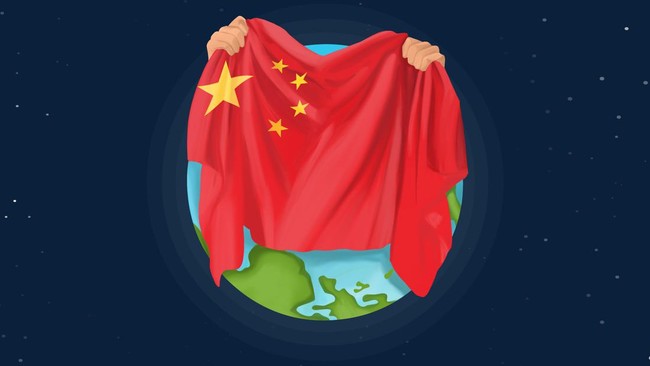
China has for years criticised the United States for using laws, sanctions, and export restrictions to pressure companies and other countries. Now, however, China is beginning to pursue a broadly similar path. China is increasingly creating rules that apply not only domestically but can also reach transactions, companies, and citizens outside its territory.
One example occurred in April 2026, when the Chinese government asked Meta, the parent company of Facebook, to cancel its planned US$2 billion purchase of Manus, an artificial intelligence start-up registered in Singapore. Meta ultimately complied with the request. The Chinese founders of Manus were also reportedly barred from leaving the country. The case shows that China is beginning to be able to help determine the fate of a transaction, even when the deal is carried out by companies located outside Chinese territory.
Beijing is also preparing rules that give the government greater control over the transfer of AI technology. From September 2026, the Chinese government will have stronger authority to prohibit someone from entering or leaving the country.
This marks a major shift for China. In the nineteenth century, China faced colonial powers that refused to follow Chinese law in ports they controlled. In recent decades, Beijing has also frequently criticised the US for applying its laws overseas. Now, however, China is using its economic power to pursue the same path.
The US can impose sanctions on companies in other countries because the dollar and its financial system are used almost everywhere in the world. When transactions pass through American banks or payment systems, Washington has an opening to apply its laws. China’s power is different. The country does not yet dominate the global financial system as America does, but China holds a very important position in global supply chains. Many foreign companies sell their products in China, have factories there, or depend on Chinese raw materials and components. This dependence is China’s strength. Foreign companies will find it difficult to ignore Chinese rules if most of their business or supplies still depend on China.
The push to expand the reach of Chinese law comes directly from President Xi Jinping. In 2018, he asked Communist Party officials to use legal weapons suited to China’s position as a great power. That same year, Meng Wanzhou, a senior Huawei executive and daughter of the company’s founder, was arrested in Canada at the request of the United States. She was accused of concealing Huawei’s relationship with customers in Iran subject to Washington’s sanctions. The incident made the Chinese government see how easily the US could use its laws to pressure important Chinese companies and their executives. China later retaliated by detaining two Canadians on charges widely regarded as fabricated. The two were held for nearly three years and were seen as bargaining chips in the dispute.
In 2021, China issued rules prohibiting companies from complying with certain foreign sanctions, especially those imposed by the US. Since then, more Chinese rules have been designed to apply overseas. For example, rules issued in late 2024 require foreign companies that use Chinese materials or components to comply with Beijing’s export provisions. The Chinese government can even inspect who the company’s customers are. The rule resembles the US foreign direct product rule, under which Washington can restrict the sale of goods made in other countries if their production uses American technology. That provision was used by the US to limit shipments of chip-making machines from the Netherlands to China.
Beijing is now beginning to use a similar system. If a product uses Chinese materials or technology, the government wants the right to regulate where that product may be sold. China has also begun imposing sanctions on foreign politicians, something previously more often done by the US and Western countries. In April 2026, Beijing again strengthened its rules to counter foreign sanctions. The rules resemble European Union provisions that prohibit European companies and citizens from complying with other countries’ sanctions if those sanctions are deemed illegitimate. However, China’s rules have a broader reach. Foreign companies can be considered in violation of Chinese law if they comply with sanctions deemed harmful to Chinese companies or citizens.
JPMorgan Chase and Citigroup are being sued in Chinese courts with total claims reaching US$44 million. The two major American banks had previously frozen assets belonging to a Chinese oil trader subject to US Treasury Department sanctions. The problem is that the two banks face two conflicting sets of rules. If they do not freeze the assets, they risk violating US sanctions. But when the assets are frozen, they are accused of violating Chinese rules. A similar case occurred in June 2026, when China’s Supreme People’s Court ruled against a Singaporean company that refused to send electronic goods to a sanctioned Hong Kong company. These cases place foreign companies in a difficult position. Complying with one country’s rules can cause them to violate another country’s rules. If they follow US sanctions, companies can be sued or have their activities restricted in China. Conversely, if they ignore US sanctions, their access to the American market and financial system is at risk.
Source: jawawa.id (https://jawawa.id/newsitem/not-wanting-to-lose-to-the-us-china-now-forces-the-world-to-submit-to-its-laws-1787925087)
Originally published by CNBC Indonesia (https://www.cnbcindonesia.com/research/20260828114312-128-763076/tak-mau-kalah-dari-as-china-kini-paksa-dunia-tunduk-pada-hukumnya), translated from Indonesian