
Not the Middle East: US Deploys 10,000 Troops Near Indonesia-China Alert Zone
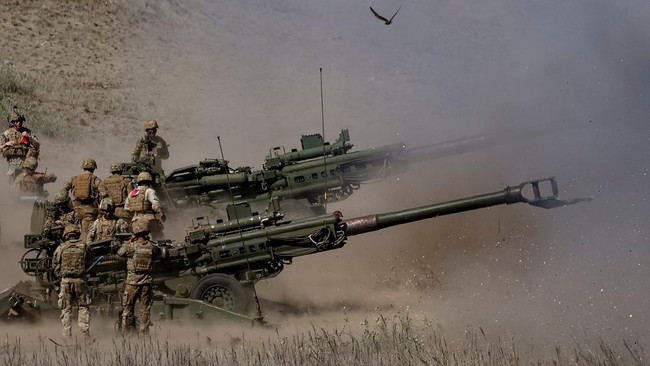
Amid global attention drawn to the Middle East conflict, the United States is demonstrating its military strength in Asia through a large-scale combat exercise with its long-time ally, the Philippines.
The annual military exercise titled Balikatan officially began on Monday (20/4/2026), involving more than 17,000 combined personnel from the US and the Philippines. This exercise is one of the largest in the history of cooperation between the two countries and will last nearly three weeks.
Not only the two countries, this year’s exercise has been expanded to include militaries from Japan, France, and Canada, which have previously signed troop deployment agreements with Manila.
Around 10,000 US military personnel are deployed for this exercise, a significant number described by Washington military officials as evidence of their commitment to the Indo-Pacific region, even as global attention is currently focused on the conflict with Iran.
“Regardless of challenges elsewhere in the world, the United States’ focus on the Indo-Pacific and our strong commitment to the Philippines remains unwavering,” said Lieutenant General of the Marines Christian Wortman at the opening ceremony, as reported by The Associated Press.
The exercise covers various combat scenarios, from battle simulations to live-fire manoeuvres at several strategic locations, including Philippine provinces facing the South China Sea and the Taiwan Strait, two geopolitical hotspots.
Chief of Staff of the Armed Forces of the Philippines, General Romeo Brawner, emphasised that this multinational exercise aims to strengthen deterrence and resilience against potential aggression in the region.
Although not naming a specific country, Brawner is known for vocally criticising China’s increasingly aggressive actions towards Philippine naval and coast guard vessels in the South China Sea, an area claimed almost entirely by Beijing.
In addition to China, those strategic waters are also claimed by Vietnam, Malaysia, Brunei, and Taiwan. However, in recent years, tensions have most frequently occurred between China and the Philippines.
The Chinese government itself has expressed objections to this military exercise, deeming the activity aimed at containing their global rise. However, the Philippine military denies this, asserting that the exercise does not target any country and is also important for preparedness against natural disasters.
The US has repeatedly warned China that they have an obligation to defend the Philippines, Washington’s oldest ally in Asia, if Philippine forces are attacked in disputed areas.
“We remain committed to our shared commitment to upholding international law, respecting sovereignty, and contributing to a free and open Indo-Pacific where countries can prosper without coercion,” said Brawner.
In one exercise scenario, Japanese forces will fire missiles from coastal areas in Ilocos Norte Province, Philippines, to sink a mock enemy ship located about 40 kilometres in the waters around the South China Sea, according to Colonel of the Marines Dennis Hernandez.
Meanwhile, US forces will use sea drones equipped with explosives to continue the attack on the target.
Last year, US Secretary of Defence Pete Hegseth also reaffirmed Washington’s commitment during a visit to Manila. He stated that the Donald Trump administration would continue to work with allies to enhance deterrence against various global threats, including Chinese aggression in the South China Sea.
“Friends need to stand shoulder to shoulder to prevent conflict, to ensure freedom of navigation, whether you call it the South China Sea or the West Philippine Sea,” said Hegseth to Philippine President Ferdinand Marcos Jr.
Source: jawawa.id (https://jawawa.id/newsitem/not-the-middle-east-us-deploys-10-000-troops-near-indonesia-china-alert-zone-1776729046)
Originally published by CNBC Indonesia (https://www.cnbcindonesia.com/news/20260420162126-4-728260/bukan-timur-tengah-as-terjunkan-10000-tentara-dekat-ri-china-siaga), translated from Indonesian