
Not Science: The Real Reason America is Returning to the Moon Revealed
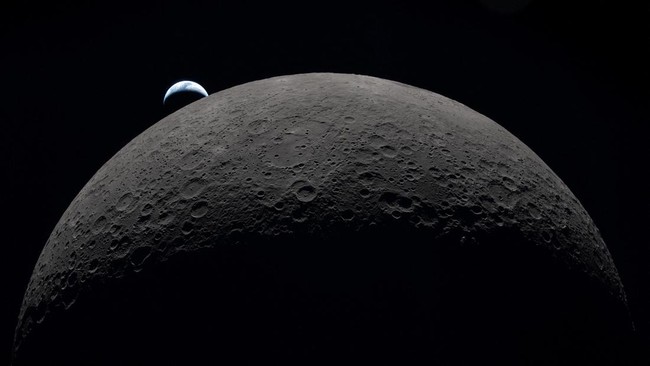
The success of the Artemis II mission, which aims to carry four astronauts around the Moon and back to Earth in April 2scale, has reignited the United States’ ambition to establish a permanent lunar base. However, behind this achievement, several scientists argue that geopolitical competition with China is the primary driver of NASA’s latest lunar exploration programme.
Launched in 2017, the Artemis programme targets the construction of a permanent lunar base before China can realise its similar plans. This move follows Beijing’s declaration of its ambition to build a scientific research station on the Moon and its acceleration of both robotic and crewed lunar exploration programmes over the last two decades.
Priyanka Dhopade, a researcher in sustainable space engineering from the University of Auckland, stated that the link between space exploration and geopolitics is not a new phenomenon. “Space and geopolitics have always gone hand in hand. The difference now is a stronger drive to build a long-term human presence on the Moon, aided by companies such as SpaceX and Blue Origin,” Dhopade noted, as quoted by Science Focus.
According to Dhopade, the scientific justification for building a manned base on the Moon is not as compelling as robotic exploration or the development of international space stations like the Lunar Gateway. “On the contrary, we are seeing budget cuts for US science missions and the effective cancellation of the Gateway programme. Therefore, geopolitics and economics appear to be driving the agenda more than scientific curiosity,” she explained.
A similar view was expressed by Oxford University astrophysicist Becky Smethurst, who assessed that the primary motivation for the Artemis programme is political and economic interest rather than science. “The motivation for this mission is not science. From the beginning, the motivation has been political and economic. So, we are re-entering a space race; this time, the United States wants to defeat China in placing humans on the Moon,” Smethurst stated.
Debates regarding lunar exploration are intensifying due to the presence of high-value resources on Earth’s natural satellite. In addition to water ice, which is essential for supporting life and fuel production, the Moon is believed to contain rare earth elements and helium-3, which could serve as potential future energy sources.
Amidst rising global competition, the United States leads more than 60 nations in signing the Artemis Accords, an agreement governing the peaceful use of the Moon. However, the accords also permit resource extraction and the establishment of safety zones in specific activity areas. This policy has sparked concerns that it could pave the way for nations or private companies to control lunar territories and resources.
“Nothing can stop NASA, the China National Space Administration, or even commercial companies from landing at a location on the Moon, claiming all the resources they can mine, and then profiting from them,” said Smethurst.
Beyond resources, the Moon holds strategic value. It could serve as an ideal transit point for deeper space exploration, including missions to Mars, and can be used to observe Earth. The far side of the Moon even holds potential as a site for technological development away from direct surveillance. The current economic value of the Moon remains difficult to calculate due to limited information regarding its resources and strategic potential. Consequently, the race to the Moon is essentially an effort to secure claims over whatever is eventually proven to be valuable. “The real question is: who will benefit from all of this?” concluded Dhopade.