
Not Poor at All: 18 Indonesian Coal Companies Post Big Profits
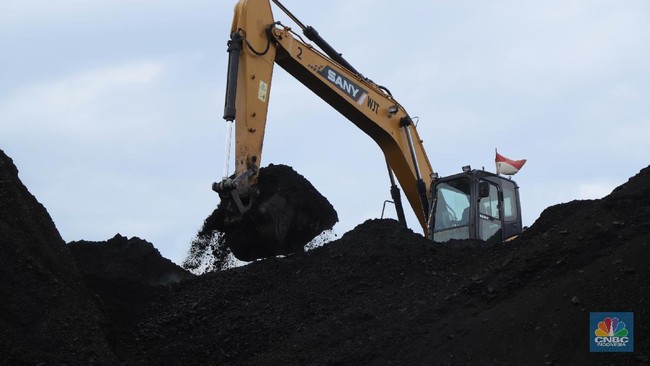
Jakarta, CNBC Indonesia — Miners’ objections to coal production cuts came under the spotlight in early 2026. Industry players warned of risks to operations, difficulties in meeting sales contracts and the threat of redundancies.
However, financial reports for the first half of 2026 showed that many listed companies whose main business is coal were still able to post substantial profits. Some even recorded net profit growth of several hundred per cent.
Of the 18 listed companies reviewed, all reported positive net profit after tax (NPAT) for January–June 2026. Sixteen posted year-on-year profit growth, one returned to profit from a loss, and one saw its profit decline.
Miners concerned about production cuts
The dispute emerged as the government reviewed the 2026 Work Plan and Budget (RKAB) for mineral and coal mining.
Early in the year, Energy and Mineral Resources Minister Bahlil Lahadalia set the 2026 coal production target under the RKAB at around 600 million tonnes, down from actual production of 817.48 million tonnes in 2025.
Bahlil said production controls were intended to balance supply and demand, ultimately helping to raise coal prices. The government wants to prevent excess production from depressing commodity prices while ensuring mining reserves are managed sustainably.
“We have already made the decision. The team has done so; I have said it is about supply and demand. What happens if we produce a lot and prices fall?” Bahlil said after the Indonesia Economic Outlook event at the Danantara Building in Jakarta on Friday, 13 February 2026.
He warned that the country’s natural resources should not simply be sold off cheaply, saying mining must be managed in a measured and sustainable way.
“Let’s not sell our national wealth cheaply. Mining has to be managed sustainably. Our children and grandchildren will also have to carry this country forward,” Bahlil said.
At an event, the Indonesian Coal Mining Association (APBI-ICMA) objected to the production figures under review. The association said proposed cuts varied, at around 40%–70% compared with several previous production benchmarks.
APBI Executive Director Gita Mahyarani warned that lower volumes could make it difficult for companies to cover fixed costs, meet financing obligations and fulfil sales contracts.
The effects could also spread to mining contractors, transport companies, shipping firms and workers.
The Indonesian Mining Association (IMA) voiced similar concerns at the CNBC Indonesia Mining Forum on Friday, 6 March 2026. IMA Deputy Chairman Ezra Sibarani highlighted the scale of the cuts and the lack of clarity over quota-setting criteria, while companies had already prepared investments and made commitments to buyers.
Listed companies’ profits grow, with some rising by hundreds of per cent
Against this backdrop, first-half results showed that several companies were able to maintain or even increase their profits.
Adaro Andalan Indonesia (AADI) recorded the highest NPAT on the list, at Rp8,480.39 billion. This was up 10.52% from Rp7,673.43 billion in the first half of 2025.
Golden Energy Mines (GEMS) reported a 45.03% rise in NPAT to Rp3,937.35 billion. Dian Swastatika Sentosa (DSSA) and Alamtri Minerals Indonesia (ADMR) posted profits of Rp3,121.02 billion and Rp3,117.77 billion respectively.
Several other listed companies also recorded year-on-year profit growth.
The list covers companies that derive the majority of their revenue from coal sales. NPAT refers to profit for the period attributable to owners of the parent company.
All figures are in billions of rupiah, using a fixed exchange rate of Rp17,900 per US dollar for both years.
Large profits are not universal
Astrindo Nusantara Infrastruktur (BIPI) showed a marked improvement. It returned to a positive NPAT of Rp79.53 billion after reporting a loss of Rp177.23 billion in the first half of 2025.
By contrast, Karya Pacific Energy (IATA) was the only listed company on the list to report a fall in NPAT. Its profit dropped 82.43% to Rp17.20 billion, although it remained in positive territory.
The differences show that companies’ financial conditions are not uniform. Positive profits alone are also not enough to conclude that production adjustments have caused no pressure.
Miners’ concerns were raised early in the year and related to future risks, while the financial reports cover a six-month period. Quota adjustments, cost structures and operating conditions can vary from one company to another.
NPAT also covers all of a group’s businesses. Its growth does not necessarily come solely from coal mining activities.
Nevertheless, the first-half 2026 reports show that industry concerns cannot be generalised into losses across all companies. Despite protests over production controls, many listed companies with coal as their main business continued to make substantial profits, with some significantly increasing earnings.
Average coal prices rise, with Indonesia’s supply policy also providing support
Meanwhile, the positive results of several listed companies came amid stronger international coal prices. Refinitiv data on daily closing prices for the Newcastle futures contract NCFMc2 show that the average coal price from January to December 2025 was US$108.52 per tonne.
The average price from the start of 2026 to 20 October was US$133.60 per tonne. That was 23.11% higher than the 2025 average, indicating a substantial price recovery this year.
The increase was also evident in the first-half comparison. The average price from January to June 2026 was US$129.23 per tonne, up from US$107.12 per tonne in January–June 2025. This represents a year-on-year rise of 20.64% in the first half of 2026.
The price movement is consistent with the production controls promoted by Energy and Mineral Resources Minister Bahlil Lahadalia early in the year, aimed at reducing the risk of oversupply and supporting commodity prices. As the world’s largest exporter of thermal coal, changes to Indonesia’s supply policy also affect expectations among international market participants.
In its Coal Mid-Year Update 2026, the International Energy Agency (IEA) said regulatory uncertainty and policies related to Indonesian exports had also exerted upward pressure on prices, particularly for low-calorie coal.
This indicates that Indonesia’s supply policy is one factor supporting prices, alongside higher gas prices amid the Middle East conflict, supply disruptions in other producer countries and developments in electricity demand in Asia.
Source: jawawa.id (https://jawawa.id/newsitem/not-poor-at-all-18-indonesian-coal-companies-post-big-profits-1792633895)
Originally published by CNBC Indonesia (https://www.cnbcindonesia.com/research/20261020151916-128-777882/anti-miskin-18-perusahaan-batu-bara-ri-ini-untung-besar-besaran), translated from Indonesian