
Not ordinary dust: health mitigation amid volcanic eruptions
When a volcano erupts, public attention generally focuses on the eruption column, pyroclastic flows, danger radius, and evacuation routes.
Yet there is another threat that descends almost silently: ashfall blanketing rooftops, roads, public facilities, and water sources. Its colour is grey and at a glance it looks like ordinary dust. That is precisely the problem — volcanic ash is not ordinary dust.
Geologically, volcanic ash consists of rock fragments, minerals, and volcanic glass on a microscopic scale (under two millimetres in diameter). This ash is not combustion residue like wood ash, but rather solid material that is hard, sharp, and abrasive. Its fine particles are easily carried by wind for tens of kilometres and are readily inhaled into the respiratory tract.
Given that Indonesia, according to the Geological Agency and the Centre for Volcanology and Geological Hazard Mitigation (PVMBG), has 127 active volcanoes, the public is not only required to understand when to evacuate. Education on how to minimise exposure to volcanic ash, both during an eruption and in the post-disaster period, is crucial for protecting health.
Health impacts from volcanic ash vary greatly from person to person. They are influenced by particle size, concentration in the air, duration of exposure, chemical composition, weather conditions, and individual vulnerability. In healthy people, brief exposure generally triggers irritation of the nose and throat, coughing, chest discomfort, and a feeling of heavy breathing.
However, the risk is far higher for people with asthma, chronic bronchitis, COPD, and cardiovascular disease. This group is vulnerable to severe shortness of breath, wheezing, and increased need for reliever medication. In addition, children, the elderly, and people with chronic illnesses require extra protection because of their limitations in avoiding exposure or accessing health facilities.
The eyes are among the organs that react most quickly. Sharp ash particles can cause itching, redness, watery eyes, and even corneal abrasions. For this reason, wearing contact lenses is strongly discouraged during ashfall and they must be replaced with protective goggles.
The WHO also reminds us that eruptions disrupt access to clean water, food, and health services, making this crisis far broader than merely respiratory problems and eye irritation.
One of the most common misconceptions is to assume the threat is over once the ashfall stops. In fact, settled ash is easily resuspended by wind, vehicle traffic, and sweeping activities. As a result, the risk of exposure continues to recur even as eruptive activity begins to subside. Therefore, ash clean-up procedures are a vital part of disaster mitigation.
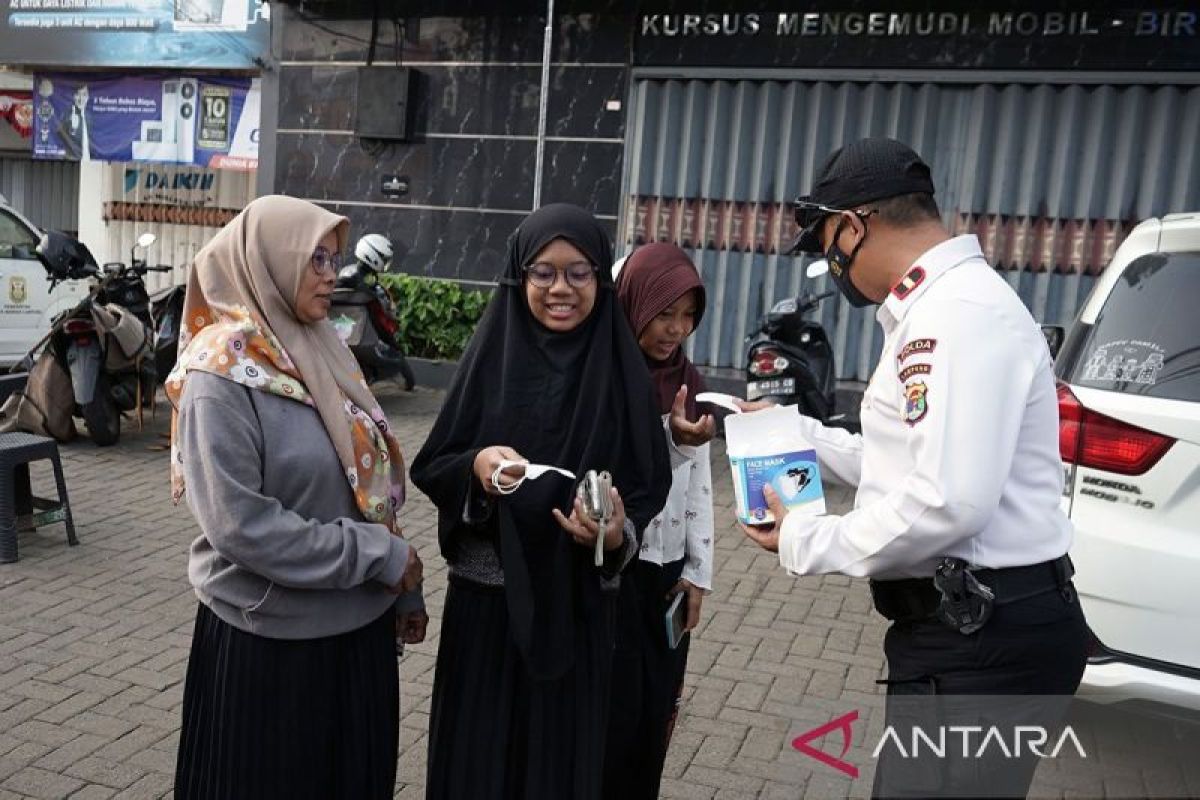
So far, mask distribution has often been the most prominent form of response. This step is indeed important, but it can create a false sense of security as though the threat automatically subsides once a mask is worn. In reality, the primary protective barrier is minimising direct exposure to volcanic ash.
As long as conditions allow, the public is advised to remain indoors in a safe place, keep doors and windows tightly shut, and limit outdoor activities. If forced to be outdoors or to clean up ash deposits, use a particulate respirator (such as an N95) that fits properly and is worn snugly.
It should be remembered that these respirators only filter particles and cannot block toxic gases. If authorities order an evacuation due to the threat of hazardous gases, pyroclastic flows, or lahars, wearing a mask is not a reason to delay evacuating.
Furthermore, adult N95 respirators are not effective for children because of their loose fit. People with chronic heart and lung disease also need to be cautious because the breathing resistance when using a tight-fitting respirator can worsen their condition.
Public health education must therefore not be limited to the call that “everyone must wear an N95”, but must take into account the specific conditions and needs of each individual.