
Not Oil, Iran Aims to Disrupt the Arabs’ Nerve Centre in the Strait of Hormuz
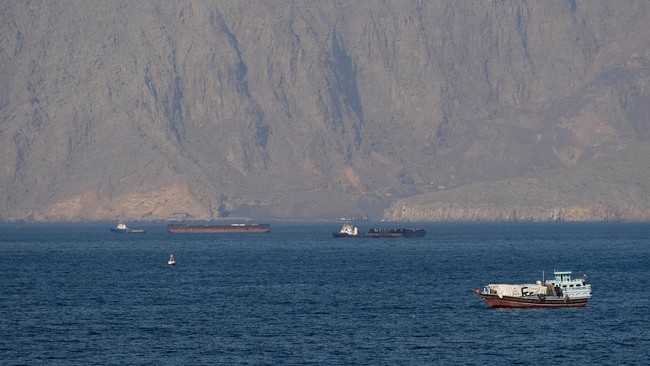
Jakarta, CNBC Indonesia - Geopolitical tensions in the Middle East are spilling into the digital realm after state-aligned Iranian media Tasnim and Fars floated a controversial proposal on Monday, 18 May 2026. Tehran is reportedly seeking to use its strategic control over the Strait of Hormuz to levy taxes and licensing fees on US technology giants traversing submarine cables laid beneath the sea in the region.
The Strait of Hormuz, about 40 kilometres wide, separates Iran and Oman and serves as a corridor for seven vital submarine cables that underpin the rapid development of artificial intelligence (AI) in Gulf states.
The proposed revenue-raising from US tech firms is viewed as intimidating and with a highly questionable legal basis.
What Iran plans to do
According to Tasnim, as cited by The Guardian, the proposal comprises three main strategies to be pursued by Tehran. First, Iran would charge licensing fees to foreign companies using the submarine cables in the area. Second, global tech giants such as Meta, Google, Amazon and Microsoft would be required to operate under the legal umbrella of the Islamic Republic of Iran, implying the need to form joint ventures. Third, Iran aims to monopolise all repair and maintenance services for the submarine cables with unilateral tariffs. Tasnim argues that this would turn the Strait of Hormuz into a strategically important wealth hub, drawing on Article 34 of the United Nations Convention on the Law of the Sea (UNCLOS) of 1982. The rule is claimed to give Iran rights to the seabed of the Strait of Hormuz, even though its surface waters are international navigational waters.
Are there other countries taking similar steps?
The unilateral move planned by Iran is regarded as having no world precedent. Iranian media have referenced Egypt, which has been able to garner annual revenue of around US$250 million to US$400 million from tolls on submarine cables jointly managed by Telecom Egypt. However, infrastructure internet experts from Kentik, Doug Madory, say that comparison is not apt since the Egyptian cables physically cross the country’s sovereign territory, running along highways and oil pipelines. This is entirely different from the situation in the Strait of Hormuz.
Could Iran levy charges on submarine cables?
The plan to collect such charges is considered legally and technically unlikely. A former US State Department official who specifically handles the global internet network said that international sanctions would immediately impede the financial mechanism. In addition, separating data traffic by specific companies within the submarine cable network would be unfeasible.
Given that most of the cables do not terminate in Iran but simply pass offshore, the only viable way for Iran to extract tolls from ships or cables would be through threats, something that has never happened before. On the other hand, physical sabotage by Iran, such as cutting cables in the Strait of Hormuz, is seen as a suicidal move given its limited capabilities. Madory notes that narratives about threats to cut cables in the Baltic or Red Sea are often exaggerated as most damage occurs due to accidents such as ship anchors.
If Iran were to deliberately cut cables, such actions would be detected immediately under the close surveillance of US military air patrols.
What would be the impact of a cable cut in the Strait of Hormuz?
If damage were to occur to cables in the Strait of Hormuz, the impact would likely be to disrupt internal Gulf internet traffic rather than global connectivity. This is because the Strait’s cables primarily serve Gulf states, unlike the Suez route and Egypt, which play a critical role in linking Asia and Europe.
In theory, physical damage to submarine cables is not uncommon and can be repaired quickly by a fleet of repair ships stationed worldwide. However, the situation could worsen in the long term if Iran begins to threaten military action on these sea lanes.
Madory warns that repair ships would not operate in a battle scenario, so security threats from Tehran could prolong the disruption in the region.