
Not MSCI: Economist Says This Factor Poses a Greater Threat to the Rupiah
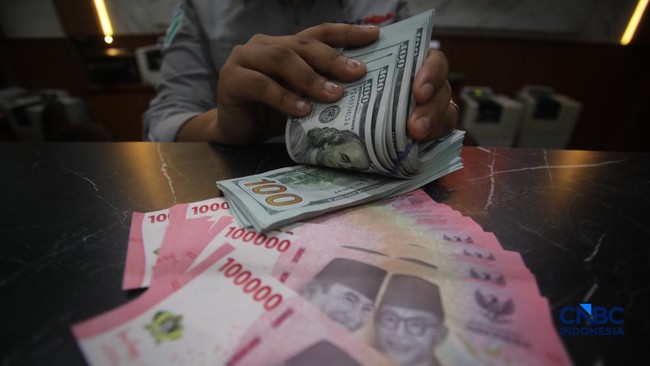
Sabang, CNBC Indonesia — Bank Danamon Chief Economist Irman Faiz says negative sentiment surrounding Morgan Stanley Capital International (MSCI) is not a fundamental driver of rupiah weakness compared with geopolitical factors.
“Looking at the bigger factors, geopolitics is the one that has a greater influence. If geopolitical conditions improve, active funds (foreign investors) will still enter the Indonesian stock market. But if conditions deteriorate, they tend to leave,” Irman said at a Bank Indonesia media briefing in Sabang, Aceh, on Thursday (5 November 2026).
As previously reported, MSCI’s consideration of downgrading Indonesia’s stock market from emerging-market to standalone-market status caused the Jakarta Composite Index (JCI) to fall.
The JCI’s decline was accompanied by foreign capital outflows from Indonesian equities. CNBC Indonesia records show foreign investors sold shares worth Rp95.98 trillion, with net foreign selling reaching Rp16.5 trillion.
Irman stressed that foreign capital outflows from the stock market are not a fundamental factor behind the rupiah’s depreciation against the US dollar. The negative impact of MSCI-related sentiment is also felt more directly in foreign withdrawals from equities than from other financial markets.
According to a study by Irman, every US$100 million of foreign capital outflows from equities causes the rupiah to depreciate by only Rp11–12 from its previous level.
Irman said capital leaving the stock market does not necessarily leave Indonesia: proceeds from share sales may instead be redirected to lower-risk sectors or instruments in the domestic financial market.
“In the stock market, investors can rotate their assets before exiting, so the impact on the rupiah is smaller. This means the direct effect of outflows from equities should be more limited,” Irman said.
He added that MSCI-related sentiment, which has prompted investors to leave the stock market, would not automatically drain all foreign capital from Indonesia.
Investors and market participants are expected to await MSCI’s final announcement in June 2027 on whether Indonesia will remain an emerging market or be downgraded to standalone-market status.
“We expect the impact of MSCI to remain limited through its directional effect before a final decision is made,” Irman said.
Geopolitical factors, by contrast, have a more direct effect on the rupiah because they can trigger capital outflows from both equities and bonds.
Irman explained that escalating geopolitical tensions, particularly in the Middle East, push up global crude oil prices, with wider effects on the economy. Most significantly, higher oil prices can fuel global inflation, potentially keeping interest rates high for longer.
Investors may then favour relatively safe financial assets in developed countries, including the United States, strengthening the dollar. Emerging markets, meanwhile, can become less attractive because they are seen as riskier.
“As a result, portfolio flows—both equities and bonds—tend to move towards safe-haven economies, or countries considered safer. That is why foreign capital flows in both the bond and stock markets have tended to be in deficit in recent months,” he said.
Irman added that outflows from government bonds are more damaging to the rupiah. They can push up yields and increase the ratio of interest payments to state revenue. This, in turn, can lead investors to perceive greater risk in Indonesia’s financial markets.
Source: jawawa.id (https://jawawa.id/newsitem/not-msci-economist-says-this-factor-poses-a-greater-threat-to-the-rupiah-1793926224)
Originally published by CNBC Indonesia (https://www.cnbcindonesia.com/market/20261106065216-17-782809/bukan-msci-ekonom-nilai-masalah-ini-lebih-berbahaya-untuk-rupiah), translated from Indonesian