
Not Just Plecos: Populations of Corydoras and Guppies Exploding in Indonesia
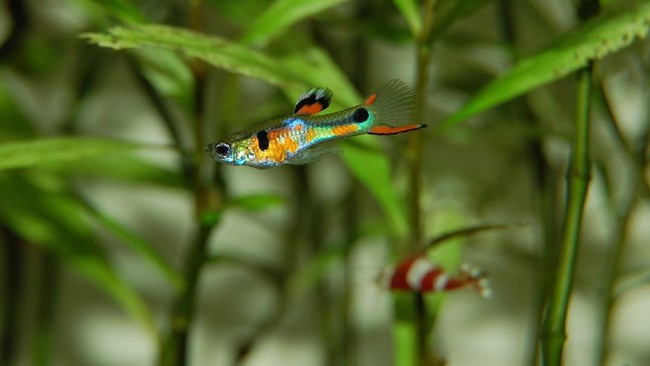
The threat of invasive foreign fish in Indonesia is expanding. The National Research and Innovation Agency (BRIN) has revealed that it is not only plecos dominating various waters, but also corydoras fish whose population is said to be developing uncontrollably and potentially disrupting the ecosystem.
Senior Researcher at the Centre for Research on Biosystematics and Evolution of BRIN, Gema Wahyudewantoro, stated that Indonesia actually possesses a vast wealth of freshwater fish biodiversity. Of the total approximately 15,750 species of freshwater fish in the world, 5,114 species are found in Indonesia.
However, the entry of foreign fish continues to occur in recent decades. Based on BRIN research results, there are around 247 types of foreign fish in Indonesia, and about 50 types of them are suspected to have spread in public waters.
“One of the most prominent examples is the pleco fish. This fish originating from the Amazon River is believed to have entered Indonesia in the 1970-1980 period, initially as an aquarium cleaner. Now, the fish has spread widely in various waters,” said Gema during the Media Lounge Discussion (Melodi) at the BJ Habibie Building, Jakarta, quoted on Thursday (14/5/2026).
Invasive fish generally have adaptation abilities, reproduce quickly, and can compete with local species because they have no natural predators in their new habitat.
This phenomenon also occurs with corydoras and guppy fish, which were previously intentionally brought in for mosquito larvae control to combat malaria. However, in their development, the populations of both fish have expanded without control.
“For example, guppy and corydoras fish that were once brought in to address malaria have instead developed uncontrollably,” he said.
BRIN records that most foreign species enter Indonesia due to human activities. The pathways are diverse, ranging from ornamental fish trade, introduction of consumption fish, ship ballast water, recreational activities such as fishing competitions, to specific needs like pest control.
“Actually, plecos are not predators, but strong competitors. Their activities at the bottom of the waters can disrupt the balance of the aquatic ecosystem,” he stated.
In addition to suppressing local fish populations, the presence of invasive fish is also said to impact the community’s economy by reducing catches of high-value fish. From a health perspective, several studies have even found potential heavy metal content and Escherichia coli bacteria in the bodies of certain invasive fish.
BRIN encourages population control measures through routine capturing, research on reproduction cycles, identification of natural enemies, environmental restoration, public education, and law enforcement.
“Most foreign species enter due to human activities. Without proper management, they can become invasive and threaten local biodiversity. Prevention remains the most effective step, through strengthening policies, research, and increasing public awareness,” said Gema.