
Not Just MSCI: 20 Events That Pummelled the Jakarta Composite Index in 2026
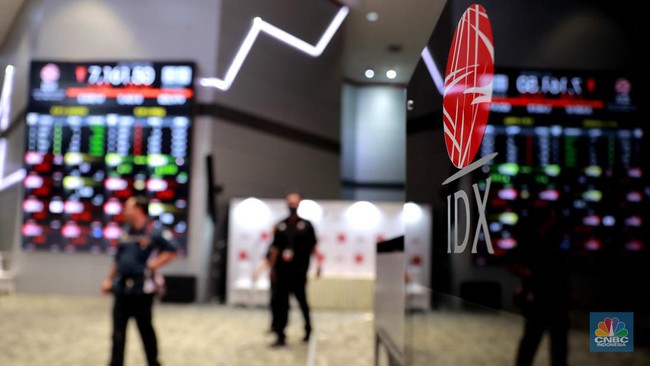
Jakarta, CNBC Indonesia — Over the past 10 months, Indonesia’s capital market has faced a series of major events in 2026.
From MSCI reviews and changes in regulatory leadership to amendments to share-trading rules, various developments have influenced investor sentiment.
Amid this sequence of events, the Jakarta Composite Index (JCI) has experienced sharp swings. After reaching a record high of 9,174.47 in January, it fell to around 4,900 in October.
Looking back at these events offers an overview of the factors that have influenced the JCI’s performance this year.
- JCI hits an all-time high, surpassing 9,100 (20 January)
The JCI began the year by setting a new all-time high.
On 20 January 2026, the index briefly reached 9,174.47 intraday. The milestone did not last long, however, as the market came under heavy pressure towards the end of January.
- MSCI freezes index changes; JCI trading halted (27–29 January)
On 27 January 2026, MSCI announced a temporary freeze on certain adjustments to Indonesian share indices, citing concerns about ownership transparency and free-float calculations.
A day later, the JCI plunged 7.35% to 8,320.56 and trading was halted after its intraday decline reached 8%. Trading was halted again on 29 January as the index continued to fall.
- IDX chief and senior OJK officials resign en masse (30 January)
Just two days after the MSCI review issue emerged, Indonesia’s capital market came under renewed pressure following news that several officials at the Financial Services Authority (OJK) and the Indonesia Stock Exchange (IDX) had resigned.
The leadership changes fuelled policy uncertainty and heightened investor concerns, contributing to volatility in the JCI.
The officials who resigned were:
Iman Rachman, IDX President Director.
Mahendra Siregar, Chairman of the OJK Board of Commissioners.
Mirza Adityaswara, OJK Deputy Chairman of the Board of Commissioners.
Inarno Djajadi, OJK Board of Commissioners member.
I.B. Aditya Jayaantara, OJK Board of Commissioners member.
- US–Iran geopolitical tensions (28 February)
The JCI’s recovery was short-lived after the United States and Israel launched attacks on Iran under Operation Epic Fury on 28 February 2026.
The attacks, which killed Iran’s Supreme Leader Ali Khamenei, raised concerns about disruptions to global energy supplies.
Oil prices subsequently approached US$120 a barrel, while gold reached US$5,400 per troy ounce as demand for safe-haven assets rose. The pressure spilled over into Indonesia’s stock market, with the JCI falling 2.66% to 8,016.83 on 2 March.
- Fitch Ratings document leak (4 March)
In March, the JCI came under renewed pressure after a draft Fitch Ratings document circulated, indicating that Indonesia’s credit outlook could be downgraded from stable to negative. The news added to investor concerns about the economy and the direction of domestic policy.
That same day, Fitch officially lowered Indonesia’s outlook to negative while affirming its BBB credit rating. Amid the pressure, the JCI closed down 4.57% at 7,577.06.
- IDX names nine shares with high shareholding concentration, including BREN and DSSA (2 April)
The IDX released its first list of shares with high shareholding concentration (HSC). Nine listed companies were included in the initial list, among them BREN and DSSA. The announcement was part of efforts to improve ownership transparency after the issue of free float drew attention from MSCI.
- Foreign investors sell shares ahead of MSCI review (7–13 May)
Foreign investors recorded net selling in the Indonesian stock market ahead of the announcement of MSCI’s May Index Review.
Net sales amounted to Rp751.18 billion on 11 May, Rp931.38 billion on 12 May and Rp1.53 trillion on 13 May. The selling pressure came as the market anticipated changes to MSCI’s index constituents.
- Danantara DSI and plans for a single-channel export policy (19–20 May)
The JCI fell on 19 May amid rumours that the government was setting up a special body to handle commodity exports. Concerns about changes to export mechanisms weighed on coal, minerals and palm oil shares.
The following day, the government formally announced plans for a single-channel export policy through PT Danantara Sumberdaya Indonesia (DSI) for coal, palm oil and ferroalloy commodities.
- MSCI rebalancing triggers Rp8.52 trillion in foreign outflows (29 May)
Foreign capital outflows rose again towards the end of May, coinciding with the MSCI index adjustment period. On 29 May, foreign investors recorded net sales of around Rp8.52 trillion. The scale of the transactions also weighed on domestic share trading.
- Moody’s downgrades DIM rating as markets come under renewed pressure (3 June)
The market faced fresh negative sentiment after reports that Moody’s had downgraded Danantara Investment Management (DIM) to Baa2.
At the same time, concerns circulated about a possible change to Indonesia’s credit assessment by S&P. These developments drew investors’ attention to fiscal risks and domestic economic conditions.
- Rupiah breaches Rp18,000 for the first time (4 June)
Pressure on domestic financial markets intensified when the rupiah breached Rp18,000 to the US dollar on the spot market on 4 June 2026. The currency briefly weakened to Rp18,029 per US dollar in morning trading.
At the same time, the JCI fell as much as 5% intraday to 5,644.23, its lowest level in about five years. The decline came amid foreign capital outflows and growing concerns about domestic economic conditions.
- MSCI retains Indonesia’s emerging-market status, but JCI continues to fall (23 June)
MSCI retained Indonesia’s classification as an emerging market in its annual review. However, its assessment of Indonesia’s stock market was extended until November 2026 amid continued concerns about ownership transparency and alleged coordinated trading practices.
Against this backdrop, the JCI closed down 3.56% at 5,883.88 on 24 June.
- Purbaya removed as finance minister, replaced by Suahasil (14 September)
President Prabowo Subianto dismissed Purbaya Yudhi Sadewa as finance minister on 14 September 2026. He was replaced by Suahasil Nazara, who had previously served as deputy finance minister.
The change drew the attention of market participants amid concerns about continuity in Indonesia’s fiscal policy.
- IDX allows shares to trade at Rp1, ending the Rp50 floor (21 September)
On 21 September 2026, the IDX announced that the minimum share price would be lowered from Rp50 to Rp1. The new rule, which took effect on 28 September, allows shares to trade below Rp50. It was one of several changes to trading rules during the year.
- IDX begins short selling (1 October)
After several delays, the IDX officially began short-selling transactions on 1 October 2026. Initially, the facility was available for five shares: PT Astra International Tbk (ASII), PT Bank Central Asia Tbk (BBCA), PT Barito Pacific Tbk (BRPT), PT Bumi Resources Tbk (BUMI) and PT Indofood Sukses Makmur Tbk (INDF).
The mechanism, which allows investors to profit from falling share prices, was initially offered on a limited basis through two securities firms, Semesta Indovest Sekuritas and Ajaib Sekuritas, with a minimum capital requirement of Rp50 million.
- MSCI consults on downgrading Indonesia to standalone-market status (15 October)
MSCI was back in the spotlight after opening a consultation on a possible reclassification of Indonesia from an emerging market to a standalone market. The proposal came amid continuing concerns about transparency and accessibility in Indonesia’s stock market.
Although no final decision had been made, the announcement increased pressure on the domestic market.
- JCI plunges 11%, its worst fall since the 1998 crisis (16 October)
A day after MSCI’s announcement, the JCI suffered its steepest daily fall in 28 years. The index plunged about 11.57% to 5,185.11, exceeding its daily decline during the 2008 global financial crisis.
Trading was temporarily halted after the JCI fell by more than 8% early in the session.
- OJK fines parties linked to DSSA, BREN and CUAN Rp2.1 trillion (16 October)
As the JCI slumped, the OJK imposed administrative penalties totalling Rp2.1 trillion on several parties over capital-market violations involving the shares of PT Dian Swastatika Sentosa Tbk (DSSA), PT Barito Renewables Energy Tbk (BREN) and PT Petrindo Jaya Kreasi Tbk (CUAN).
The penalties related to findings of share-trading manipulation and violations in the allocation of shares during initial public offerings (IPOs).
The fines by share were:
DSSA: Rp1.5 trillion.
BREN: Rp500 billion.
CUAN: Rp100 billion.
The sanctions were imposed on parties found to have breached the rules, and not automatically on the listed companies themselves.
- JCI tumbles; 7% lower auto-rejection limit reinstated (19 October)
The IDX reinstated a 7% lower auto-rejection limit from 19 October 2026, down from 15%. The move followed the JCI’s fall of more than 11% in the previous session.
The adjustment limits how far share prices can fall in a single trading day, in an effort to curb excessive selling pressure.
- IDX excludes 80 HSC shares from JCI, including BREN and DCII (21 October)
The IDX officially announced on 21 October 2026 that shares categorised as having high shareholding concentration (HSC) would be excluded from the JCI calculation. The policy will take effect on 2 November and is intended to improve the index’s representation of market conditions.
As of 19 October 2026, 80 shares were on the HSC list, including PT Barito Renewables Energy Tbk (BREN) and PT DCI Indonesia Tbk (DCII). Together, these shares accounted for about 18% of the JCI’s weighting.
The IDX had previously excluded HSC shares from the IDX30, LQ45 and IDX80 indices.
Source: jawawa.id (https://jawawa.id/newsitem/not-just-msci-20-events-that-pummelled-the-jakarta-composite-index-in-2026-1793595129)
Originally published by CNBC Indonesia (https://www.cnbcindonesia.com/research/20261102092216-128-781416/tak-cuma-msci-ini-20-drama-yang-buat-ihsg-babak-belur-sepanjang-2026), translated from Indonesian