
Not Just Modern: Digital Marriage Registration Also Makes Data More Secure
Jakarta, VIVA – Digitalisation efforts are beginning to reach matters long considered deeply personal, including marriage registration in the Catholic Church. Beyond merely keeping pace with the times, digital systems are also seen as capable of making data more secure and well-organised.
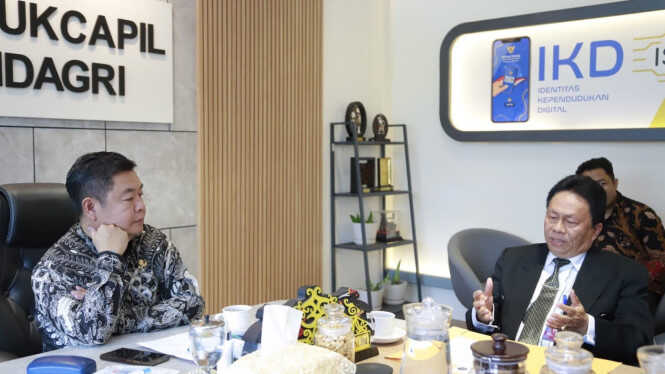
This was discussed during an audience between the Directorate General of Catholic Community Guidance at the Ministry of Religious Affairs and the Directorate General of Population and Civil Registration (Dukcapil) at the Ministry of Home Affairs in Jakarta on Monday, 16 February 2026. The meeting focused on plans to integrate digital-based marriage registration with the national civil administration system.
Director of Catholic Religious Affairs, Salman Habeahan, stressed that this transformation is not merely about modernising services. According to him, digital registration has a direct impact on legal certainty and ease of document access for the faithful.
“Digital marriage registration in Catholic churches is not just about modernisation, but also about guaranteeing legal certainty and integrating population data,” said Salman. He added that the system would make it easier for congregants to access official documents more practically and swiftly.
Furthermore, digitalisation is considered capable of strengthening the government’s programme to develop the Digital Population Identity, or IKD. Data connected directly to the national system would make marriage information more valid and less likely to become separated from the main database.
Director General of Dukcapil, Teguh Setyabudi, welcomed the initiative and emphasised the importance of following established mechanisms. Data integration, he said, must remain within the regulatory framework already set by the government.
“The Directorate General of Dukcapil fully supports digital marriage registration as long as it continues to follow applicable procedures to support government digitalisation through IKD as its primary basis,” Teguh explained. He expressed hope that this collaboration could improve data accuracy whilst broadening benefits for the public.
The integration process will begin with the signing of a Cooperation Agreement between the Directorate General of Dukcapil and the Directorate General of Catholic Community Guidance. This stage serves as the initial gateway to ensure the utilisation of population data proceeds in a legal, secure, and structured manner.
Head of the Population Data Administration Services Working Team, Ni Luh Mertasih, explained that the Cooperation Agreement plays an important role in managing data access. “The Cooperation Agreement serves as a crucial instrument to ensure the utilisation of population data proceeds in accordance with the provisions of prevailing laws and regulations,” she said.