
Not Just Indonesia: India, Pakistan, and China Also Restrict Dollar Purchases
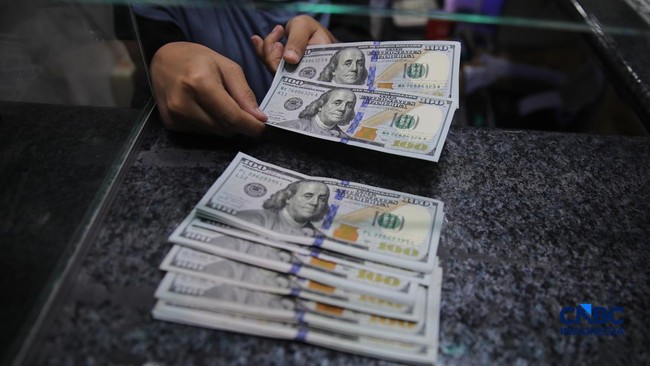
Bank Indonesia (BI) is further tightening rules on foreign exchange purchases. Starting 1 July 2026, the purchase of foreign currency against the rupiah without supporting documents or an underlying transaction will be limited to a maximum of US$10,000 per entity per month.
This means that buying US dollars or other foreign currencies above US$10,000 can no longer be done freely. Transactors must present supporting documents explaining the need for the foreign currency purchase.
BI Deputy Governor Destry Damayanti stated that this step is taken to strengthen foreign exchange transaction governance domestically. BI wants to ensure that large dollar purchases have a clear purpose, rather than being for speculation or taking advantage of rupiah weakness.
“We are doing this to enforce the existing governance rules. Purchases of dollars, especially above US$10,000, must have an underlying,” Destry said during a press conference on Thursday (18/6/2026).
Previously, BI had lowered the limit for dollar purchases without underlying to US$25,000 per person per month. Now, the limit is further reduced to US$10,000 per entity per month.
This tightening is intended to deepen the Money Market and Foreign Exchange Market (PUVA) to make it more advanced, efficient, and prudent. The policy is also aimed at maintaining the attractiveness of foreign investment and strengthening the effectiveness of monetary policy, including maintaining rupiah exchange rate stability.
BI also emphasised that it will tighten supervision of banks. One concern is the use of underlying documents, which must not be used repeatedly for different transactions.
“Underlying documents cannot be used multiple times. This is what we are doing, conducting direct supervision of banks. We warn banks whose governance is still poor. Because this applies in all countries,” Destry explained.
In addition to foreign exchange purchases, BI is also adjusting the threshold for supporting documents required for outgoing transfers in foreign currency. From 1 July 2026, foreign currency transfers abroad exceeding US$25,000 must be accompanied by supporting documents. Previously, the documentation requirement applied to transfers above US$50,000.
Nevertheless, BI stressed that this policy does not prohibit the public or businesses from buying foreign currency. As long as the transaction has a clear need and is supported by valid documents, foreign exchange purchases can still proceed.
“We are not restricting. If there is a need and an underlying, we will support it,” Destry concluded.
Such policies are not entirely unusual. Several other countries also have rules governing the purchase of dollars or foreign currency domestically. The forms vary, ranging from nominal limits and annual quotas to mandatory supporting documents.
However, the goal is relatively similar: to ensure orderly foreign exchange demand and prevent excessive pressure on the domestic currency.
- China: Dollar Purchases Allowed, but with an Annual Quota
China is one of the clearest examples. In the Bamboo Curtain country, individual foreign exchange purchases and exchanges are subject to an annual quota of US$50,000.
If the need for foreign exchange exceeds the quota, customers must present additional supporting documents or an underlying to the bank. These documents serve as proof that the foreign exchange purchase has a legitimate purpose, such as education, healthcare, travel, or other permitted needs.
Additionally, China regulates the use of domestic bank cards for cash withdrawals abroad. The aim is to prevent citizens from withdrawing large amounts of foreign currency overseas to circumvent domestic foreign exchange rules.
- Pakistan: Daily and Annual Limits
Pakistan also has rules governing foreign exchange purchases. The State Bank of Pakistan limits individual purchases of foreign currency through money changers to US$10,000 per person per day and US$100,000 per person per year.
These rules apply not only to cash purchases. Foreign exchange purchases via cheque, bank transfer, or outward remittances are also counted within these limits.
The background to this policy is not much different from that of Bank Indonesia.
Pakistan has faced significant pressure on its currency, foreign exchange reserves, and import needs. In such conditions, excessive dollar demand from the public can exacerbate pressure on the local currency.
Therefore, foreign exchange purchase rules were tightened. The goal is to ensure dollar purchases are better documented and not easily used for speculation.
- India: Not Just Dollar Purchases, but Overseas Transfers Are Also Regulated
India takes a slightly different approach. The country looks not only at cash dollar purchases but more broadly at the use of foreign exchange by citizens for overseas needs.
Through the Liberalised Remittance Scheme (LRS), Indian citizens are allowed to send or use foreign exchange up to US$250,000 per year for permitted transactions.
These needs can vary, such as for overseas education, medical treatment, private travel, investment, gifts, donations, or helping family living abroad.
India also does not permit all types of transactions. Certain uses of foreign exchange are prohibited, such as buying lottery tickets, margin trading, or other activities deemed risky and non-compliant with regulations.
- Bangladesh: Foreign Exchange for Travel Also Subject to Quotas
Bangladesh also has foreign exchange restriction rules, particularly for overseas travel needs.
Adult Bangladeshi citizens can carry or use foreign exchange up to US$12,000 per year for private travel abroad. Within this amount, there is a quota breakdown for travel to SAARC countries and Myanmar.