
Not Just Illegal, Legal Imported Clothing Also Threatens SMEs
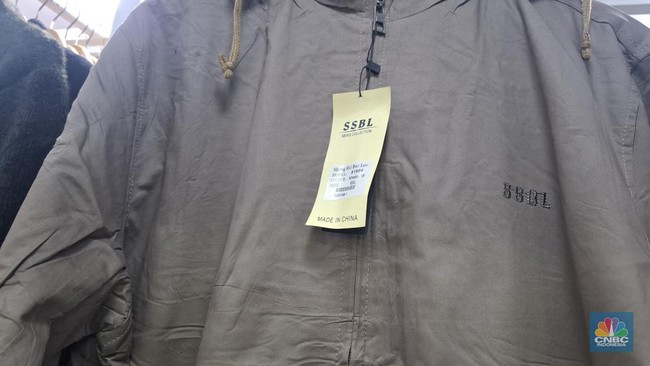
Small and medium-sized enterprises (SMEs) in the convection industry are requesting that the government focus not only on eradicating illegal clothing imports but also on regulating the entry of legal imported products at low prices. This situation is considered equally capable of threatening the sustainability of domestic convection businesses.
The Chairman of the Association of Creative Convection Entrepreneurs (IPKB), Nandi Herdiaman, stated that the flood of imported products is one of the primary issues facing convection SMEs. According to him, imported goods circulating in the market, including through marketplaces, force local products to face increasingly heavy price competition.
“Imports must be viewed from both sides. Illegal goods must certainly be dealt with; that is the domain of Customs and law enforcement. However, legal imports must also be controlled if the goods are cheap and ultimately kill the domestic industry,” Nandi told CNBC Indonesia on Monday (5/10/26).
Therefore, the government needs to view the import issue more comprehensively, as different entry routes have different characteristics. Handling illegal goods requires supervision and enforcement, whereas legal imports relate to trade policy and industrial protection.
Inter-agency coordination is essential to ensure that import policies do not increase pressure on SMEs. Furthermore, the convection sector has different characteristics compared to large-scale garment industries, which are generally oriented towards mass production and export markets.
“Therefore, the Ministry of Trade, the Ministry of Industry, and Customs must each play their respective roles in fixing this issue. We must ensure that when SMEs raise concerns about illegal imports, they are not simply directed to agencies that lack the necessary authority,” said Nandi.
The issue of cheap imported products cannot be resolved solely through enforcement against illegal goods. Products entering officially still need attention if their prices are too low and have the potential to erode the market for domestic SME products.
This condition requires government attention because the sustainability of convection SMEs is also linked to the domestic textile industry supply chain. If the market for local products continues to erode, the demand for domestically produced textile raw materials is also at risk of weakening.
Nandi also requested that the government not only view trade performance from the aggregate perspective of exports and imports. In his view, trade indicators must be viewed alongside the condition of domestic producers, especially SMEs that have long absorbed local textile products.
“Indonesia’s trade is said to be good, but we must look at whose goods are being sold on marketplaces. Do not just look at the trade figures; look at how the producers are doing. If producers, SMEs, and the domestic textile industry continue to decline, then there is a problem that must be addressed,” Nandi emphasised.
Source: jawawa.id (https://jawawa.id/newsitem/not-just-illegal-legal-imported-clothing-also-threatens-smes-1791190445)
Originally published by CNBC Indonesia (https://www.cnbcindonesia.com/news/20261005132813-4-773371/bukan-cuma-ilegal-pakaian-impor-legal-juga-bikin-ukm-baju-terancam), translated from Indonesian