
Not Just Hormuz! Iran Could Close This Strait, Sending Oil Prices Skyrocketing
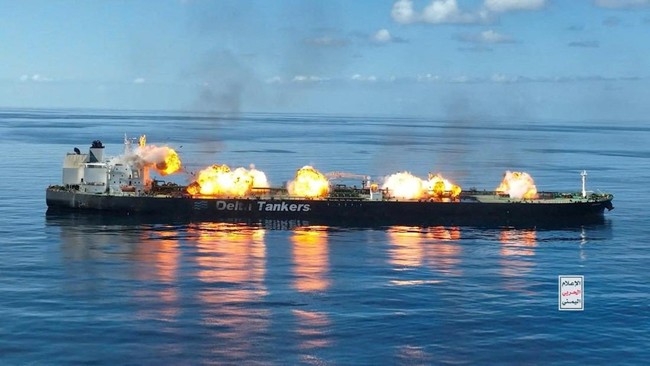
The escalating conflict between the United States and Iran could enter a far more dangerous phase. After successfully disrupting shipping in the Strait of Hormuz, Iran is now signalling it is ready to play its riskiest card by using its allies, the Houthi group in Yemen, to close the Bab el-Mandeb Strait, the strategic waterway connecting the Red Sea to the Gulf of Aden. If this scenario materialises, two of the world’s most important energy shipping lanes could be paralysed simultaneously. Analysts warn this could shake global trade and cause oil prices to surge dramatically.
As US strikes on Iranian territory intensify and Houthi attacks increase concurrently, Tehran is seen to be widening the scope of the conflict to increase pressure on Washington. The strategy involves threatening global trade and energy supply routes, not only in the Persian Gulf but also in the Red Sea. Iran has already demonstrated its most important strategic asset by disrupting ship traffic in the Strait of Hormuz. Now, the country is considered ready to open a second pressure point at the Bab el-Mandeb Strait, a narrow passage linking the Red Sea to the Gulf of Aden and a transit route for Saudi Arabian oil exports and a large portion of international trade.
Mohammed al-Farah, a member of the Houthi political bureau, accused Washington of pushing Saudi Arabia to attack Yemen and said such actions would not benefit the United States. “If the current situation worsens further, the Bab el-Mandeb Strait and the Strait of Hormuz will be closed in an operational alliance. Oil prices will then surge to US$200 per barrel in a terrible shock,” he said.
Middle East expert Fawaz Gerges said Iran wants to show the United States that it can threaten both shipping lanes simultaneously. According to him, this move transforms a previously bilateral conflict into a direct threat to the sea lanes that sustain global energy trade. “Iran is willing to go to any lengths,” Gerges said. “Now (Tehran) is escalating both around and in the wider region. The message is it’s not just Hormuz, but Bab el-Mandeb is also at risk.”
Analysts warn the greatest danger is not necessarily an imminent full-scale war, but rather “mission creep”, a situation where both sides slowly and continuously escalate without directly entering open warfare. With the conflict now spreading from the Persian Gulf to the Red Sea, the threat to international trade and energy supplies is expected to grow. This pressure could force both Washington and Tehran back to the negotiating table before the world’s two most important oil chokepoints become the main theatre of conflict.
Dennis Ross, a former US peace negotiator for the Middle East, said Washington’s goal is to change Iran’s strategic calculus. “The question is how to change Iran’s calculation so that they are ready to come back and talk, but not just talk, rather to actually formulate an acceptable arrangement,” Ross said. The Houthi group has previously proven its ability to disrupt global trade through Bab el-Mandeb. After the Gaza war erupted in October 2023, the Iran-backed group launched a series of attacks on commercial vessels in the Red Sea, stating their targets were ships linked to Israel as a show of support for the Palestinian people. The attacks forced global shipping companies to reroute vessels around southern Africa, causing logistics costs to spike sharply. The situation also triggered US and British airstrikes and the formation of a multinational naval mission to protect international shipping.
Andreas Krieg, a senior lecturer at King’s College London, described the latest Houthi threat as “another nuclear option” for Iran after the Strait of Hormuz. He said this card would likely only be played if the Islamic Revolutionary Guard Corps (IRGC) concluded that open war was unavoidable. However, he cautioned that if Washington intensifies strikes on Iran’s vital infrastructure, Tehran could respond by using its allies in Yemen to close Bab el-Mandeb, thereby worsening the economic shock already triggered by the crisis in the Strait of Hormuz.
Abdulaziz Sager, chairman of the Saudi Arabia-based Gulf Research Center, said Gulf states increasingly believe that diplomatic space with Iran is narrowing, even though they understand the cost of a wider conflict would be enormous. “Whether Iran wins or Iran loses, both carry consequences for the region,” Sager said. He assessed that the Houthis still have the capability to disrupt shipping in Bab el-Mandeb, but they are unlikely to escalate without direct direction from Tehran. Any Houthi attempt to threaten international shipping lanes could trigger a broader military response from the US and its allies to significantly weaken the group’s capabilities.