
Not Just an Exchange, Indonesia Is Building Price Sovereignty
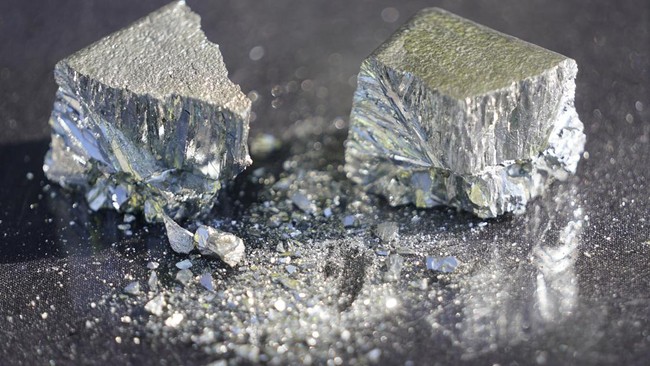
Indonesia is entering a new chapter in its economic policy. President Prabowo Subianto is pushing for the establishment of a Strategic Mineral and Commodities Exchange, with the idea that Indonesia should not forever remain a price taker, but rather be able to build its own reference price. The plan is even directed to begin operating on 1 January 2027.
This idea is important. However, one thing needs to be placed proportionally: building an exchange does not automatically mean building a world price.
Indonesia has actually long had commodity futures trading. The government has for several years placed the strengthening of the Indonesia CPO Exchange as part of efforts to build a price reference. In its 2025 performance report, Bappebti itself acknowledged that transactions on the Indonesia CPO Exchange are still not optimal for carrying out that function.
This is where public discussion should move one step further. The issue is no longer simply whether Indonesia can have an exchange, but rather what makes a price formed in Indonesia trusted by the world?
This question is important because Indonesia actually has substantial capital. BPS recorded Indonesia’s exports throughout 2025 reached US$282.91 billion, an increase of 6.15 percent compared to 2024. Non-oil and gas exports even reached US$269.84 billion.
In the mineral sector, Indonesia’s position is also strong. Government data shows Indonesia’s nickel reserves are around 57 million tonnes of metal, or about 23 percent of world reserves. Indonesia has even become the world’s largest nickel producer. But production strength does not automatically turn into price strength.
This is the paradox that needs to be understood. A country can have abundant resources, large production and a high export share, but its commodity prices still refer to markets formed elsewhere. Because a world price is not merely a number resulting from calculation. Price is information born from market interaction.
A new price will only become a reference if there is adequate transaction volume, liquidity, information transparency, clear quality standards, credible settlement mechanisms, and market participants who believe that the price represents actual supply and demand conditions. Therefore, Indonesia’s challenge is not building a ‘price board’, but building a price formation ecosystem.
The exchange must be connected to the physical market. Traded commodities must have clear quality standards. Warehouses and receipt systems must be verifiable. Inspection must be independent. Transaction settlement must be trustworthy.
Banks and financial institutions need to provide financing and hedging instruments. And no less importantly, global players must be given a reason to participate in trading. Without all of that, we risk having a price recorded in Indonesia, but not necessarily a price used by the world.
The CPO experience provides a valuable lesson. The government has indeed built the Indonesia CPO Exchange as part of efforts to strengthen domestic price formation. However, Bappebti’s report shows that the exchange’s transactions are still not optimal for becoming a price reference. This means the main challenge is not making a market exist, but making a market live.
A market lives when producers need the exchange to sell, industry needs the exchange to buy, traders use it to manage risk, banks use it as a basis for financing, and investors are willing to take positions. When all of this happens simultaneously, the price formed begins to have informational power.
At this point, the idea of a commodity exchange should be linked to downstreaming. Downstreaming is not only about turning ore into value-added products. It can also create commodities with more uniform specifications so that they are easier to trade and use as a contract basis.
Nickel is an interesting example. Indonesia has enormous supply strength, but world nickel prices still have a strong reference from the London Metal Exchange. On the other hand, Indonesia’s own policies show that changes in domestic production can influence global supply perceptions. The government even noted that nickel prices moved after the announcement of production adjustments.
This shows that Indonesia actually already has market power. The next task is to turn market power into price-discovery power. There is another dimension that is rarely discussed: price is strategic data.
Price is not merely a number to determine how much an exporter receives. Price signals scarcity to investors, provides a basis for industry to calculate costs, helps banks assess risk, becomes a contract reference, and influences production decisions.
If the prices of Indonesia’s strategic commodities continue to be formed mainly abroad, then some of the most important economic information about Indonesia’s resources is also formed abroad.
Therefore, the ambition to build an Indonesia Reference Price can actually be read more broadly as an effort to build price information sovereignty. That sovereignty does not mean the government sets prices as it wishes. Quite the opposite. A credible price must be born from a transparent, competitive and open market. The government needs to be the guardian of the rules of the game, not a player that determines the numbers.
The measure of success also needs to be expanded. Do not only look at the exchange’s transaction value. Also measure how many physical transactions use the exchange, how great its liquidity is, how many international players participate, how strong the relationship is between exchange prices and the physical market, and finally: how many international trade contracts use Indonesian prices as a reference.
With such measures, the ambition to become a price setter will be tested not by the size of the building or the number of commodities listed, but by whether the world ultimately looks to Indonesia when it wants to know the price of nickel, CPO, tin or other strategic commodities. That is the real meaning of price sovereignty.
Source: jawawa.id (https://jawawa.id/newsitem/not-just-an-exchange-indonesia-is-building-price-sovereignty-1787320398)
Originally published by CNBC Indonesia (https://www.cnbcindonesia.com/opini/20260821184205-14-761429/bukan-sekadar-bursa-indonesia-sedang-membangun-kedaulatan-harga), translated from Indonesian