
Not Just a Global Technology Market, Luhut Urges Indonesia to Develop AI with National Capacity
The rapid and swift development of artificial intelligence (AI) raises the question of whether AI will make human life better, or instead cause humans to lose something most fundamental about themselves.
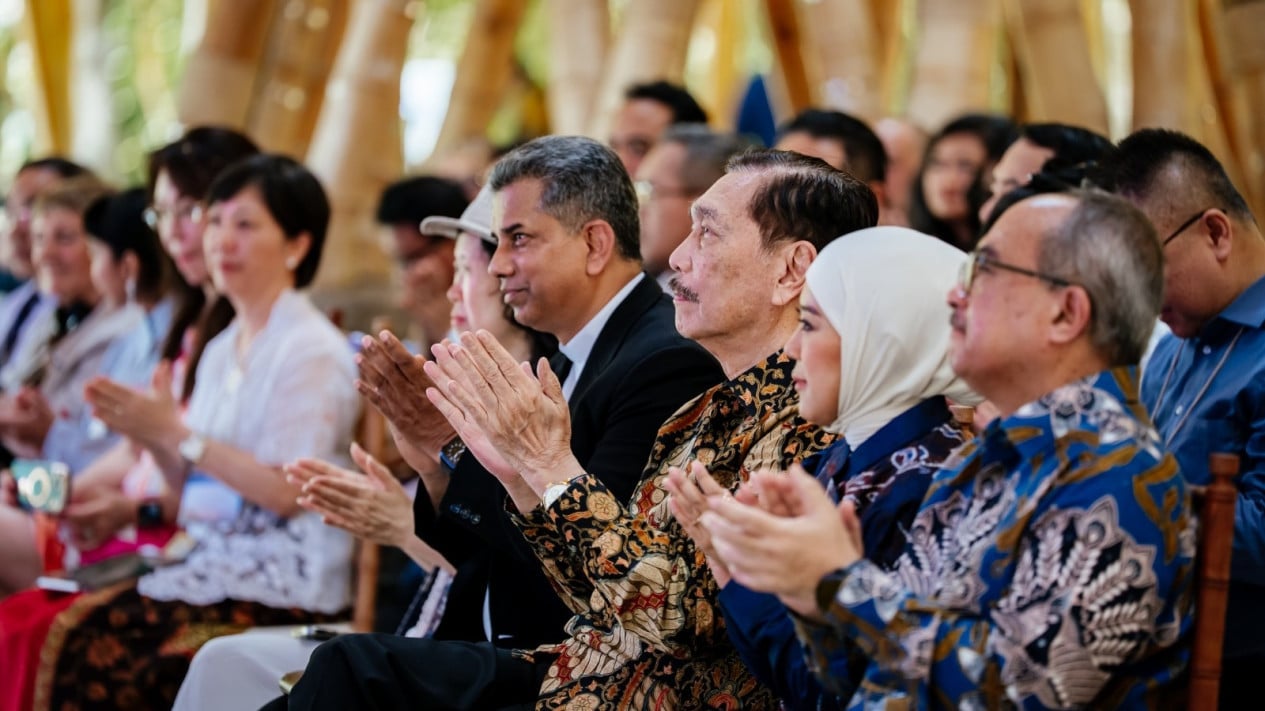
That question was one of the key focuses of the ‘World Encounter Summit 2026’, which brought together government leaders, youth, academics, religious figures, technology companies and civil society from various countries in Bali.
Chair of the National Economic Council (DEN), Luhut Binsar Pandjaitan, said Indonesia must build its own capacity so that it does not merely become a user of technology, including in the utilisation of AI.
“One way is through the development of AI supported by clean energy and STEM education,” Luhut said in a statement on Sunday, 6 September 2026.
Meanwhile, Minister of Communication and Digital Affairs, Meutya Hafid, stressed that the high use of AI by Indonesia’s younger generation must be accompanied by strengthened research, talent, infrastructure and policy.
According to her, the use of AI alone does not automatically constitute national capacity. “Indonesia has the opportunity to become a creator of technology, not merely a market for AI products from other countries,” Meutya said.
Executive Director of Scholas Occurrentes, Maria Paz Jurado, reminded that the biggest question in the AI era is not only about what machines are capable of doing.
“Because the world must also determine what kind of human being it wants to build together with that technology,” she said.
The series of forums began with the Bali Harmony Dialogue at the United In Diversity (UID) Bali Campus, located in the Kura Kura Bali Special Economic Zone (KEK).
The forum was then continued with the XI International Scholas Chairs Congress 2026 on 4-6 September 2026.
Participants from five continents discussed the impact of AI on various aspects of life, from education, the world of work, the mental health of younger generations, democracy, to social relations.
However, one of the discussions that drew considerable attention was the gap in AI development. This is because not all countries have equal access to data, computing power, digital infrastructure, talent, or the ability to regulate the technology.
Therefore, the equitable distribution of AI benefits is considered not merely a technological issue, but also one concerning social, economic, moral and environmental justice.
Source: jawawa.id (https://jawawa.id/newsitem/not-just-a-global-technology-market-luhut-urges-indonesia-to-develop-ai-with-national-capacity-1788717051)
Originally published by VIVA.co.id (https://www.viva.co.id/bisnis/1926731-tak-hanya-jadi-pasar-teknologi-global-luhut-dorong-ri-kembangkan-ai-dengan-kapasitas-nasional), translated from Indonesian