
Not Iran, These 2 Asian Countries Become Victims of Trump's Strait of Hormuz Blockade
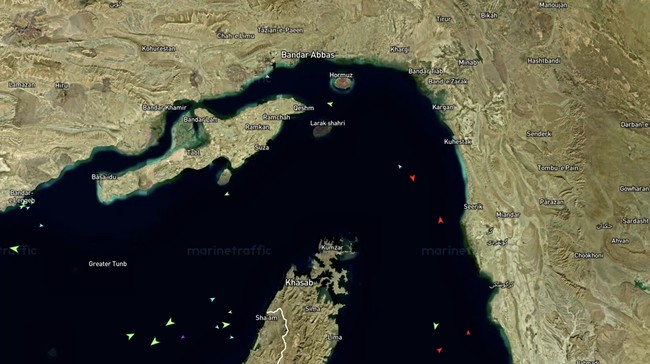
Jakarta, CNBC Indonesia - The United States’ (US) move to block Iran’s shipping routes in the Strait of Hormuz is beginning to trigger widespread impacts on the global energy market. The policy, which started on Monday, not only pressures Tehran but also hits major countries such as India and China.
Washington is known to have prevented ships from entering and exiting Iranian ports via the Strait of Hormuz after peace negotiations failed. This route is a vital passage for around 20% of the world’s oil supply, so the effects are immediately felt by major energy importing countries, particularly India.
India faces heavy pressure as it must lose two main supply sources at once. In addition to the disruption of Iranian oil flows due to the blockade, the US exemption for purchasing Russian oil also officially ended on 11 April.
Mukesh Sahdev, head of oil analysis at X. Analysts, said this situation narrows India’s room to manoeuvre. “India is facing increasing supply pressures with the loss of Iranian oil supplies, compounded by not receiving Russian oil supplies,” he told CNBC International on Wednesday (15/4/2026).
India itself imports more than 85% of its oil needs, or around 5.5 million barrels per day. The disruption in the Strait of Hormuz causes the country to lose around 3 million barrels per day that previously passed through that route.
This situation forces Indian refineries to seek alternative sources, particularly from Russia. However, the end of the US exemption makes that option increasingly limited.
India’s situation is even more vulnerable because its energy reserves are relatively small. Sahdev noted that India’s oil reserves are only around 160 million barrels, or enough for about 30 days. Compare that to China, which has reserves for up to around 300 days.
This pressure is starting to be reflected in the economic conditions. Private sector activity in India in March slowed to the lowest level since October 2022, triggered by weakening domestic demand and increasing inflationary pressures due to the Middle East conflict.
The Indian Ministry of Finance has even warned that the projected economic growth of 7.0%-7.4% is at risk of significant decline due to surging energy prices and supply chain disruptions.
China
Meanwhile, the blockade’s impact has also provoked a strong reaction from China. The Beijing government described the US action as dangerous and irresponsible.
Spokesman for the Chinese Foreign Ministry, Guo Jiakun, said the blockade has the potential to damage regional stability. “China believes that only by achieving a comprehensive ceasefire and ending the war can we ease the situation in the strait,” he stated.
As the largest buyer of Iranian oil, China has a significant interest in keeping that route open. The closure of the Strait of Hormuz directly disrupts energy supplies to the country and has the potential to pressure its economy.
On the other hand, the global oil market is beginning to be volatile. Brent crude oil prices fell around 1% to US$98.44 per barrel, or approximately Rp1.67 million. Meanwhile, West Texas Intermediate (WTI) oil fell 2.6% to US$96.48 per barrel, or approximately Rp1.64 million.
Although prices temporarily corrected amid hopes for a diplomatic solution, analysts warn that the market remains in a tight condition. The end of the exemption for purchasing Russian oil has the potential to push prices back up.
Source: jawawa.id (https://jawawa.id/newsitem/not-iran-these-2-asian-countries-become-victims-of-trumps-strait-of-hormuz-blockade-1776246667)
Originally published by CNBC Indonesia (https://www.cnbcindonesia.com/news/20260415120815-4-726918/bukan-iran-2-negara-asia-ini-jadi-korban-blokade-selat-hormuz-trump), translated from Indonesian