
Not Imported: This New LPG Alternative Gas Comes from Within Indonesia's Earth
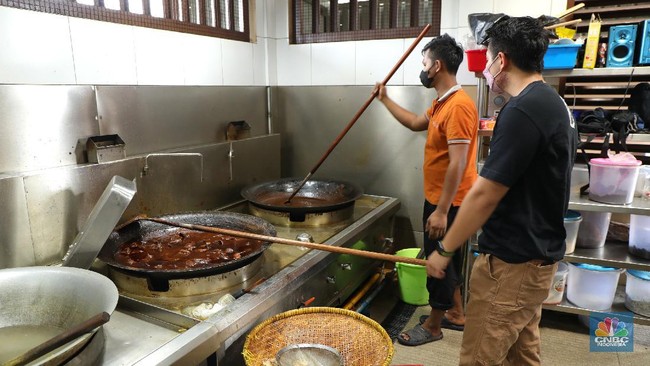
The government is currently preparing a new cooking fuel product as an alternative energy source to replace Liquefied Petroleum Gas (LPG). This is because the majority of LPG supplies still rely on imports.
Amid the current global geopolitical uncertainties, coupled with disruptions to the global energy supply chain, Indonesia must consider alternative energy sources and, of course, reduce dependence on foreign energy supplies.
It should be noted that domestic LPG needs reach 8.6 million tonnes per year, but the government can only produce 1.6-1.7 million tonnes domestically, meaning the rest still relies on imports. If calculated, the import portion of domestic LPG can reach 80-84% of domestic needs.
So, why must Indonesia’s LPG imports be that large? Doesn’t Indonesia have vast natural gas resources?
The Minister of Energy and Mineral Resources (ESDM), Bahlil Lahadalia, explained that the main obstacle to domestic LPG production lies in the low content of C3 (propane) and C4 (butane) in Indonesia’s natural gas, which are the main raw materials for LPG.
On the contrary, Indonesia’s natural gas reserves are dominated by C1 (methane) and C2 (ethane) types, which are abundant and spread across all oil and gas fields in Indonesia, but are more suitable for conversion into pipeline gas or Compressed Natural Gas (CNG).
With the greater content of C1 and C2 in Indonesia’s oil and gas, the government has now decided to develop this gas into CNG.
“The problem is the question I always get: why don’t we produce LPG domestically? We have abundant gas. We no longer import gas. All gas is for domestic industry. We even export 30% of our total gas lifting. But why do we import LPG? Because LPG’s raw materials are C3, C4… C3, C4 are different from most of our gas; our gas is C1, C2. C3, C4 are small, that’s why our domestic industry is small,” explained Bahlil at the Sinergi Alumni IPB Untuk Bangsa event on Saturday (2/4/2026).
Not only is the methane and ethane content higher, Bahlil stated that the production cost of CNG can even be 30%-40% cheaper than LPG.
He mentioned that the national LPG expenditure has so far reached Rp 137 trillion per year, of which Rp 80-87 trillion must be subsidised by the state.
Therefore, according to him, it is important for the country to intensify alternative energy sources that come from domestically and are cheaper.
“So we don’t import; the transportation cost alone can already cover it,” he said.
“And if asked whether it’s already performing on the road or not, on a large scale it’s already running. In Java regions, CNG is already used. Hotels, restaurants, then MBG, MBG kitchens are already using it,” he clarified.
On a different occasion, the Director General of Oil and Gas (Dirjen Migas) of the Ministry of ESDM, Laode Sulaeman, explained that the government is refining the distribution model and field infrastructure readiness.
“Targeted for this year to be consumable by the public,” he said at an energy discussion event held by ASPEBINDO in Jakarta, quoted on Wednesday (13/5/2026).
According to him, the plan to implement the use of compressed natural gas will not immediately target all regions of Indonesia simultaneously, but will be carried out gradually.
In the initial phase, distribution will be prioritised for major cities on Java Island to test the effectiveness of the distribution simulation, before being expanded to other regions.
“Gradually in major cities on Java first. The roadmap is, of course, we have it because this hasn’t been announced by the Minister, but the point is that in the future we will reduce our LPG, we will replace it with CNG,” explained Laode.
In addition to foreign exchange efficiency, the government ensures that safety aspects are the top priority by preparing Type 4 composite fibre cylinders that are claimed to be lighter and stronger.
“Research for using CNG has been going on for quite a long time, and there are two important components in the cylinder and valve parts that require technology, which finally today has been found and can be implemented,” he said.
Currently, the Ministry of ESDM is conducting trials for CNG use with a smaller capacity of 3 kilograms. CNG use has actually already been implemented for the transportation, hospitality, and restaurant sectors with larger sizes of 12 kg to 20 kg.
CNG Specifications
Referring to Presidential Regulation No. 64 of 2012 on the Provision, Distribution, and Pricing of Gas Fuel for Road Transportation, CNG is gas sourced from natural gas with methane (C1) elements.
Meanwhile, LPG, referring to Presidential Regulation No. 38 of 2019, is liquefied hydrocarbon gas under pressure to make it easier to store, transport, and use. LPG generally consists of propane gas (C3), butane (C4), or a mixture of both.
Citing the official website of PT PGN (PGAS), natural gas itself consists of a mixture of elements such as hydrocarbons comprising methane (C1), ethane (C2), propane (C3), and butane (C4). CNG itself consists of 95% methane content.
Given the diversity of natural gas elements, their processing and utilisation also differ. Natural gas can be processed into LPG, Liquefied Natural Gas (LNG), including into CNG.
Understanding CNG is often accompanied by understanding LPG and Liquefied Natural Gas (LNG). However, it should be noted that CNG, LPG, and LNG are three different things.
The main difference between CNG, LPG, and LNG lies in their physical state and storage pressure. CNG is stored in gas form at high pressure, while LPG is in liquid form at moderate pressure and temperature. LNG, on the other hand, is transported in liquid form at very low temperatures.
Advantages
Citing the official page of P