
Not Government Spending, Purbaya Reveals Indonesia's Economic Growth Engine
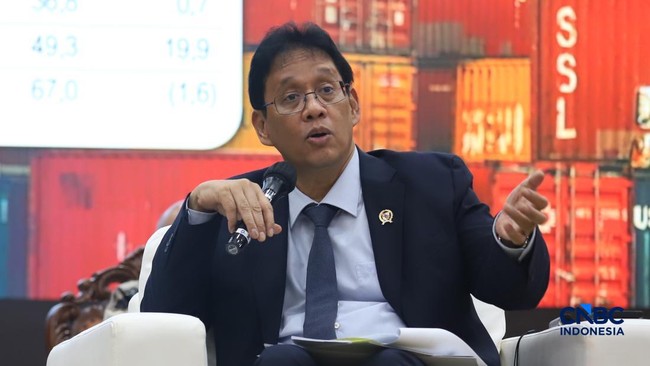
Finance Minister Purbaya Yudhi Sadewa has revealed the main engine driving Indonesia’s economic growth, stating that it is not government spending that powers the economy. Purbaya said the contribution of government spending to the economy reaches only 7.7%. The remainder is driven by the private sector. “If we look at it, the contribution of government spending to the economy is only around 7.7%. The rest is the private sector. So if the private sector does not move, it is almost certain we cannot grow by 5.61% in the first quarter of 2026,” Purbaya said during CNBC Indonesia’s Economic Update 2026, cited on Tuesday (23/6/2026). Purbaya continued that President Prabowo’s strategy for a strong Indonesian economy is for government spending and public spending to grow simultaneously. “This shows that the President’s strategy to build the economy in both the government and private sectors is working well. Government spending is alive. Public spending is also growing significantly,” he stressed. “If we multiply the government’s share, public spending with its share of over 55% contributes around 2.9% to that 5.6% figure. Investment contributes 1.9%, while government spending only contributes 1.34%,” Purbaya explained. Purbaya added that there are two economic engines for Indonesia that are still considered quite strong: car sales and cement sales. Car sales were able to grow by 55% and motorcycle sales reached 28.1% growth. Furthermore, data on fuel consumption for transport and industry in the March period showed rapid growth. Retail fuel grew by 11.9% at the end of the first three months of this year, industrial fuel by 17%, and total fuel consumption rose by 13%. He also mentioned that electricity sales are still capable of high growth, indicating that household, business, and industrial electricity consumption is increasing due to economic activity, with total growth reaching 19%. In addition, domestic cement consumption, which supports development programmes across the country, saw growth that Purbaya said was able to penetrate the 35.6% level in April 2026. “So it is indeed higher than before, but that does not mean this is the only growth engine. Public purchasing power is still quite good if we look at the available figures,” he concluded.