
Not Gold or Oil, Trump is Now Hunting Waste to Defeat China
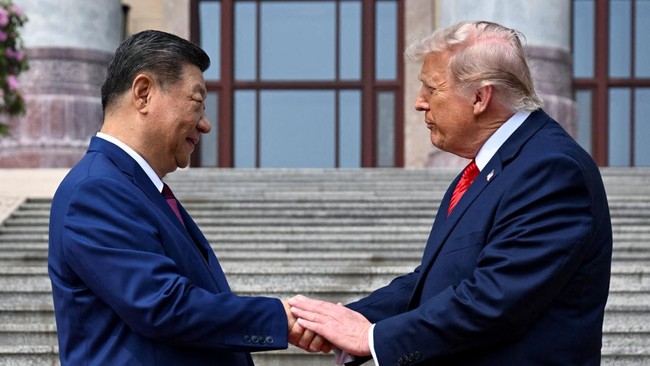
US President Donald Trump has signed an executive order that allows for the restriction of certain industrial waste exports. This move is an effort to maintain the domestic supply of critical minerals and rare earth elements (REE). The new policy is also part of Washington’s efforts to reduce dependence on mineral supply chains dominated by China and to strengthen the security of strategic raw material supplies for US industry and defence.
Through this order, the US government can limit the shipment of industrial and electronic waste containing high-value minerals abroad. Targeted materials include used batteries, black mass from battery recycling, tungsten, and various electronic components containing critical minerals and rare earth elements. This step is expected to increase the supply of raw materials for the domestic recycling industry, while simultaneously helping the US recover strategic minerals without the need to open many new mines.
The policy is part of a series of Trump administration measures to strengthen national mineral supply chain resilience amidst intensifying economic and technological competition with China. The US government hopes these materials, particularly tungsten and battery fragments known as black mass, can be diverted to domestic recycling facilities.
According to data from the environmental organisation Basel Action Network, the US exports nearly 33,000 metric tons of electronic waste every month. Much of this waste contains lithium and other critical minerals that are still recyclable. The export of electronic waste has long been a grievance for the US recycling industry. They argue that retaining these materials domestically could help Washington achieve its critical mineral production targets while reducing the need for new mines, which often face public opposition.
The Trump administration has also received numerous complaints from recycling companies that find it difficult to compete with global buyers willing to pay above-market prices for high-value waste. In the last 18 months, several North American recycling companies have faced financial pressure, with Li-Cycle and Ascend Elements even filing for bankruptcy. However, some new projects are proceeding, including the construction of battery recycling facilities by Blue Whale Materials and two other companies in Oklahoma.
China currently dominates most of the world’s critical mineral production. According to the US Geological Survey (USGS), the US remains dependent on China for more than a dozen strategic minerals considered vital. Although the US possesses critical mineral reserves in various finished products, such as lithium-ion batteries and magnets, it remains heavily reliant on raw mineral imports.
Recycling serves as a shortcut for the US. China has long used its dominance in the mineral market as economic leverage, including limiting the export of rare earth metals and other minerals when trade relations with Washington intensify. Because building mines and processing facilities takes years, the Trump administration is opting for a faster solution: securing minerals already within the country before they are exported.
A survey released this month by recycling company Cirba Solutions shows that approximately 84% of Americans would be more motivated to recycle old electronic devices if they knew the move could reduce US dependence on foreign mineral supplies. Pressure is also mounting from the defence and manufacturing sectors. Under federal regulations, US companies must cease purchasing minerals from China starting 1 January 2027.
Tungsten has become a particular focal point. The US has not had commercial tungsten production since 2015, while the global supply of this metal is still dominated by China. Tungsten is a strategic metal that forms the backbone of the global defence and high-tech industries. With the highest melting point of all metals, tungsten is used in products ranging from ammunition and industrial machinery to semiconductors. China’s dominance in the global tungsten supply chain has led to it being frequently referred to as the ‘defence industry version of nickel’ due to its vital role in modern security and manufacturing.
Consequently, waste and scrap have become one of the primary domestic sources of tungsten in the US. This metal is crucial as it is used in ammunition and various weaponry systems. The recycling company Amermin, in a letter to US Trade Secretary Howard Lutnick last March, described tungsten exports as an ‘unacceptable risk to American industrial and military readiness.’
Trump’s latest order continues a series of policies throughout the year aimed at reducing US reliance on supply chains controlled by China. In January, Trump also issued a declaration after a trade investigation found that imports of processed critical minerals and their derivatives potentially threaten US national security. According to Rho Motion, a research firm focusing on the electric vehicle and battery markets, China controlled over 80% of the global used battery recycling market last year. Furthermore, the market for black mass refining is controlled by Chinese companies to over 89%. Black mass is the material resulting from the crushing of used batteries, containing lithium, nickel, cobalt, and other essential minerals. Having controlled over 80% of the global battery production market, China now almost monopolises the battery recycling sector.
Source: jawawa.id (https://jawawa.id/newsitem/not-gold-or-oil-trump-is-now-hunting-waste-to-defeat-china-1785484558)
Originally published by CNBC Indonesia (https://www.cnbcindonesia.com/research/20260731122738-128-755409/bukan-emas-atau-minyak-trump-kini-berburu-sampah-demi-kalahkan-china), translated from Indonesian