
Not Fundamentals, This is the Culprit Behind the JCI's Weakness
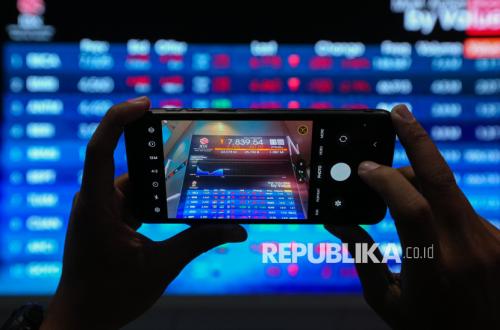
REPUBLIKA.CO.ID, JAKARTA — The Composite Stock Price Index (IHSG) has declined below the 7,000 level amid unrelenting pressures from global sentiment. Geopolitical uncertainties are making investors cautious towards emerging markets such as Indonesia.
Big Data Director of Indef, Eko Listiyanto, stated that the pressure on the IHSG is inseparable from the still turbulent global dynamics. This situation is seen to make market players hold back on expansion and shift risks.
“This is related to the global impact that has not yet found a cooling point from the geopolitical situation,” said Eko during a discussion titled “2 Months of the Israel-US Vs Iran War: Beware of the Impact on the Economy!” in Jakarta, Thursday (30/4/2026).
In addition, Eko added that the United Arab Emirates’ (UAE) exit from OPEC has also triggered new uncertainties in the global energy market. This change is assessed to impact investors’ risk perceptions towards the global and domestic economy.
“The UAE left OPEC yesterday and that will certainly create new dynamics in the context of geopolitics as well as energy prices,” he said.
Eko assessed that the weakening of the IHSG and the rupiah exchange rate is influenced by negative sentiment that surpasses Indonesia’s economic fundamental conditions. Therefore, he emphasised that responses are not sufficient with just optimistic narratives.
“If sentiment is countered with sentiment, in my opinion, that is not right,” Eko stated.
According to him, a more effective step is to demonstrate the strength of economic fundamentals through concrete and measured policies. He assessed that government efforts such as strengthening energy resilience are heading in that direction, although they require consistency.
“The best way to counter sentiment in situations like this is not with positive sentiment but with facts, by showing the fundamentals,” he continued.
Eko also highlighted the implementation of several national priority programmes. He assessed that suboptimal implementation could worsen market sentiment. “If not carried out well, then indirectly it becomes a sentiment burden, adding to the negative sentiment,” he said.
According to Eko, improving policy governance is key to restoring market confidence and maintaining economic stability.
He believes that with better implementation, the undervalued condition of the rupiah and IHSG can gradually recover. “The way to fix it is to properly implement the major programmes,” said Eko.