
Not from the State Budget: Revenue Sources for the Special Business Entity in the Oil and Gas Bill
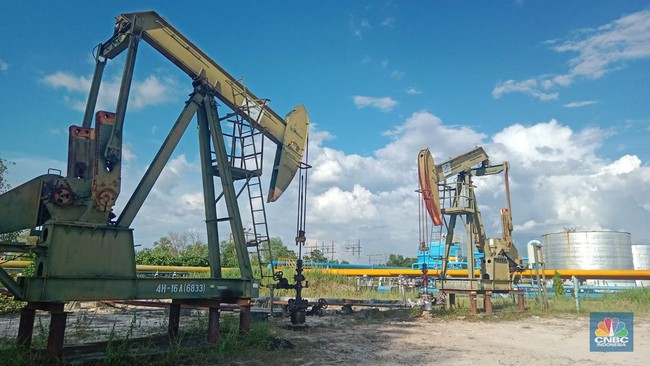
The Special Business Entity (BUK Migas) designed within the Draft Oil and Gas Bill will not be entirely dependent on the State Budget (APBN) to conduct its operational activities.
In the draft Oil and Gas Bill received by CNBC Indonesia, the revenue sources for BUK Migas are specifically regulated in Article 67. Revenue for BUK Migas will be sourced from the results of upstream business activities, the management of state-owned assets that become the rights of BUK, and other income from upstream business activities.
This differs from the pattern of upstream management institutions that have traditionally focused more on management and supervisory functions. In the latest draft regulation, BUK Migas is mandated to undertake upstream business activities.
Article 5 of the draft Oil and Gas Bill states that the central government delegates the management of upstream business activities to BUK Migas. BUK Migas will then become the holder of the authority for oil and gas mining business and will carry out all upstream business activities.
Meanwhile, the operational costs of BUK Migas will not be charged to the State Budget. Article 68 states that the operational budget for BUK Migas will be sourced from a portion of the revenue obtained by BUK Migas as referred to in Article 67.
Member of the House of Representatives (DPR RI) Eddy Soeparno stated that the formation of BUK Migas must be viewed holistically to strengthen national energy security. He noted that the presence of BUK Migas as a management institution for the upstream oil and gas sector is a solution to increase lifting and attract quality investment.
“This is a way of thinking about how lifting can increase and investment can arrive, namely through the presence of BUK Migas as a feature or institution that will manage the upstream oil and gas sector, but increasing oil and gas lifting will not rely entirely on BUK Migas,” he told CNBC Indonesia on Thursday (3/9/202<0xA0>6).
Below is the content of the articles in the draft Oil and Gas Bill related to the formation of BUK Migas:
Article 5
(Control and Management)
Upstream Business Activities as referred to in Article 4 paragraph (3) shall be organised by the Central Government as the holder of the Oil and Gas Mining Authority.
The Central Government as referred to in paragraph (1) shall delegate the management of Upstream Business Activities to BUK Migas.
BUK Migas as referred to in paragraph (2) is the holder of the authority for oil and gas mining business and is responsible to the President.
BUK Migas, as the holder of the authority for oil and gas mining business as referred to in paragraph (3), shall carry out all Upstream Business Activities.
In the event that the management of Upstream Business Activities as referred to in paragraph ( and 4) cannot be implemented, BUK Migas may offer cooperation for Working Areas to Business Entities and/or Permanent Establishments.
Article 6
(Business Management)
Oil and Gas business activities shall be carried out based on Business Licences from the Central Government.
Oil and Gas business activities consist of:
Upstream Business Activities; and
Downstream Business Activities.
The acquisition of Business Licences as referred to in paragraph (1) for Upstream Business Activities as referred to in paragraph (2) letter a shall be coordinated and implemented by BUK Migas.
Upstream Business Activities as referred to in paragraph (2) letter a consist of:
Exploration; and
Exploitation.
- Downstream Business Activities as referred to in paragraph (2) letter b consist of:
Processing;
Transportation;
Storage; and
Trading.
BUK Migas: Formation, Duties, Organs, Capital, Revenue
Article 63
BUK Migas as referred to in Article 5 paragraph (2) is established based on this Law.
BUK Migas as referred to in paragraph (1) functions to manage and control Upstream Business Activities.
(ly) In performing the function referred to in paragraph (2), BUK Migas is tasked with:
managing Working Areas through cooperation with contractors based on Cooperation Contracts acting as operation management;
preparing tenders for Working Areas to be further developed;
conducting selection and determining contractors for the management of Working Areas;
preparing terms and conditions of Cooperation Contracts;
signing Cooperation Contracts;
reviewing and submitting reports on field development plans for the first production in a Working Area to the Minister;
reviewing and providing approval for work plans and/or budgets of contractors who have signed Cooperation Contracts;
selling Oil and/or Gas that becomes its right based on Cooperation Contracts;
managing and recording revenue generated from the management of Upstream Business Activities;
managing and recording assets obtained from the management of Upstream Business Activities;
recording proven reserves of Oil and Gas;
managing Upstream Business Activity data;
preparing business plans for the provision of oil and gas;
conducting investment activities in the form of participating interests in Working Areas;
performing necessary corporate actions based on the approval of the supervisory board; and
reporting periodically to the President regarding the management of Upstream Business Activities.
Article 64
- The organs of BUK Migas consist of:
supervisory board; and
board of directors.
- The supervisory board as referred to in paragraph (1) shall consist of 7 (seven) persons, comprising:
1 (one) chairperson acting as a member; and
6 (six) members.
Members of the supervisory board as referred to in paragraph (2) shall be selected by the House of Representatives upon the proposal of the President.
The Chairperson and Members of the supervisory board as referred to in paragraph (3) shall be appointed and dismissed by the President.
Article 65
The board of directors as referred to in Article 64 paragraph (1) letter b shall consist of at least 7 (seven) persons.
The board of directors as referred to in paragraph (1) consists of:
president director;
vice president director; and
directors.
Source: jawawa.id (https://jawawa.id/newsitem/not-from-the-state-budget-revenue-sources-for-the-special-business-entity-in-the-oil-and-gas-bill-1788411331)
Originally published by CNBC Indonesia (https://www.cnbcindonesia.com/news/20260903104936-4-764574/bukan-apbn-ini-sumber-pendapatan-badan-usaha-khusus-di-ruu-migas), translated from Indonesian