
Not El Niño, Scientists Explain Why Europe Remains Hot Through the Night
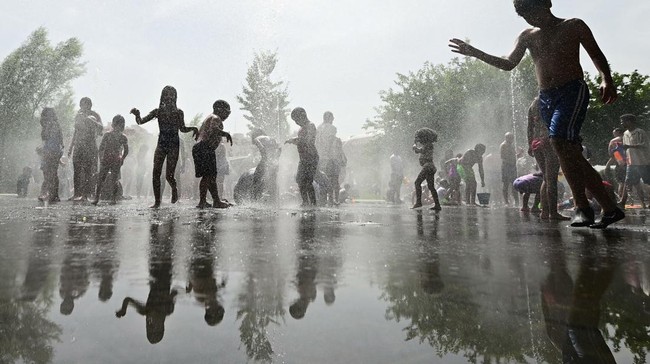
The heatwave currently sweeping Europe has been recorded as the hottest and most humid in observational history, with scientists warning the extreme conditions could cause thousands of deaths. The findings were revealed in a new study by the World Weather Attribution (WWA) network, which concluded that the ‘super El Niño’ phenomenon forming in the Pacific Ocean played no role in this heatwave. Instead, global warming is the primary cause.
Scientists analysed the likelihood of the average daily maximum temperatures recorded on 26-28 June in Western and Central Europe compared to the cooler climatic conditions of 1976 and 2003. They explained that the weather pattern, a low-pressure heat dome trapping hot air from the south, is not unusual in itself. However, the temperatures recorded this time far exceed normal conditions. According to the study, if a similar event had occurred around 50 years ago, the June heatwave would have been approximately 3.5 degrees Celsius cooler. The three-day temperature levels projected would have been expected less than once in 10,000 years.
The impact is already being felt across the continent, with daytime temperatures in a French city surpassing 44 degrees Celsius and night-time temperatures in parts of Spain remaining above 30 degrees Celsius. ‘This event would not have been possible in June without climate change,’ said Theodore Keeping of Imperial College London. ‘Three consecutive nights of such temperatures would also not have been possible at any time of year without climate change,’ he added.
Beyond the high temperatures, humidity levels reached unprecedented levels. In many UK cities, humidity exceeded 50 per cent, with dew points around 20 degrees Celsius. This is significantly higher than during the July 2022 heatwave that set the UK’s temperature record, when dew points were in the single digits. The study also found that the wet-bulb globe temperature (WBGT), an index measuring the combined effects of air temperature, humidity, radiant heat, and air movement, has broken or is expected to break records in nearly half of European cities. Researchers explained that high humidity increases health risks by slowing evaporation, making sweating less effective at cooling the body.
The elderly and those with chronic illnesses are the most vulnerable, but migrants and the homeless also face high risks. ‘What we see very clearly is how unequal the impacts of this heatwave are and how they show the widening inequalities caused by climate change,’ said Friederike Otto of Imperial College London. ‘Because, of course, the most vulnerable are the most likely to lose their lives,’ she added. While it is too early to calculate the excess mortality from this heatwave, previous research showed that smaller heatwaves in June and July 2025 killed around 2,300 people in London and 11 other European cities. ‘The health impacts of this heatwave are likely to be very large across much of Northern and Central Europe,’ Keeping said.
The researchers stressed that heatwaves will become more intense and frequent unless the world drastically cuts fossil fuel emissions. They also warned that Europe, as the fastest-warming continent, is unprepared for such conditions. An ageing population, high urbanisation, and cities built for a cooler climate make the region increasingly vulnerable. In the UK, only about 5 per cent of homes have air conditioning. Beyond expanding air conditioning use, the researchers urged European nations to invest in passive cooling systems such as building insulation, better ventilation, green roofs and walls, and street tree planting. Carolina Pereira Marghidan of the Red Cross Red Crescent Climate Centre also called on governments to expand heat action plans to include often-overlooked groups, such as people with mental health conditions and pregnant women. ‘Europe does have heatwave action plans, but research also shows that sometimes these plans do not yet cover all groups that may be vulnerable,’ she said.
Source: jawawa.id (https://jawawa.id/newsitem/not-el-nino-scientists-explain-why-europe-remains-hot-through-the-night-1782705128)
Originally published by CNBC Indonesia (https://www.cnbcindonesia.com/tech/20260629100611-37-746428/bukan-el-nino-ilmuwan-jelaskan-alasan-eropa-panas-sampai-malam), translated from Indonesian