
Not Discarded, Waste in Pinrang Becomes a Source of Income for Residents
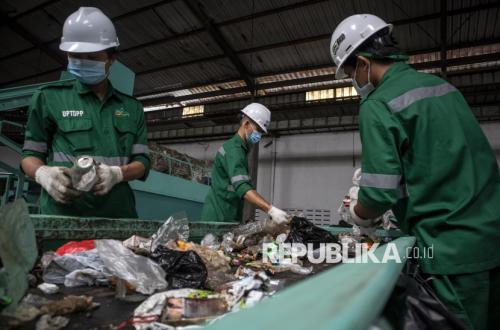
In many homes, waste often ends up as something to be quickly disposed of. It is considered dirty, useless, and troublesome. However, in Pinrang Regency, South Sulawesi, that perspective is slowly changing. Waste is no longer seen as an end, but as a beginning—the start of economic opportunities growing from simple household items.
Deputy Governor of South Sulawesi Fatmawati Rusdi urges the community to begin managing waste from the source, namely households. She emphasises that small awareness efforts like sorting waste can have a significant impact, not only on the environment but also on family economies.
“Waste is not merely a problem, but it can have economic value if managed properly. The key lies in the awareness to sort it from the source,” said Fatmawati during a capacity-building and skills enhancement event for women in the Pinrang Regent’s Office Hall recently.
This call to action is not without reason. Waste volume in South Sulawesi continues to rise. Data shows production reaching around 908,850 tonnes per year. In Pinrang Regency alone, the amount is about 76,125 tonnes per day, mostly from household activities.
Behind these large figures lies potential that has not yet been optimally exploited. Fatmawati encourages strengthening waste banks, composting processing, and implementing the reduce, reuse, and recycle (3R) principles as sustainable solutions.
For many families, especially women, this step opens new avenues. From the kitchen, small yards, to the back of the house, waste is starting to be processed into something valuable. Plastic bottles are sorted, food scraps turned into compost, and used items transformed into creative products.
At several locations, waste banks are becoming meeting points for hope and small enterprises. Residents save waste just like saving money. Every kilogram of plastic, paper, or metal has value that can be exchanged. Gradually, this habit forms a new mindset, that waste is not a burden, but an asset.
The activity even feels like a new social endeavour. Housewives gather, sharing ways to sort waste, exchanging craft ideas, and discussing marketing of recycled products. From simple activities, broader economic networks grow.