
Not China, This Asian Nuclear Giant Fears Being Dragged into Middle East War
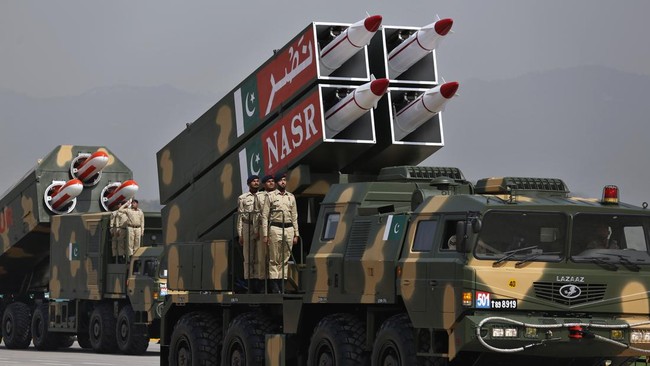
Pakistan’s position in the Middle East war has become increasingly complicated after the Iran-backed Houthi group in Yemen launched an attack on Saudi Arabia this week. Islamabad is reportedly frustrated by the escalation, as it threatens to drag the country into the conflict while jeopardising its role as a mediator between the United States and Iran.
Several regional analysts and Pakistani officials said the Houthi attack on Saudi Arabia has heightened Islamabad’s fears that the conflict could expand into a new war between Riyadh and the Yemeni armed group. This situation is considered far riskier than Iran’s missile attack on Saudi Arabia earlier this year.
Pakistan, which possesses nuclear weapons, previously helped mediate a temporary agreement between Washington and Tehran last month. On the other hand, Islamabad also has a mutual defence treaty with Saudi Arabia signed last year and stations thousands of its troops in the kingdom, including a squadron of fighter jets.
The Houthis launched missiles at Saudi Arabia after accusing the kingdom of bombing an airport under their control on Monday. The cross-border attack ended a four-year ceasefire, although it has so far been limited to a single incident.
‘Our top civilian and military leadership have conveyed to Iran at the highest level that an attack on Saudi Arabia is an attack on Pakistan. That is our red line,’ a Pakistani official told Reuters. The official, along with several other Pakistani officials, spoke on condition of anonymity as they were not authorised to make public statements.
Pakistani security analyst Muhammad Amir Rana said Islamabad did not expect the situation to deteriorate so quickly. ‘Pakistan did not anticipate that tensions would escalate so rapidly,’ he said.
Two Pakistani officials said the country’s troops are stationed near the Saudi border with Yemen. This makes Pakistani military personnel more vulnerable if the conflict expands. Additionally, Islamabad is concerned that the Houthi escalation could disrupt shipping in the Red Sea, a vital trade route used by Pakistan and many other nations.
If the conflict widens and threatens Saudi interests, Pakistan could potentially have to intervene militarily under the terms of the mutual defence treaty. Retired Pakistani General Ghulam Mustafa said the government is currently trying to maintain a diplomatic balance. ‘Pakistan’s top leadership is currently trying to calm all parties involved,’ he said. However, he warned the situation could change if the Houthis expand the scope of their attacks.
The latest tensions have also sparked new concerns in Pakistan regarding Iran’s internal dynamics. Two Pakistani government officials said Islamabad is observing the growing divergence of views between Iranian political leaders such as President Masoud Pezeshkian, Foreign Minister Abbas Araghchi, and Parliament Speaker Mohammad Bagher Ghalibaf, and the Islamic Revolutionary Guard Corps. Pakistani defence analyst Muhammad Ali assessed that the Iranian military is now increasingly dominant in the decision-making process. ‘The military appears to be dominating the decision-making process in Iran,’ he said, adding that this reality is now better understood in Islamabad.
The rising tensions have also reportedly delayed a visit by an Iranian delegation to Islamabad. Two Pakistani officials said the delegation led by Iranian Interior Minister Eskandar Momeni was originally scheduled to arrive earlier this week. However, the previously unannounced visit only took place on Wednesday, two days later than planned. According to them, the bilateral talks are also expected to cover developments in the agreement between the US and Iran.
At a press conference on Thursday, Pakistani Foreign Ministry Spokesperson Tahir Andrabi reiterated Islamabad’s position of promoting a peaceful resolution. ‘We call on all parties to exercise maximum restraint,’ Andrabi said, adding that the diplomatic path remains the primary option.
Source: jawawa.id (https://jawawa.id/newsitem/not-china-this-asian-nuclear-giant-fears-being-dragged-into-middle-east-war-1784281937)
Originally published by CNBC Indonesia (https://www.cnbcindonesia.com/news/20260717150329-4-751657/bukan-china-raksasa-nuklir-asia-ini-waswas-terseret-perang-timteng), translated from Indonesian