
Not Arabia: The World's Largest Wild Camel Population Is Found Near Indonesia
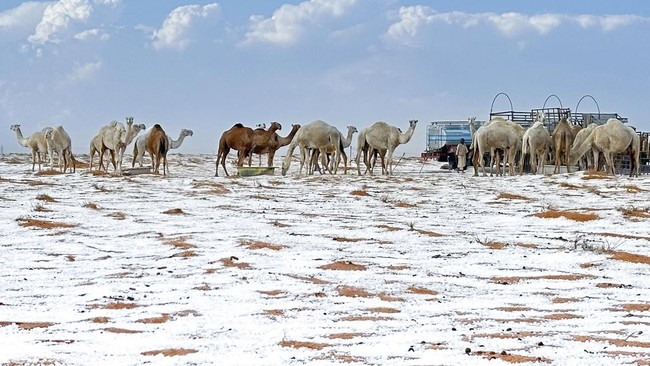
Camels have long been associated with the vast deserts of the Middle East, such as Saudi Arabia or Egypt. However, a surprising fact remains little known: the country with the largest population of wild camels in the world is located directly south of Indonesia, namely Australia. The presence of these long-legged mammals is now beginning to cause major problems for the neighbouring nation. Australia’s status as a haven for the largest wild camel population on Earth has been officially confirmed by the Guinness Book of Records. In total, the number of camels in Australia is not as high as in countries on the Arabian Peninsula or East Africa such as Somalia, Chad, and Sudan. The difference is that in those countries, camels have long been domesticated and are part of the local culture and economic engine, serving as livestock, a food source, and a means of transport. In the Land of the Kangaroo, however, these camels live entirely in the wild. According to a report by IFLScience, the growth of the wild camel population in Australia has surged so dramatically that it has triggered alarm from the local government. Camels are not actually endemic or native to Australia. The animals first set foot on the continent because they were brought by humans. Historically, the ancestors of camels originated from the northern region of the Americas. Around 6 to 7 million years ago, they migrated across the Bering Strait land bridge into Asia and then spread to Africa. It was in Asia and Africa that they evolved into the camels we know today, while those that remained in the Americas evolved into other species like llamas. Separated by deep geographical barriers, including the Wallace Line, ancient camels could never cross into Australia naturally. Their jumbo body size also made it impossible for them to stow away in the hulls of ancient trading ships as rats or cats did. The presence of camels in Australia only began during the British colonial era. In the 19th century, the colonial government brought camels to assist in the construction of a telegraph line that cut through the arid Australian desert. To operate them, they even brought in camel handlers and riders from regions that are now Afghanistan and Pakistan. The trouble began when the era of motorised transport arrived. The camels were simply released into the wild because they were deemed no longer needed. With no natural predators and minimal competitors in the dry Australian outback, the camels adapted remarkably well. The result was a massive population explosion within a century. This population boom is now recognised as a serious threat to the local ecosystem. Before the arrival of camels, the largest mammal on the continent was the kangaroo. The camels’ voracious consumption of local vegetation rapidly depletes native Australian plants. This triggers a food crisis for other endemic species, including endangered animals. Beyond destroying the food chain, camels are known to guzzle massive amounts of water after enduring days of thirst. Consequently, many natural water sources in the outback are drying up, triggering a clean water crisis for other wildlife and for human communities living in the area. Although the Australian government once carried out a mass culling programme and successfully eliminated around 100,000 camels, this figure is deemed insufficient to curb the growth of the wild camel population, which is now estimated to have reached hundreds of thousands to millions in central Australia. Nevertheless, their presence is not entirely negative. On the positive side, the camels’ consumption of scrub grass in the outback is thought to slightly help limit the spread of wild grass, which indirectly helps suppress the potential spread of the bushfires that frequently haunt Australia.