
Not an Instant Report Card, RGSS Serves as a Performance Diagnostic Tool for 514 Local Governments in Indonesia
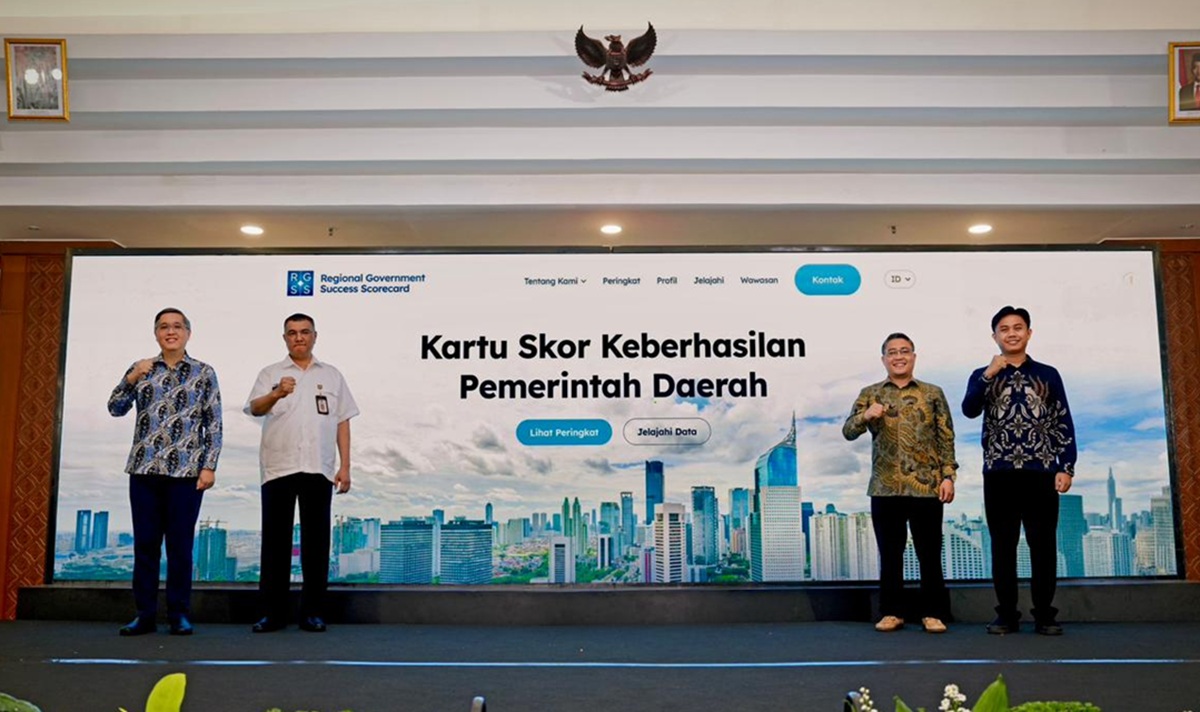
Efforts to reduce regional disparities and improve the quality of public services in Indonesia have gained support from a new instrument. The Regional Government Success Scorecard (RGSS), a data-based tool, has arrived to help identify the key drivers of local government success.
Developed by the Chandler Governance Group (CGG) with support from the Gates Foundation, the RGSS has been adapted to the local context through collaboration with the Institute for Economic and Social Research (LPEM) at the University of Indonesia’s Faculty of Economics and Business. This instrument provides a comparative and contextual view of governance performance across 514 cities and regencies in Indonesia.
Historically, comparing the performance of local governments has often been deemed unfair because it ignored differing structural starting points, such as geographical factors or natural resource wealth. To address this challenge, the RGSS does not use simple rankings; instead, it employs a Dynamic Peer Comparison (DPC) methodology.
Through the DPC method, each local government is assessed and compared with other regions that possess similar characteristics and structural conditions. This step was taken to avoid conventional ranking biases that tend to favour regions with natural structural advantages while disadvantaging areas operating in more challenging environments.
This diagnostic framework is built upon four main pillars. Through this approach, the RGSS is positioned as a tool to assist policymakers in conducting self-evaluations, rather than as an instrument to judge regional performance.
“RGSS is not a report card; it is a diagnostic tool. Our goal is to help national and local leaders better understand the factors associated with variations in governance results and outputs across different contexts, and to uncover practical lessons that can be shared across local governments,” said Wu Wei Neng, Chief Executive Officer of the Chandler Governance Group.
Similar appreciation came from regulators who recognise the importance of standardised, objective evaluation. “Strengthening local governance requires an evidence-based approach that is responsive to local needs. We welcome the RGSS initiative as a useful tool to better understand the factors related to differences in results and performance of local governments throughout Indonesia,” said Dr Heriyandi Roni, M.Si., Director of Regional Performance Evaluation and Capacity Building at the Ministry of Home Affairs.
As the primary academic partner, LPEM FEB UI ensures that the RGSS is methodologically robust and relevant to the reality of the Indonesian governmental landscape. Khoirunurrofik, Ph.D, Head of Public Finance and Development Planning Studies at LPEM FEB UI, hopes this tool can enrich evidence-based discussions regarding public policy and regional development.
Currently, all local government profiles, interactive data tools, and methodological documentation for the 514 cities and regencies are accessible to the public and policy practitioners via the official website at https://regionalgovscorecard.org/.