
Not Afraid of Israel's Blockade: A Portrait of Gaza's Fashion Industry
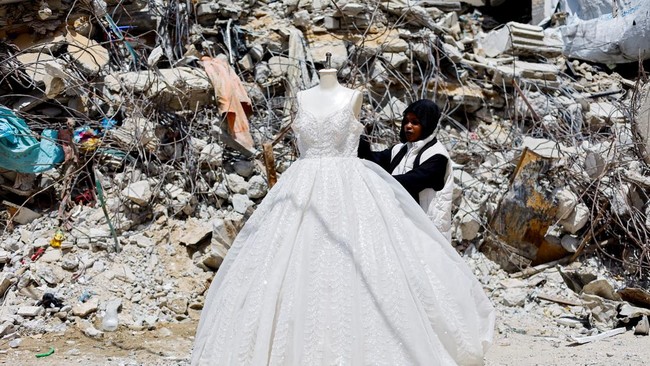
Amid the devastation of war in the Gaza Strip, a number of tailors are endeavouring to preserve the wedding tradition by repairing and recycling old wedding gowns. In a small sewing workshop in southern Gaza, Nisreen Al-Rantisi is busy reshaping worn dresses so they can still be worn amid rising living costs and material shortages. (REUTERS/Mahmoud Issa)
Families in Gaza are now struggling to obtain new wedding gowns. Many residents are turning to sewing shops that remain in operation to mend old gowns or children’s clothes. Importers point to delays in deliveries, high logistics costs, and restrictions on imported materials such as decorative crystals as major causes of shortages and price increases. (REUTERS/Mahmoud Issa)
The situation has become more difficult as many workshops were damaged during the conflict. Rantisi says she has had to reuse old gowns by washing, styling, and repairing them to look new. At the start of the war, she even had to use a bicycle-powered sewing machine due to a prolonged electricity crisis. (REUTERS/Mahmoud Issa)
According to Rantisi, the price of fabric has risen sharply since the war began. Before the conflict, ordinary fabric sold for around 120 to 150 shekels or about Rp900,000, but now prices reach around 500 shekels or about Rp3 million. The rise directly affects the price of wedding gowns and children’s clothing, which have become increasingly unaffordable for residents. (REUTERS/Mahmoud Issa)
The Israeli military body that controls access to Gaza, COGAT, has not yet commented on the situation. Meanwhile, more than two million Gaza residents have fled and are living in damaged houses, emergency tents, or on the rubble of buildings after two years of war. (REUTERS/Mahmoud Issa)
Despite the crisis, some couples continue to celebrate their weddings. Mass weddings are occasionally held in Gaza to bring some happiness in a bleak situation. But shop workers say the price of gowns is no longer affordable for most residents. (REUTERS/Mahmoud Issa)
“Before the war, prices were affordable for everyone. But now wedding gowns are very unaffordable,” said Rawan Shalouf, an employee at a bridal shop. (REUTERS/Mahmoud Issa)
A 21-year-old groom-to-be, Shahed Fayez, says he has been searching for a wedding gown for days ahead of his wedding in four days, but has not found one that suits him. He says the cheapest gowns now cost more than $1,000 or about Rp17.5 million, while the entire dowry money his family has does not reach even $200 or about Rp3.5 million.
Source: jawawa.id (https://jawawa.id/newsitem/not-afraid-of-israels-blockade-a-portrait-of-gazas-fashion-industry-1779545966)
Originally published by CNBC Indonesia (https://www.cnbcindonesia.com/news/20260519183536-7-736064/tak-gentar-dirudal-israel-begini-potret-eksisnya-industri-fesyen-gaza), translated from Indonesian