
Not a Single Drop of Rain in a Month: A Rare 1.5-Century Event
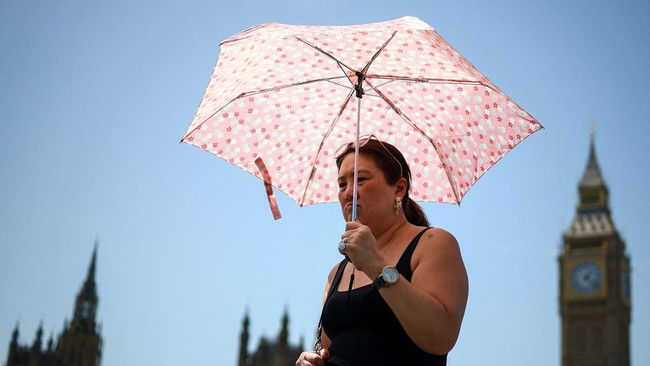
A worrying record has been set in England. The oldest weather station in London has just experienced its first truly rain-free calendar month since records began more than a century and a half ago, according to IFLScience and various official sources, Tuesday (4/8/2026).
The observation station at Kew Gardens, which has been recording weather data since 1871, registered zero millimetres of rain throughout July 2026. This is the first time in the station’s recording history that not a single drop of rain fell over an entire month.
Previously, the driest month on record occurred in July 1999 with just 2.5 millimetres of rainfall, followed by July 1921 with 3.7 millimetres. This time, however, the recorded figure was completely empty.
A similar situation has been observed in surrounding areas. The Hogsmill observation station recorded its last rainfall on 27 June, and throughout the following month there was no additional rainfall whatsoever.
Overall, England experienced its driest July since records began in 1836. Average rainfall was only around 7 per cent of the usual amount, while southern England received only about 1 per cent of the average July rainfall.
The UK Met Office stated that the combination of extreme heat, abundant sunshine, and an almost complete absence of rain made this month truly extraordinary in the climate records.
Weather observers have also noted a worrying trend. Of the six driest Julys ever recorded, five of them have occurred since 1990. This further strengthens suspicions that climate change is making weather patterns increasingly extreme and unpredictable.
Kew Gardens has not yet released an official statement confirming the figures, but independent analysis of data released by the Met Office indicates that the zero-millimetre reading is indeed real. The local government has already declared drought status in several regions, including London, from late July.
Drought Spreading Across the World
This situation is not an isolated event. Many parts of the world are now experiencing droughts that are longer and more severe than usual, driven by the strengthening of the El Niño phenomenon, which is expected to persist until early 2027.
In Europe, Italy, Belgium, and Cyprus have now imposed water usage restrictions, while major rivers are experiencing reduced flows that threaten drinking water supplies and agriculture. On other continents, the Horn of Africa, parts of the United States, Australia, and South Asia have also reported very sharp declines in rainfall.
Indonesia Faces Scorching Heat
Indonesia has not escaped the effects of this climate change. The Meteorology, Climatology, and Geophysics Agency (BMKG) recorded that by mid-July, more than half of Indonesia’s land area, or 54.5 per cent, had already entered the dry season.
The peak of the dry season is predicted to occur between August and September 2026, with characteristics that are drier and longer-lasting than in ordinary years. Hundreds of monitoring points have already recorded no rainfall for more than a month, and dozens of points have received no rain for more than two months.
These conditions are exacerbated by air temperatures tending to be higher than the long-term average, causing water to evaporate more quickly and making the land even drier. Experts warn that such natural phenomena will occur increasingly frequently as global warming continues, making rainfall patterns more extreme. When it rains, it can be very heavy, but dry seasons can last far longer than usual.