
Not a Short-Term Investment: Danantara Targets a Global Portfolio and Sustainable Returns
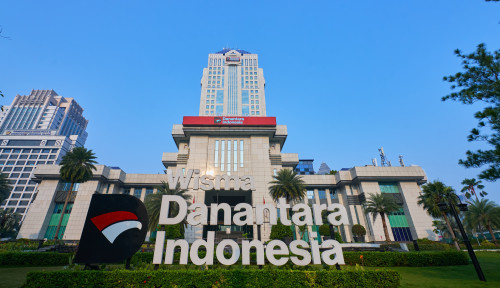
Danantara Investment Management (DIM) places long-term investment as the foundation for building its portfolio. Rather than merely chasing performance over quarters or years, the investment institution views portfolio sustainability over decades as a key measure of investment success.
Djamal Attamimi, Managing Director of Global Business Development, Corporate Finance & Investments at Danantara Investment Management, said this approach is necessary because Danantara’s investments relate to long-term interests and future generations.
“From the investment side, especially related to Danantara, we are making investments for the long term, for the next generation. So the most important thing is the sustainability of our portfolio investment. We cannot look at it quarter to quarter or only year to year — we have to look at it in terms of decades,” Djamal said in the Danantara dari Dalam programme, quoted on Monday (7/9/2026).
According to Djamal, this long-term orientation means Danantara needs to observe how portfolio performance develops over time, rather than judging success solely on short-term achievements.
This approach has implications for how Danantara builds its portfolio. To maintain sustainability, diversification becomes an essential element. The portfolio cannot focus only on particular sectors or countries, but must have global coverage that represents the development of the world economy.
“So that means not just focusing on a particular sector or a particular country, but we must be able to encompass and hold a portfolio that represents the composition of the world economy,” Djamal said.
From Asset Consolidation to Global Scale
Djamal sees Danantara’s role as inseparable from efforts to consolidate state assets. This consolidation is considered important because it provides the scale Indonesia needs to participate more relevantly in the global economy.
With greater scale, Danantara’s investment contributions are expected to support the creation of more significant market share for Indonesia in world markets.
However, Djamal believes achieving this goal will not happen instantly. Business development requires stages, including strengthening the composition of staff and teams within Danantara Holding, Asset Management and Investment Management.
On the investment side, the need for scale goes hand in hand with the imperative to build a sustainable portfolio.
“And we cannot look at it quarter to quarter or only year to year — we have to look in decades, because the next generation is long term and for future generations,” he said.
Because of its long horizon, Danantara also needs to consider a geographically diversified portfolio. According to Djamal, diversification does not only serve to spread investments, but also enables the portfolio to follow changes and developments in the global economy.
At the same time, this strategy does not mean Danantara will enter every sector without focus. Djamal said there is a thematic approach that follows global trends with long-term prospects.
He cited technology, healthcare and education as important sectors within this perspective. Each investment opportunity will still be assessed one by one before Danantara determines its involvement.
Returns and Impact Must Go Hand in Hand
In building its portfolio, Danantara does not only look at potential financial gains. Djamal said there are two mandates that must run simultaneously: sustainable return and impact.
“So our dual mandate is sustainable return and impact. And both can go hand in hand because, to generate sustainable returns, some of the sectors we invest in must indeed be sectors with long-term impact,” Djamal said.
This concept means sectors that deliver long-term impact can form part of the effort to generate sustainable returns.
One sector Djamal mentioned is artificial intelligence (AI). According to him, the development of AI relates not only to technology, but also has the potential to improve companies’ operational efficiency.
For this reason, Danantara needs exposure to the AI sector as part of its strategy to generate long-term returns.
“For us to generate long-term returns, this AI component becomes important because AI contributes in the form of efficiency to company operations. Like it or not, we must have exposure to that AI sector,” he said.
However, entering a sector still in its early stages of development requires a capital approach that is likewise long term. This is where corporate finance becomes crucial in supporting the investment strategy.
Capital Structure Is Decisive
Djamal explained that the development of an investment portfolio must be matched by an appropriate funding structure. Danantara needs to determine the most optimal combination of capital sources, whether through equity, long-term debt, or a combination of both.
These considerations include when the company needs to go to market for capital raising and how to balance the asset side with liabilities.
“Will it be through equity? Will some be through long-term debt? What is the best, most optimal combination? When do we go to market for capital raising? All of this is done to support the existing investment portfolio,” Djamal said.
According to him, funding decisions must be commensurate with the character of the portfolio being developed. Thus, the investment strategy and the capital strategy cannot run separately.
This role is also part of Djamal’s responsibilities at Danantara Investment Management. He said his day-to-day work largely involves coordination with the investment and finance teams to ensure the company’s activities have adequate funding and capitalisation support.
Indonesia Seen as Attractive to Global Investors
Amid this global portfolio development strategy, Djamal believes Indonesia itself remains attractive to international investors.
According to him, Indonesia is a growing country with a productive demographic base. He noted that Indonesia’s median population age is around 30 years.
This demographic structure is considered one of the factors that can support improvements in productivity and the development of economic sectors. If productivity rises and economic sectors continue to grow, per capita income has the potential to increase.
Rising incomes can then drive growth in disposable income and domestic consumption. That growth in demand ultimately requires investment in the various businesses and sectors that underpin people’s needs.
“To meet domestic consumption and demand, investments must of course be made, both directly and indirectly, in businesses or sectors that support the growth of that demand,” he said.
In this context, Danantara sees its role not only as a funding provider, but also as a catalyst for sectors in need of capital.
Djamal said growth in domestic demand can become space for Danantara to participate in providing funding and encouraging the development of sectors that need capital support.
Danantara and the Measure of Long-Term Success
For Djamal, Danantara’s ultimate measure of success lies not merely in the size of investments it can make in the short term. The institution’s success must be seen in its ability to maintain its existence and generate positive returns sustainably in the years ahead.
“For me, Danantara’s success is that Danantara still exists and delivers positive, sustainable returns in the future,” Djamal said.
With this approach, Danantara’s investment strategy is built on three interconnected layers: a long-term investment horizon, global portfolio diversification, and the selection of thematic sectors capable of generating returns while delivering impact.
Portfolio development also requires a suitable capital structure so that investment expansion can proceed sustainably. Meanwhile, Indonesia’s characteristics as a market with a productive population and potential consumption growth form one of the bases for viewing investment opportunities from a global perspective.
Source: jawawa.id (https://jawawa.id/newsitem/not-a-short-term-investment-danantara-targets-a-global-portfolio-and-sustainable-returns-1788810617)
Originally published by wartaekonomi.co.id (https://wartaekonomi.co.id/read633169/bukan-investasi-jangka-pendek-danantara-bidik-portofolio-global-dan-cuan-berkelanjutan), translated from Indonesian