
Not a New Discovery: The Origins of Rare Earth Elements in Indonesia Already Exist
The Indonesian Mining Institute (IMI) has revealed that the potential for rare earth elements (REE) in Indonesia has long been identified, primarily through monazite minerals found as by-products of tin mining. However, its development remains in the early stages.
Chairman of the IMI, Irwandy Arif, stated that the Indonesian mining industry has long been researching the presence of rare earth elements contained within monazite minerals, particularly those produced by PT Timah Tbk (TINS). “In the industry, the first and long-standing investigations into the presence of rare earth elements in monazite by-products at PT Timah are the precursors to what we are discussing now,” Irwandy said during a webinar hosted by the Mineral Industry Body (BIM).
Furthermore, Irwandy noted that the government’s attention to the future of REE has become increasingly evident in recent years. This is evidenced by the establishment of bodies to manage the development of the mineral industry, including REE, as well as the formation of PT Perminas. “This is actual proof of the government’s seriousness in developing rare earth elements in Indonesia,” added Irwandy.
He also mentioned that research regarding REE, which he has published in book form, has been ongoing for approximately five years. During that period, the government began drafting classifications for critical and strategic minerals, which were eventually published in 2023. He noted that while serving as a special staff member at the Ministry of Energy and Mineral Resources (ESDM), he was tasked with assisting the Directorate General of Minerals and Coal in drafting these policies.
Additionally, through the Coordinating Ministry for Maritime Affairs and Investment (Kemenko Marves), the government has begun pioneering collaborations with the United States and the European Union regarding the development of critical minerals, including rare earth elements.
What are Rare Earth Elements?
Irwandy Arif explained that REE consists of a group of 17 chemical elements in the periodic table that possess unique magnetic and chemical properties. These minerals are classified into two major groups: light rare earth elements and heavy rare earth elements.
The 17 elements include scandium (Sc), yttrium (Y), lanthanum (La), cerium (Ce), praseodymium (Pr), neodymium (Nd), promethium (Pm), samarium (Sm), europium (Eu), gadolinium (Gd), terbium (Tb), dysprosium (Dy), holmium (Ho), erbium (Er), thulium (Tm), ytterbium (Yb), and lutetium (Lu).
The division between heavy and light categories is based on orbital electron configuration, where the heavy group tends to be rarer and possesses much higher economic value.
In Indonesia, REE are generally found as by-products of mining activities for other commodities such as tin, nickel, and bauxite. Types of minerals containing REE in the country include monazite, xenotime, and zircon, which are widely found in alluvial tin deposits in the Bangka Belitung Islands.
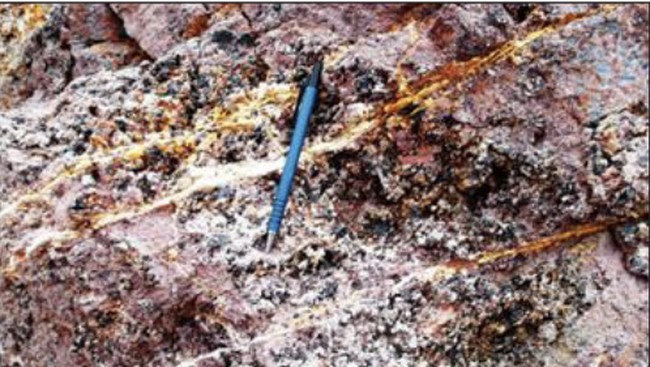
In addition to being by-products, the government recently identified primary-type rare earth element reserves in the Mamuju region, West Sulawesi. This discovery is a new focal point because the concentrations are significantly higher than those found in by-products, opening opportunities for Indonesia to build its own strategic mineral processing industry.
“There is one place in Indonesia, specifically in Mamuju Regency, West Sulawesi, which contains primary rare earth minerals, rather than just by-products,” explained Irwandy.
Based on research data, the findings in Mamuju show total REE concentrations as high as 4,500 to 6,000 ppm, far exceeding the levels in Bangka Belitung, which range from 1,000 to 2,391 ppm. Meanwhile, North Sumatra also holds potential with concentrations of 2 to 1,400 ppm derived from the weathering of granite rocks.
“The largest supply uses include catalysts, glass, and polishing. The largest portion, 31%, is cerium. Second is lanthanum for catalysts and NiMH batteries. Then, at 25%, we have neodymium (Nd). Nd is used for permanent magnets,” he noted.
The use of REE for permanent magnets is the most strategic sector, as it is a key component in electric vehicle traction motors, wind turbines, and computer hard drives. The volume of REE-based magnet usage is projected to increase from 29% in 2023 to 41% by 2034.
Source: jawawa.id (https://jawawa.id/newsitem/not-a-new-discovery-the-origins-of-rare-earth-elements-in-indonesia-already-exist-1780910829)
Originally published by CNBC Indonesia (https://www.cnbcindonesia.com/news/20260518103943-4-735480/bukan-barang-baru-cikal-bakal-logam-tanah-jarang-sudah-ada-di-ri), translated from Indonesian