
North Maluku Economy Soars, but Senator Says Only Investors' Accounts Are Ringing
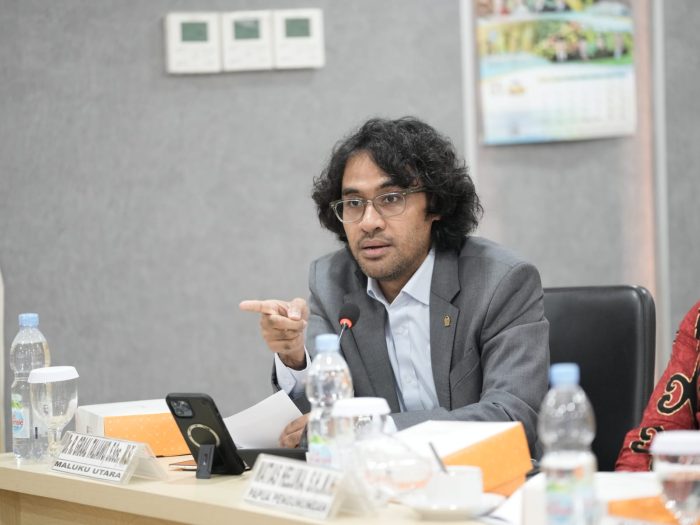
Member of the Regional Representative Council (DPD RI) Committee II, Graal Taliawo, has launched a sharp critique of the investment direction developing in North Maluku. During separate meetings with the Ministry of Investment and Downstreaming/BKPM and the Ministry of Energy and Mineral Resources (ESDM) at the DPD RI Building in Jakarta on 9 June 2026, Graal assessed that the region’s high economic growth has yet to provide real benefits to the public.
“There is no point in exaggerating North Maluku’s high economic growth to us. It is not the people’s bank accounts that are ringing. We are still witnessing economic inequality right before our eyes,” Graal asserted.
According to him, North Maluku is facing a development paradox. On one hand, the government is promoting sustainable investment, but on the other, incoming investment is still dominated by the extractive sector based on mining and mineral processing.
Graal highlighted North Maluku’s economic growth, which in recent years has been among the highest in Indonesia, even exceeding 30 percent. However, this high figure is considered not directly proportional to the improvement in public welfare. “Our economic growth is very high, but people still struggle to meet basic needs, including paying for their children’s education. This shows that the benefits of the economy are not being felt equally,” he said.
He explained that the main contributing sector to the region’s economic growth comes from the mining and mineral downstream industry. This condition, he said, creates non-inclusive economic growth because profits are enjoyed more by investors than by local communities.
Beyond the issue of economic inequality, Graal also warned of the immense ecological pressure currently facing North Maluku due to the expansion of the mining sector. He revealed that out of a total of approximately 3 million hectares of land in North Maluku, around 655,000 hectares have been allocated for mining activities. Meanwhile, sustainable food agricultural land only amounts to around 6,000 hectares. “If this condition continues, the people might end up only being able to eat nickel and gold,” he remarked.
Data presented by Graal showed that as of 2025, there were approximately 113 Mining Business Permits (IUP) in North Maluku. According to him, only a small fraction are currently operating, yet the resulting environmental impact is already being felt significantly. “Only about 10 percent are actively producing, but environmental damage is already visible. Imagine if all those IUPs were to operate,” he said.
He also highlighted several areas where almost the entire region has been designated as a Mining Business Permit Area (WIUP), such as Taliabu Island, Mangoli Island, and Gebe Island.
During the meeting, Graal also conveyed various complaints from communities living around mining areas. One concerned the implementation of the Community Development and Empowerment Programme (PPM), which is considered lacking in transparency and minimal in involving affected communities. “People complain because they are not involved in drafting empowerment programmes, even though they are the ones who most feel the impact of mining activities,” he said.
Furthermore, he requested that the state be present in the land acquisition process to prevent practices detrimental to the public. He stated that negotiations between companies and landowners must be conducted fairly and in accordance with applicable legal provisions.
Graal firmly urged the central government to stop issuing new mining permits in North Maluku. He admitted to frequently receiving aspirations from citizens worried that their living space is increasingly threatened by the expansion of the mining industry. He also urged the Ministry of ESDM to conduct an evaluation of all IUPs, both those currently operating and those that have not yet commenced production activities. Companies failing to fulfil their environmental and social obligations should be dealt with firmly.
On the other hand, Graal encouraged the government to direct investment towards more sustainable sectors, such as agriculture, plantations, marine, and fisheries. “North Maluku has great potential to develop a green economy and a blue economy. Investment must provide broader benefits to the community, not just pursue the exploitation of natural resources,” he stated.
Responding to the criticism, Deputy for Investment Control and Implementation at the Ministry of Investment and Downstreaming/BKPM, Edy Junaedi, stated that the government is currently not issuing new IUPs. “We are not issuing new IUPs at this time,” he said. BKPM also expressed openness to developing investment in non-mining sectors deemed to have great prospects in North Maluku.
Meanwhile, Director General of Law Enforcement at the Ministry of ESDM, Rilke Jeffri Huwae, requested detailed reports if there are mining companies suspected of violating regulations. Regarding village electrification, the Directorate General of Electricity at ESDM confirmed that the Village Electricity Programme is ongoing, with the target that all regions of Indonesia, including North Maluku, will have access to electricity by 2029. To date, there are still around 62 villages in North Maluku without electricity, including Kulo Village in Central Halmahera Regency.