
North Maluku Aims to Become a Global Benchmark for Sustainable Nickel Downstreaming
Nickel downstreaming continues to be the primary driver of economic growth in North Maluku. After recording the highest economic growth rate in Indonesia, the regional government is now striving to ensure that industrial development aligns with the sustainability principles increasingly demanded by global markets.
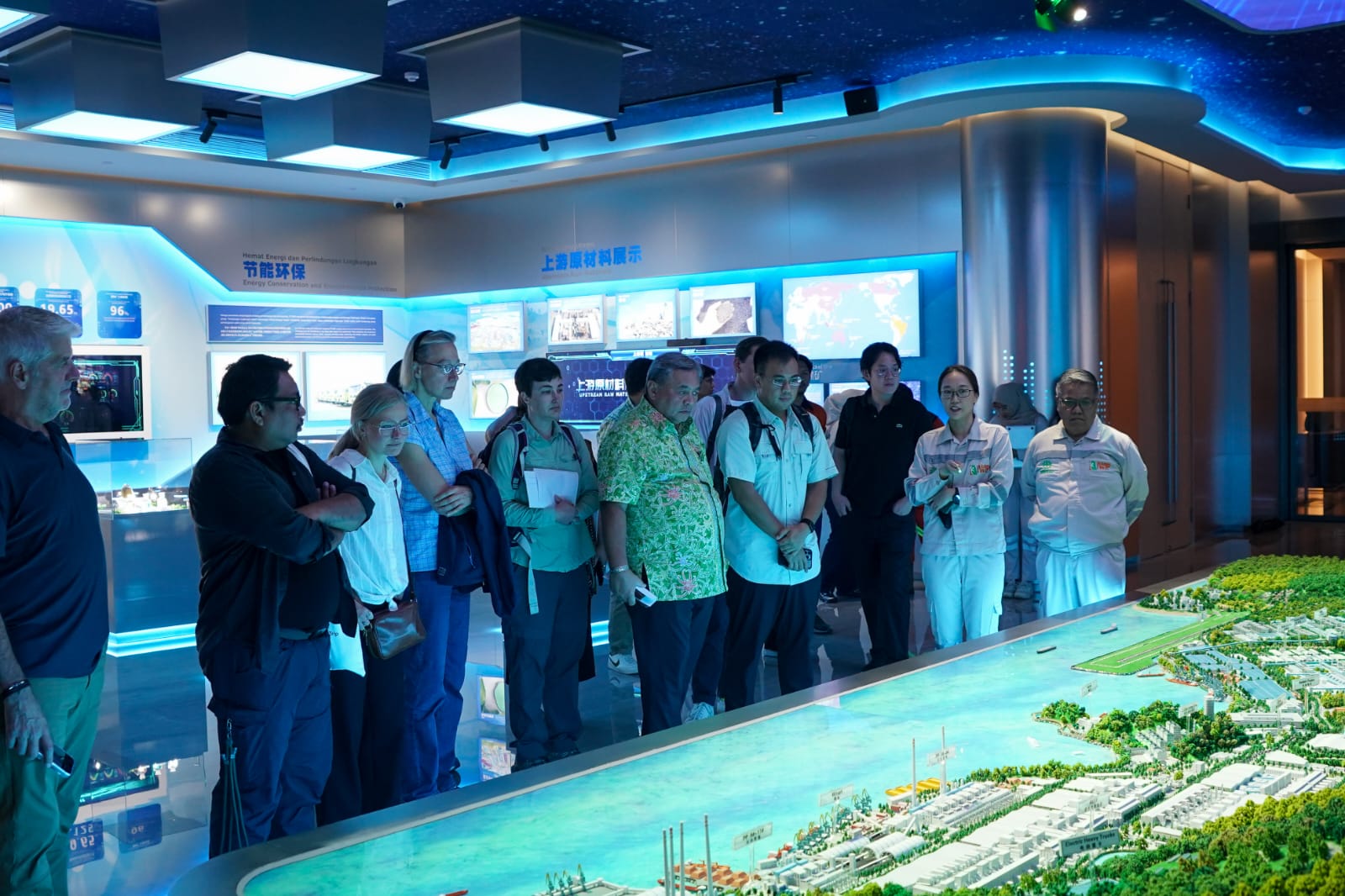
This commitment was highlighted during the North Maluku Sustainability Trip, organised by the UK and Ireland Bilateral Committee of the Indonesian Chamber of Commerce and Industry (Kadin) in collaboration with Kadin Indonesia and the Indonesia Weda Bay Industrial Park (IWIP). The event brought together international organisations, investors, industry players, academics, and policymakers to observe the development of the nickel downstreaming ecosystem in North Maluku firsthand.
The forum served as a discussion platform on how the region can become a global reference for responsible downstreaming practices. Such efforts are deemed increasingly vital amidst rising international market demands for sustainable critical mineral supply chains. According to US Geological Survey (USGS) data, Indonesia is set to hold the world’s largest nickel reserves by 2026, reaching 62 million tonnes, or approximately 44.3% of global reserves. About 90% of these reserves are located in Central Sulawesi, South Sulawesi, Southeast Sulawesi, and North Maluku, making North Maluku a strategic region in the global supply chain for the electric vehicle (EV) industry and energy transition.
However, increasing global attention towards Environmental, Social, and Governance (ESG) aspects means nickel-producing regions are required to demonstrate sustainable industrial practices rather than just increasing production. North Maluki Governor Sherly Tjoaster stated that downstreaming has had a tangible impact on the regional economy, with growth reaching approximately 34% annually last year, and 19.64% in the first quarter of 2026, the highest in Indonesia.
Despite this success, the regional government maintains that the success of downstreaming cannot be measured solely by economic growth. Strengthening environmental oversight, transparency, and community involvement in industrial development are essential factors to ensure economic benefits are widely and sustainably shared. “Fifty years from now, North Maluku must not only be known for the nickel extracted from its soil, but for the value we have successfully left for its people,” said Sherly.
The Sustainability Trip featured prominent organisations involved in global mineral sustainability standards, including the Nickel Institute, International Council on Mining and Metals (ICMM), Initiative for Responsible Mining Assurance (IRMA), Global Battery Alliance, Glencore, and GIZ. Participants visited the PT Weda Bay Nickel (WBN) mining area and various facilities within the Indonesia Weda Bay Industrial Park (IWIP) to review nickel processing, environmental management, and R&D centres.
Ahmad Fikri Susanto, Director of BYD Haka Auto and representative of the UK and Ireland Bilateral Committee of Kadin, noted that global market demands are evolving. Investors and buyers no longer look solely at production capacity but also at how sustainability practices are implemented. “Global investors and buyers now want to see more than just production volumes. They want to understand how the supply chain is managed, how the environment is protected, and how the community benefits from development,” he said.
Bernardino Vega, Vice Chair for International Affairs of Kadin Indonesia, added that sustainability standards are increasingly influencing investment decisions and market access. He noted that investment in Indonesia’s mineral processing sector surged by 208% between 2019 and 2022, rising from US$3.56 billion to US$10.96 billion.