
North Korea Shakes Up UN, Declares It Forbidden to Submit to Global Nuclear Rules
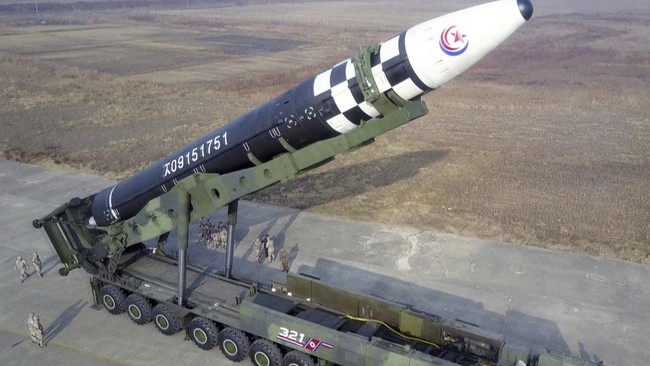
North Korea’s envoy to the United Nations (UN) has firmly declared that Pyongyang will not be bound by any atomic weapons agreements. This announcement reaffirms that external pressures will not alter the country’s status as a nuclear-armed power in the world.
Citing a report from Al Jazeera, the statement by Ambassador Kim Song, broadcast by state media on Thursday (7/5/2026), comes as the United States (US) and other countries level sharp criticisms. These criticisms target North Korea’s nuclear programme at the ongoing Nuclear Non-Proliferation Treaty (NPT) review conference at UN headquarters.
North Korea itself withdrew from the NPT in 2003 and has since conducted six nuclear tests. These provocative actions have triggered various sanctions from the UN Security Council, yet Pyongyang is believed to still possess dozens of nuclear warheads to this day.
Ambassador Kim Song highlighted the course of the conference in New York, which he views as cornering his country’s sovereign position before the international community. According to him, there are systematic efforts by Western parties to delegitimise the nuclear status they have achieved.
KCNA reported the diplomat’s defence of North Korea’s sovereign rights. He condemned the actions of the United States and its allies, who continue to question Pyongyang’s military position.
“At the 11th NPT Review Conference currently underway at UN headquarters, the United States and certain countries following it have baselessly questioned the current status and implementation of sovereign rights,” Kim stated.
Ambassador Song also emphasised that claims from outside parties or unilateral desires from Western countries will have no impact on his nation’s strategic position. For him, North Korea’s nuclear strength is a final reality.
He assured that his country’s status as a global nuclear power will not waver due to rhetorical pressures from international forums. His side insists that this position is no longer negotiable.
“The status of the Democratic People’s Republic of Korea as a nuclear-armed state will not change based on external rhetorical claims or unilateral desires,” he added.
Furthermore, Song provided a final affirmation regarding his government’s official stance towards the international treaty regulating the spread of atomic weapons. He ensured there is no room for new agreements that could restrain their steps.
North Korea has stated an absolute rejection of rejoining the global nuclear pact. The senior diplomat emphasised that his country will take its own path, free from those international legal rules.
“To clarify once again, the Democratic People’s Republic of Korea will not be bound by the Non-Proliferation Treaty under any circumstances,” Song asserted.
He then concluded his statement by explaining that the legal basis for possessing weapons of mass destruction has been strengthened through the highest legal instruments in his country. This is intended to give the policy a firm and transparent foundation.
Song stated that his country’s nuclear status is now permanent and has a very strong legal basis. This also includes protocols on when and how the weapons will be used.
“The status as a nuclear-armed state has been enshrined in the constitution, which transparently states the principles of nuclear weapons use,” Song continued.
North Korea has long insisted that it will not relinquish its nuclear arsenal, portraying that path as irreversible. On the other hand, international observers note that North Korea has sent ground troops and artillery shells to support Russia’s invasion of Ukraine in exchange for military technology assistance from Moscow.
Based on a report from the Stockholm International Peace Research Institute (SIPRI), nine nuclear-armed countries—including Russia, the US, and North Korea—possess a total of 12,241 nuclear warheads as of January 2025. This nuclear issue also forms the core of the conflict between the United States and Israel against Iran, where US President Donald Trump stated that Tehran must not possess nuclear weapons, although Iran denies pursuing atomic arms.