
North Korea Holds Live-Fire Drill, Displaying 'Very Great Destructive Power'
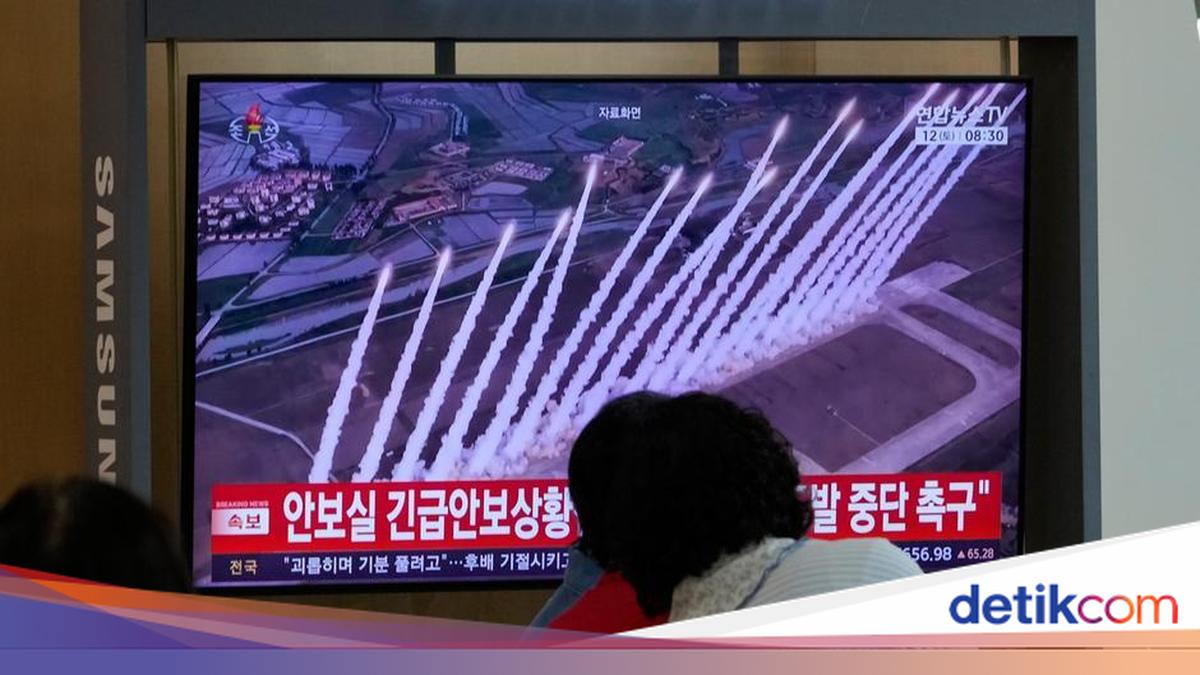
On Monday (14/09), North Korea said that a recent “live-fire” exercise demonstrated “very great destructive power”.
According to the North Korean government news agency KCNA, the drill held on Saturday (12/09) fired various types of weapons simultaneously, aiming to boost the morale of North Korean troops and enhance their capability to “completely destroy the enemy”.
KCNA reported that the exercise involved five army units and tested a range of weapons systems, including attack drones, tactical cruise missiles, tactical ballistic missiles and other armaments.
Experts said North Korea has not reduced its weapons development and testing activities, even though US President Donald Trump recently scaled down joint military exercises with the United States and South Korea. The move appeared to be an effort to revive diplomacy with the North Korean leader, Kim Jong Un.
North Korea claims to possess great military strength
North Korean Marshal Pak Jong Chon, as quoted by KCNA, said the exercise aimed to “raise the level of specialisation so as to incapacitate the enemy’s armed forces organisationally and structurally as soon as the order is given”.
He added that the weapons systems deployed in the drill demonstrated “the very great destructive power of concentrated fire”.
South Korea’s Joint Chiefs of Staff said several missiles were fired on Saturday (12/09), travelling about 250 kilometres (155 miles) before reaching waters off North Korea’s east coast.
That range indicates the weapons were designed to strike targets in South Korea, including US military bases there.
North Korea’s response to “provocation”
The live-fire exercise took place a day after the United States, South Korea and Japan completed trilateral military drills that North Korea regarded as a provocation.
In August, Trump ordered the Pentagon to “significantly reduce” the scale of the Ulchi Freedom Shield exercise conducted with South Korea. According to the US president, the decision was taken because of his good relationship with Kim Jong Un.
North Korea rejected Trump’s move, saying that shortening the exercise did not change its “provocative and aggressive nature”.
The exercise ended six days earlier than originally planned. Experts said Kim Jong Un likely feels his position in any potential negotiations with the United States has grown stronger than before, since his first meetings with Trump in 2018 and 2019.
Kim previously said he could return to the negotiating table if the United States abandoned what he called its “hostile policy” towards his country and recognised North Korea’s status, as claimed by Pyongyang, as a nuclear state.